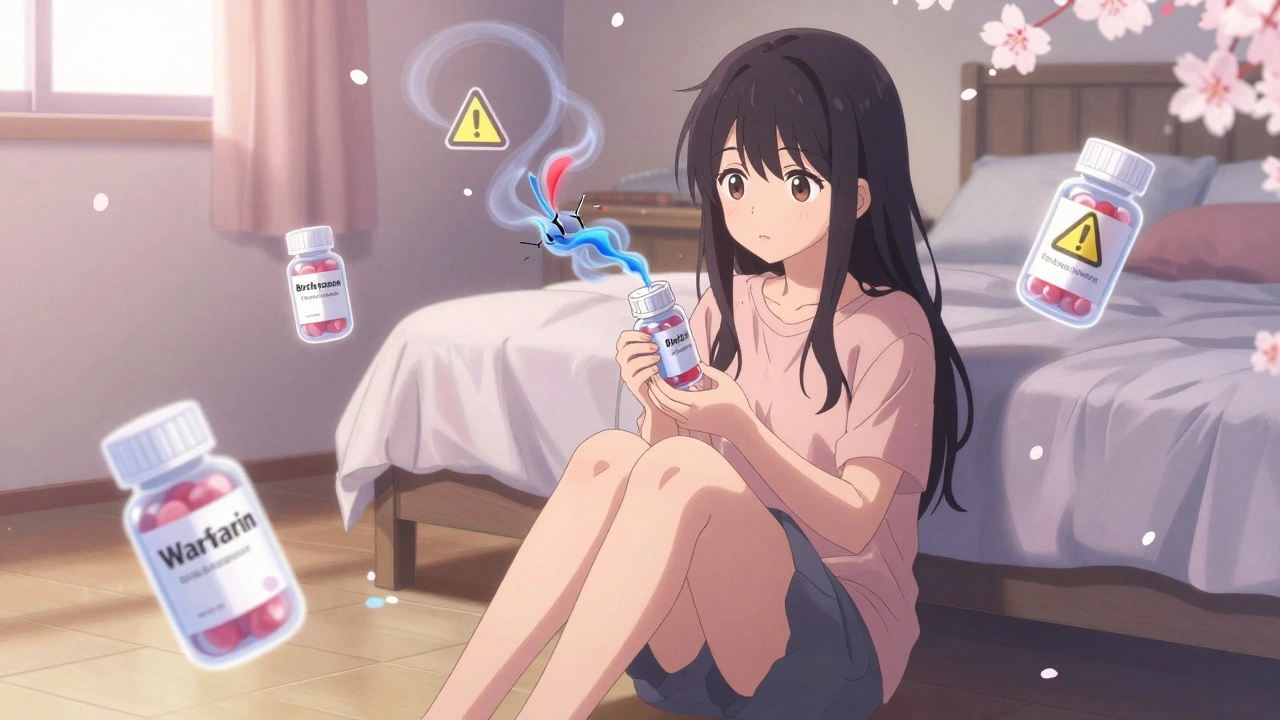
Many people turn to St. John’s Wort because it’s natural, widely available, and marketed as a gentle fix for low mood. But here’s the truth most labels won’t tell you: St. John’s Wort doesn’t just affect your mood-it can shut down the effectiveness of life-saving medications. If you’re on anything from birth control to blood thinners, this herb isn’t harmless. It’s a silent saboteur in your body’s drug system.
St. John’s Wort doesn’t work like a vitamin. It’s a powerful biological trigger. Its active ingredient, hyperforin, tells your liver to crank up production of enzymes-especially CYP3A4 and CYP2C9-that break down drugs. Think of it like a factory suddenly speeding up its assembly line. Your body starts clearing out medications faster than it should.
That means if you’re taking warfarin, your blood thinner, the drug gets flushed out before it can do its job. Your INR drops. Your risk of clotting goes up. Same with cyclosporine, the drug transplant patients rely on to keep their new organs from being rejected. A 40% drop in blood levels isn’t just a number-it’s a countdown to organ failure.
This isn’t theory. In Australia, the Therapeutic Goods Administration (TGA) logged 22 cases between 1998 and 2000 where warfarin stopped working after people started taking St. John’s Wort. One patient’s INR fell from 2.5 to 1.3 in just seven days. That’s not a fluke. That’s a medical emergency waiting to happen.
St. John’s Wort doesn’t pick and choose. It hits a wide range of prescriptions hard. Here’s what’s at risk:
And here’s the kicker: these interactions don’t show up right away. It takes 1-2 weeks for enzyme induction to peak. You might feel fine for weeks, then suddenly crash.
Most users think: ‘It’s herbal. It’s natural. It’s safe.’ That’s the trap. A 2022 Johns Hopkins study found 41% of people taking prescription drugs didn’t tell their doctor they were using St. John’s Wort. They didn’t consider it medicine. They thought it was just a ‘supplement’.
Online reviews don’t help. WebMD shows 68% of users say it helped their depression. That’s real relief for some. But those same users rarely mention the warfarin they’re on, or the birth control they’re relying on. The success stories are loud. The near-misses? Silent.
One Reddit user shared how their INR dropped from 2.8 to 1.5 after starting St. John’s Wort. Their doctor had to increase warfarin by 25%. Another user on Drugs.com got pregnant despite perfect birth control use. These aren’t outliers. They’re predictable outcomes.
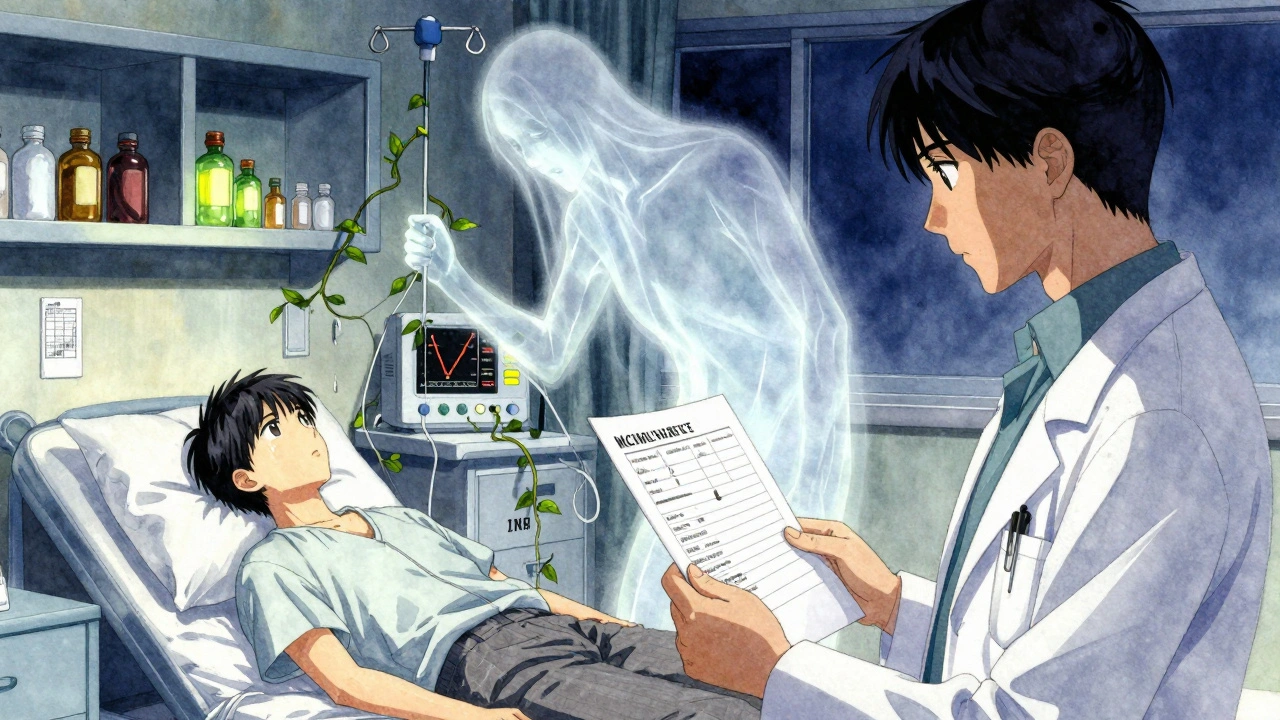
If you’re already on St. John’s Wort and take any prescription meds:
If you’re thinking about starting it:
The global market for St. John’s Wort hit $287 million in 2022. Four million Americans use it. It’s everywhere-in health stores, online, even in some pharmacies. But here’s what’s missing: warning labels that actually stick.
Australia requires interaction warnings on all products since 2018. The U.S. FDA only requires a vague line: ‘Ask a doctor if you’re taking prescription drugs.’ That’s not enough. People skim labels. They skip warnings. They assume ‘natural’ equals ‘no risk.’
The truth? St. John’s Wort is one of the most dangerous herbal supplements out there. The University of Washington’s Drug Interaction Facts database lists over 50 major interactions. That’s more than ginkgo, echinacea, or garlic combined. And unlike pharmaceuticals, herbal products aren’t standardized. One bottle might have 0.1% hyperforin. Another might have 0.8%. That’s a 800% difference in risk.
Even experts are divided. A 2022 review in the Journal of Alternative and Complementary Medicine suggested it might be safe under strict monitoring. But the American Psychiatric Association’s 2023 guidelines downgraded it from ‘may be considered’ to ‘not recommended’ for anyone on prescription meds. That’s a clear signal: the risks outweigh the benefits.
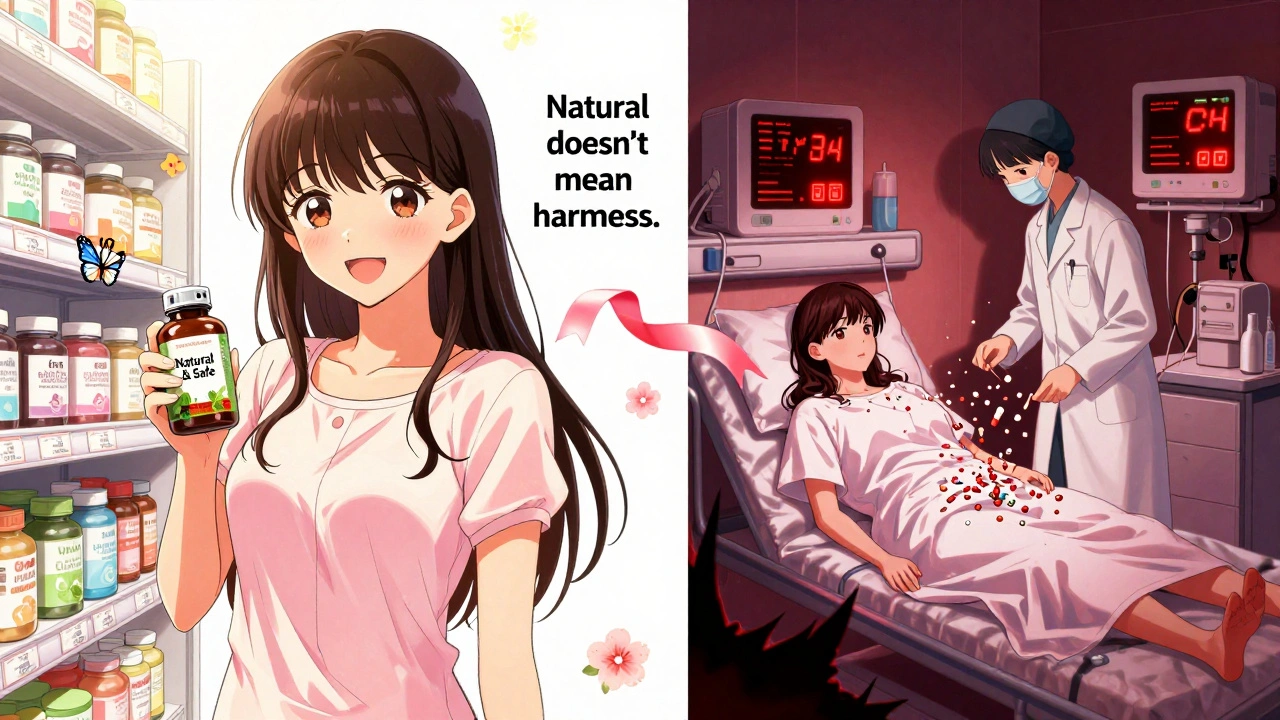
Take five minutes today and do this:
There’s no such thing as a harmless supplement when you’re on real medicine. St. John’s Wort isn’t the villain-it’s a warning sign. Pay attention to it before it’s too late.
No. Combining St. John’s Wort with SSRIs, SNRIs, or other antidepressants can trigger serotonin syndrome-a potentially fatal condition with symptoms like high fever, rapid heartbeat, confusion, tremors, and seizures. At least six Australian cases have been documented. This is not a risk worth taking.
The herb itself clears in a few days, but its effects on liver enzymes last up to two weeks. That’s why experts recommend a 14-day washout period before starting any medication affected by CYP3A4 or P-glycoprotein. Don’t assume it’s safe just because you stopped taking it.
No. Even low doses can induce enzyme activity. Studies show that 900 mg daily (standard dose) increases CYP3A4 by up to 40%. There’s no proven safe threshold for people on prescription drugs. The European Food Safety Authority says no safe level can be established due to individual differences in metabolism.
If you’re not taking any prescription drugs, over-the-counter medications, or other supplements, it’s less risky-but not risk-free. It can still cause side effects like anxiety, dizziness, dry mouth, or photosensitivity. And if you ever start a new medication later, you’ll need to stop St. John’s Wort first. It’s easier to avoid it altogether.
Evidence-based options include cognitive behavioral therapy (CBT), regular exercise (30 minutes, five days a week), light therapy for seasonal depression, and prescription SSRIs like sertraline or escitalopram-all under medical supervision. These have proven safety profiles and no dangerous interactions.
Because the supplement industry isn’t regulated like pharmaceuticals. Labels don’t have to prove safety or list all interactions. Many people assume ‘natural’ means ‘safe.’ Pharmacies don’t always flag it. Doctors don’t always ask. It’s a perfect storm of misinformation and lack of oversight.
In Australia, yes-since 2018, all St. John’s Wort products must carry interaction warnings. In the U.S., the FDA only requires a generic disclaimer: ‘Ask your doctor if you’re taking prescription drugs.’ That’s it. No specific drug names. No real guidance. That’s why so many people get caught off guard.
Only if you’ve waited at least two weeks after stopping the medication and your doctor confirms your drug levels are stable. For example, if you stop warfarin, wait two weeks, get an INR check, and it’s normal, then you *might* consider St. John’s Wort. But even then, if you ever restart the drug, you’ll need to go through the same process again. It’s a constant cycle of risk.
St. John’s Wort isn’t the enemy. It’s a symptom of a bigger problem: we treat herbs like candy. We assume what’s natural is harmless. But your body doesn’t care if something comes from a plant or a lab. It only cares about the chemistry. And St. John’s Wort? It’s a chemical grenade in a quiet little bottle. Don’t open it unless you’re ready for the explosion.

Steve Sullivan
8 12 25 / 23:56 PMbro i took this for 3 months last year while on birth control and got pregnant. my doctor flipped out. i thought it was just 'herbal tea' lol. now i keep it in a locked box labeled 'DANGER: CHEMICAL GRENADE' 🤡
Kathy Haverly
10 12 25 / 17:26 PMSo let me get this straight-you’re saying a plant that’s been used for centuries is more dangerous than Big Pharma’s $2000/month antidepressants? Cute. I’ll take my 0.8% hyperforin over your synthetic poison any day. Your fearmongering is just marketing for SSRIs.
William Umstattd
12 12 25 / 16:43 PMThis is why America is dying. People treat herbal supplements like they’re candy from a gas station. There’s no regulation. No accountability. No consequences. You think your ‘natural’ remedy is safe? You’re one bad interaction away from a stroke, a transplant failure, or a dead baby. Wake up. This isn’t opinion-it’s biochemistry. And you’re playing Russian roulette with your liver.
Tejas Bubane
14 12 25 / 09:23 AMlol at all these scaredy cats. if you can't handle a little enzyme induction, maybe you shouldn't be on 7 different meds. i've been taking sjw with my antihypertensives for 5 years. my bp is better than my doctor's. stop scaremongering and let people live.
Asset Finance Komrade
14 12 25 / 18:14 PMAs an Australian, I can confirm the TGA warnings are mandatory and printed in bold. Over here, pharmacists actually ask you about supplements. In the US? You get a 3mm disclaimer buried under glittery packaging labeled 'Calm Your Soul™'. The regulatory disparity is criminal. We don’t let people poison themselves with marketing.
Ronald Ezamaru
16 12 25 / 14:59 PMI used to be a skeptic until my cousin went into serotonin syndrome after mixing sjw with sertraline. She spent 11 days in ICU. Her mom didn’t even know it was an herb she was taking. I now hand out printed sheets to every relative who says 'I’m just trying natural stuff.' It’s not about fear-it’s about respect for your own biology. Don’t be the person who didn’t ask.
Tiffany Sowby
16 12 25 / 20:54 PMI’m a nurse. I’ve seen this happen. A 24-year-old woman on warfarin starts sjw for ‘anxiety’-ends up with a PE. She didn’t even know it was an interaction. The worst part? She cried because she felt guilty. She didn’t know. And that’s the problem. People aren’t evil-they’re uninformed. We need better labeling. Not more fear.
Raja Herbal
17 12 25 / 02:02 AMyou guys are acting like sjw is a bomb. i live in india, we’ve used this for generations. my grandma took it with her blood pressure meds. she’s 89 and still walks 5km daily. maybe your bodies are weak, not the herb.
Rich Paul
17 12 25 / 04:57 AMok but like, hyperforin induces CYP3A4 and P-gp, right? so if you're on a substrate, you're fucked. but what about drugs that are metabolized by CYP2D6? sjw barely touches that. so like, if you're on propranolol or fluoxetine? chill. it's not all doom. also, dose matters. 300mg vs 900mg is a whole different ballgame. stop with the fear porn.
Katherine Rodgers
17 12 25 / 19:59 PMi took sjw for 2 weeks while on xanax and didn’t even notice a thing. my anxiety was fine. your ‘medical emergency’ is just your pharma overlords being mad you found a cheap fix. #freeherbs