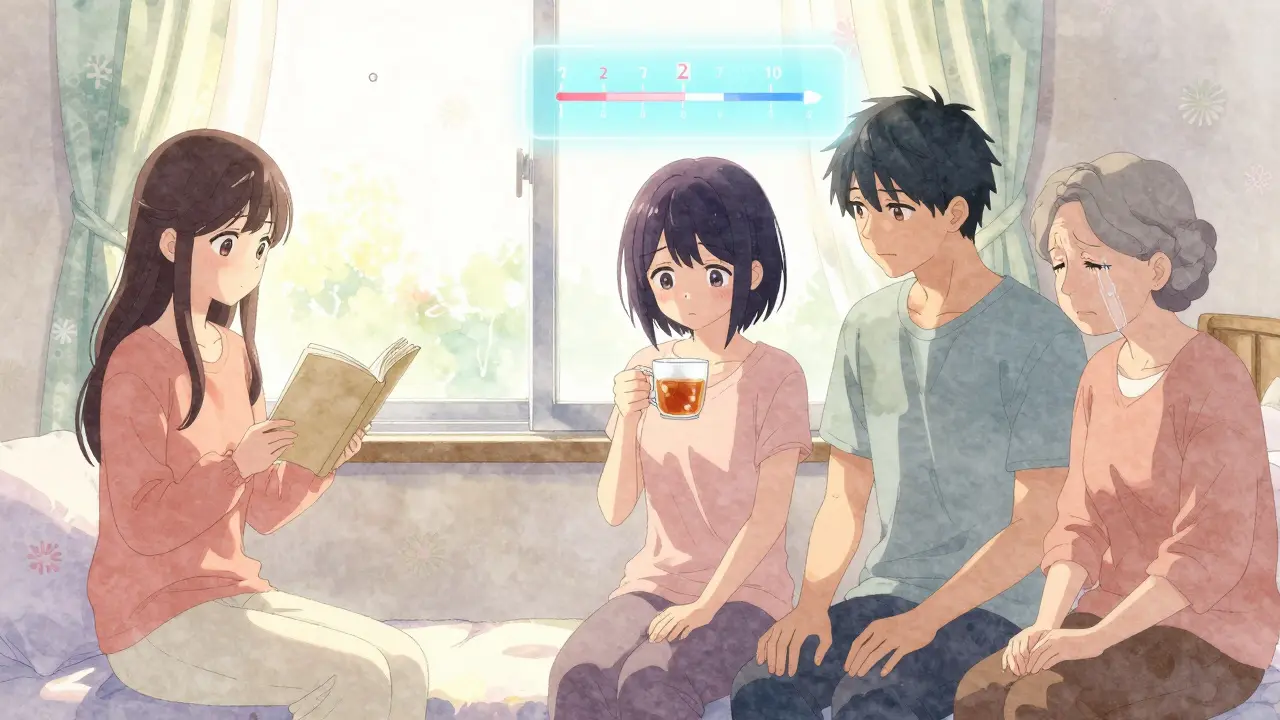
When someone is fighting advanced cancer, the goal isn’t just to stop the disease anymore. It’s to help them live as well as possible - even if the clock is ticking. Pain control and quality of life become the real measures of success. And the good news? Most of the time, it’s possible to get both.
Why Pain in Cancer Isn’t Normal - It’s Manageable
Many people assume that pain is just part of having cancer. That’s not true. Studies show that 70 to 90% of people with advanced cancer feel significant pain, but up to 90% of that pain can be controlled with the right approach. The problem isn’t a lack of tools - it’s a lack of consistent action.
Pain isn’t just a number on a scale. It’s the kind of ache that keeps you from sleeping, the burning that makes walking painful, the sharp stab when you breathe. It affects your mood, your appetite, your ability to talk to your family. That’s why pain isn’t treated as an afterthought in modern palliative care. It’s the first thing you assess.
Every patient should be asked: On a scale of 0 to 10, how bad is your pain right now? Zero means no pain. Ten means the worst pain you’ve ever felt. This isn’t just a formality. It’s how doctors track progress. If your pain score stays above 4 after treatment, something needs to change.
The Three-Step Ladder for Pain Relief
The World Health Organization’s analgesic ladder is still the backbone of cancer pain management. It’s simple, evidence-based, and works for most people.
Step 1: Mild pain (1-3) - Start with over-the-counter meds. Acetaminophen (up to 4,000 mg a day) or ibuprofen (400-800 mg three times daily) are often enough. But don’t use NSAIDs long-term if you have kidney issues or stomach ulcers.
Step 2: Moderate pain (4-6) - Add a weak opioid like codeine. It’s usually combined with acetaminophen. Dose is typically 30-60 mg every 4 hours. This step helps bridge the gap before stronger meds are needed.
Step 3: Severe pain (7-10) - Strong opioids like morphine are the gold standard. Starting dose? Around 5-15 mg every 4 hours by mouth. But here’s the key: it’s not just about giving a pill. It’s about scheduled dosing - not waiting until the pain hits hard. Breakthrough pain? Give 10-15% of your total daily dose as needed.
Dosing isn’t one-size-fits-all. Someone who’s never taken opioids before might need half the dose of someone who’s been on them for years. Doctors adjust every 24 to 48 hours until pain is under control. And they check in - every day - to see if it’s working.
When Opioids Aren’t Enough - Or Too Much
Opioids are powerful, but they’re not perfect. Side effects like constipation, drowsiness, nausea, and confusion happen. And in 15-20% of people on long-term high doses, something strange occurs: opioid-induced hyperalgesia. That means the medicine starts making the pain worse.
When that happens, switching opioids can help. You don’t just double the dose. You use an equianalgesic table to find the right equivalent, then start at 50-75% of that dose. Why? Because your body doesn’t fully tolerate the new drug right away. This reduces the risk of overdose while still controlling pain.
If side effects are unbearable, alternatives exist. Fentanyl patches or methadone are often used for people with opioid toxicity. Methadone is tricky to dose - it needs expert handling - but it can be life-changing for those who haven’t responded to anything else.

Non-Opioid Helpers: The Hidden Weapons
Pain isn’t just physical. Sometimes it’s nerve-related - burning, tingling, shooting. That’s neuropathic pain. And it doesn’t respond well to opioids alone.
That’s where adjuvant meds come in:
- Gabapentin or pregabalin - 100-1,200 mg three times a day - for nerve pain from tumors pressing on nerves.
- Duloxetine - 30-60 mg daily - helps with both nerve pain and depression, which often go hand-in-hand.
- Dexamethasone - 4-16 mg daily - reduces swelling around tumors, especially in bone or brain metastases.
- Bisphosphonates like zoledronic acid - given IV every 3-4 weeks - strengthen bones weakened by cancer and reduce pain from fractures or bone destruction.
For bone pain, radiation is often the fastest fix. A single 8 Gy dose can cut pain in half within days. Multiple sessions (20-30 Gy total) work for more widespread damage. It’s quick, focused, and often covered by insurance.
Quality of Life Isn’t Just About Pain
Pain control is the foundation - but it’s not the whole house. Quality of life means being able to eat with your family, sit outside, laugh without wincing, or hold your grandchild’s hand.
The National Comprehensive Cancer Network (NCCN) says every cancer patient needs a full psychosocial check. That includes:
- How anxious or depressed you feel (using a simple 0-10 distress scale)
- Whether you have someone to talk to at home
- Your cultural views on pain - many Asian and Hispanic patients stay quiet because they don’t want to seem weak
- Your spiritual or religious beliefs - which can be a huge source of comfort
A 2022 study found that patients who got early palliative care - within 8 weeks of diagnosis - had a 20-30% better quality of life score. And they lived longer. On average, 2.5 months longer.
That’s not magic. It’s structure. It’s having a team - nurse, doctor, social worker, chaplain - who shows up not just to treat symptoms, but to listen.

Barriers No One Talks About
Why isn’t everyone getting this care? Three big reasons:
- Doctors don’t always ask. A 2017 study found 40% of oncology nurses weren’t trained in current pain guidelines. If they don’t screen, the pain goes unnoticed.
- Patients are scared. Sixty-five percent of cancer patients worry opioids will make them addicted. But addiction is rare in people with cancer who take opioids for pain. Fear keeps them silent.
- Insurance won’t pay. Massage, acupuncture, counseling, physical therapy - these help. But many plans don’t cover them. That leaves people with only pills.
And in some places, strict opioid laws make doctors afraid to prescribe enough. A patient might get 10 mg of morphine when they need 50. The result? Suffering continues.
What’s New in 2025?
The field is changing fast.
New guidelines now explicitly say cancer pain is different from chronic pain like backaches. The CDC’s 2022 update includes a cancer exception - finally recognizing that people with cancer need higher doses when needed.
Tech is helping too. Smartphone apps let patients log pain in real time - what triggered it, what helped, how they felt emotionally. One 2021 study showed this improved documentation accuracy by 22%. That means better decisions.
Genetic testing is starting to show which patients metabolize opioids slowly (CYP2D6 poor metabolizers). That helps avoid overdoses or ineffective doses before they happen.
And AI? Early tools are being tested to predict pain spikes before they occur - based on past patterns, lab results, even sleep data.
Twelve new non-opioid drugs are in late-stage trials. They target specific cancer pain pathways - like nerve compression or bone breakdown - without the risk of addiction.
What You Can Do Right Now
If you or someone you love has cancer and is in pain:
- Ask for a pain score to be taken at every visit - and write it down.
- Don’t wait until the pain is unbearable to speak up. Say: “This isn’t getting better.”
- Ask if a palliative care team is available. You don’t need to be near death to use it.
- Request a referral if pain isn’t controlled after two weeks of treatment.
- Ask about non-drug options: radiation, physical therapy, counseling.
- Bring a family member to appointments. They might hear things you miss.
Palliative care isn’t giving up. It’s fighting smarter. It’s saying: I want to live - fully - for as long as I can.
Is palliative care only for people who are dying?
No. Palliative care is for anyone with a serious illness like cancer, at any stage. It’s not about giving up - it’s about improving life while you’re living it. Many people start palliative care right after diagnosis to manage symptoms, reduce stress, and make treatment decisions clearer.
Will opioids make me addicted if I take them for cancer pain?
Addiction is rare in cancer patients using opioids for pain. The goal is relief, not euphoria. Your body needs the medicine to function, not to get high. Doctors monitor closely and adjust doses to avoid dependence. Fear of addiction often keeps people from getting the pain relief they need.
What if my pain doesn’t respond to morphine?
There are other options. You might switch to fentanyl patches, methadone, or hydromorphone. If the pain is nerve-related, gabapentin or duloxetine can help. Radiation therapy for bone metastases often brings quick relief. A palliative care specialist can test different combinations until something works.
Can non-drug treatments really help with cancer pain?
Yes. Radiation can cut bone pain in half within days. Physical therapy helps with mobility and reduces stiffness. Massage and acupuncture ease muscle tension and anxiety. Counseling helps with emotional pain - which can make physical pain feel worse. These aren’t extras. They’re essential parts of a full pain plan.
Why don’t more doctors offer palliative care early?
Many still think it’s only for end-of-life care. Others worry about upsetting patients. Some don’t know how to refer. But guidelines now say early integration improves survival and quality of life. If your doctor hasn’t mentioned it, ask: “Can I see a palliative care team?” It’s your right.
How do I know if my pain is being managed well?
Your pain should be under 3 out of 10 most of the time. You should be able to sleep, eat, and talk without constant discomfort. If you’re still struggling after two weeks of treatment, or if side effects are worse than the pain, it’s time to ask for a plan change. Don’t wait - speak up.

Dominic Suyo
18 12 25 / 16:09 PMLet’s be real - this whole ‘palliative care’ thing is just a fancy way of saying ‘we gave up on curing you.’ And don’t get me started on the opioid ladder. Step 3? Morphine? Please. Half the time, patients are getting 5mg when they need 50. Doctors are scared of DEA audits more than they are of watching someone suffer. It’s not medicine - it’s liability management dressed in a white coat.
And don’t even mention ‘quality of life’ like it’s some spiritual awakening. You can’t ‘laugh without wincing’ when your bones are dissolving. That’s not quality - that’s survival with extra steps.
Kevin Motta Top
19 12 25 / 03:57 AMActually, the WHO ladder still works - if you give it time and proper titration. Pain isn’t a switch. It’s a dial. And yes, 70-90% of cancer pain is controllable. The problem isn’t the tools - it’s the system that doesn’t prioritize it until it’s too late.
Erica Vest
19 12 25 / 06:39 AMCorrect terminology: opioid-induced hyperalgesia (OIH) is distinct from tolerance. Many clinicians conflate the two. OIH requires a strategic opioid switch, not dose escalation. Equianalgesic conversion must account for cross-tolerance and pharmacokinetics - particularly with methadone’s long half-life and active metabolites.
Additionally, bisphosphonates reduce skeletal-related events by 30-40% in metastatic bone disease, per ASCO 2023 guidelines. IV zoledronic acid remains first-line for lytic lesions.
Kinnaird Lynsey
19 12 25 / 10:55 AMWow. So much information. I’m just glad someone finally wrote this without making it sound like a textbook. I wish my dad’s oncologist had said half of this. Instead, he just handed us a script and said, ‘Call if it gets worse.’
shivam seo
21 12 25 / 03:07 AMUS healthcare is a joke. You need a PhD just to get a pain med that doesn’t make you vomit. Meanwhile, in Australia, we just give morphine and shut up. No forms, no ‘distress scales,’ no social workers asking about your ‘spiritual beliefs.’ Just medicine. Real medicine.
And don’t get me started on acupuncture. That’s what you do when you’re too lazy to prescribe an actual drug.
benchidelle rivera
21 12 25 / 23:40 PMIf you’re not asking for a pain score at every visit, you’re not advocating for your loved one. Period. This isn’t optional. This is basic human dignity. If your doctor doesn’t track it, find one who does. Your life matters more than their convenience.
Andrew Kelly
22 12 25 / 05:19 AMWait - so you’re telling me the government didn’t invent cancer pain to keep people hooked on opioids? Because that’s what it looks like. First they tell you to avoid painkillers, then they push you into morphine, then they say ‘oh, but don’t get addicted.’
And why is ‘AI predicting pain spikes’ suddenly a breakthrough? Because they’ve been ignoring data for decades. Now they want to monetize it with apps. Classic.
Anna Sedervay
22 12 25 / 18:30 PMWhile I appreciate the attempt at comprehensive discourse, the text exhibits a troubling conflation of palliative intent with curative pragmatism. The NCCN guidelines, while authoritative, are not universally applicable across cultural epistemologies - particularly in collectivist societies wherein familial autonomy supersedes individual symptom reporting. Furthermore, the reliance upon CYP2D6 phenotyping is premature; the clinical validity of pharmacogenomic stratification in oncology remains insufficiently validated in prospective cohort studies.
Additionally, the omission of ketamine as a viable adjuvant for refractory neuropathic pain constitutes a critical lacuna in the proposed framework.
Dev Sawner
23 12 25 / 21:12 PMThis article is dangerously misleading. In India, we do not have access to morphine in rural areas. Even in cities, the paperwork is so complex that patients die waiting. The WHO ladder is a Western fantasy. What good is a ‘fentanyl patch’ when you live 300km from the nearest pharmacy? And who pays for ‘counseling’ when your family is struggling to buy rice?
Stop romanticizing palliative care. For most of us, it’s not about ‘quality of life’ - it’s about not dying alone in a dark room because no one had the courage to give you a pill.
Moses Odumbe
25 12 25 / 17:10 PMOMG YES. 🙌 I’ve seen this firsthand. My aunt got her morphine dose wrong because the nurse didn’t check her kidney function. She was in agony for 3 days. Then they switched her to methadone and she was back to watching sitcoms. 😭💊
Also - gabapentin for nerve pain? LIFE CHANGER. Why isn’t this on every cancer care checklist??
Meenakshi Jaiswal
25 12 25 / 19:26 PMAs a nurse who’s worked in oncology for 15 years, I can tell you - the real heroes are the palliative care teams who show up at 2 a.m. to adjust a drip, hold a hand, or just sit quietly. They don’t get medals. They don’t get headlines. But they’re the reason people die with dignity.
And yes - non-drug options matter. A massage, a song, a grandchild’s laugh - these aren’t ‘extras.’ They’re the medicine that pills can’t give.
bhushan telavane
27 12 25 / 02:13 AMIn India, we call this ‘dard ka ilaj’ - treatment of pain. But no one talks about it. Families think if you complain, you’re being weak. My uncle didn’t ask for pain meds for two weeks. He just whispered, ‘It’s okay.’
Thank you for writing this. Maybe now someone will listen.
Mahammad Muradov
28 12 25 / 15:20 PMThis is a dangerous oversimplification. Cancer pain is not ‘manageable’ - it is a divine test. The use of opioids is a moral compromise. The body is a temple. To chemically dull its signals is to reject God’s design. True healing comes through prayer, fasting, and acceptance - not pharmaceuticals.
Those who seek relief through drugs are not brave - they are surrendering to the devil’s convenience.
holly Sinclair
28 12 25 / 18:18 PMWhat if pain isn’t a problem to be solved, but a signal - a visceral language of the body refusing to be ignored? We’ve turned suffering into a metric: 0 to 10, a checkbox, a dose adjustment. But what of the silence between the numbers? The grief that doesn’t fit on a distress scale? The fear that doesn’t respond to gabapentin?
The real innovation isn’t AI predicting pain spikes - it’s the willingness to sit with someone when the numbers won’t budge. When morphine doesn’t touch the ache in their soul. When the only thing left to do is hold their hand and say, ‘I see you.’
Maybe the goal isn’t to eliminate pain - but to ensure no one has to endure it alone. That’s not medicine. That’s humanity.
And yet, we build algorithms to predict suffering while forgetting how to be present in it.
Who are we really healing - the patient, or the system’s guilt?
Dominic Suyo
28 12 25 / 21:25 PMAnd here’s the kicker - the 2.5-month survival boost from early palliative care? That’s not because they ‘felt better.’ It’s because they stopped wasting time on toxic chemo that didn’t work. They got to go home. To sleep. To eat. To say goodbye without being tethered to an IV pole.
That’s not magic. That’s just not being a monster.