When you pick up a prescription, you might not notice the difference between your brand-name drug and the generic version on the shelf. But if you’re looking for an authorized generic, you need to know exactly what to look for. Unlike regular generics, authorized generics aren’t just similar to the brand drug-they’re made in the same factory, with the same ingredients, by the same company. The only real difference? The label and the box.
For example, when Pfizer made an authorized generic of Lyrica (pregabalin), they didn’t outsource production. They used the same pills, same capsules, same manufacturing line-but put Greenstone LLC as the distributor instead of Pfizer. The active ingredient? Identical. The inactive ingredients? Identical. Even the pill imprint and color? Often the same. The only thing changed was the label.
Some authorized generics even have small footnotes like “AG” or “Authorized Generic” on the label-but that’s optional. Don’t rely on it. Many don’t include it at all.
Here’s the key: In an authorized generic, the product code and package code match the brand-name drug exactly. Only the labeler code changes.
For example:
See how the last two parts (0110-01) are identical? That means it’s the exact same drug, same strength, same packaging size. Only the distributor changed. If the entire NDC is different, it’s a regular generic approved through an ANDA-not an authorized one.
Authorized generics don’t need to prove bioequivalence. They’re the same drug, same factory, same process. The FDA inspects the same facility that makes the brand drug. That’s why patients and pharmacists report almost zero differences in how they work.
Here’s a quick comparison:
| Feature | Authorized Generic | Regular Generic |
|---|---|---|
| Manufacturer | Same as brand-name drug | Usually a different company |
| Active Ingredients | Identical | Identical |
| Inactive Ingredients | Identical | May differ |
| NDC Product Code | Same as brand | Completely different |
| Labeling | No brand name, no trademarks | May include bioequivalence statement |
| Approval Pathway | Under original NDA | Under ANDA |
You can find it here: FDA’s Authorized Generic Drug List
Search by brand name or generic name. If the drug appears on this list, then any version with the matching product and package code is an authorized generic. This is the only source you need to confirm legitimacy.
Here are the top errors:
A 2022 survey of independent pharmacies found pharmacists spent an average of 2.7 minutes per prescription verifying authorized generic status. That’s more than double the time needed for regular generics. But with the right tools, it’s fast.
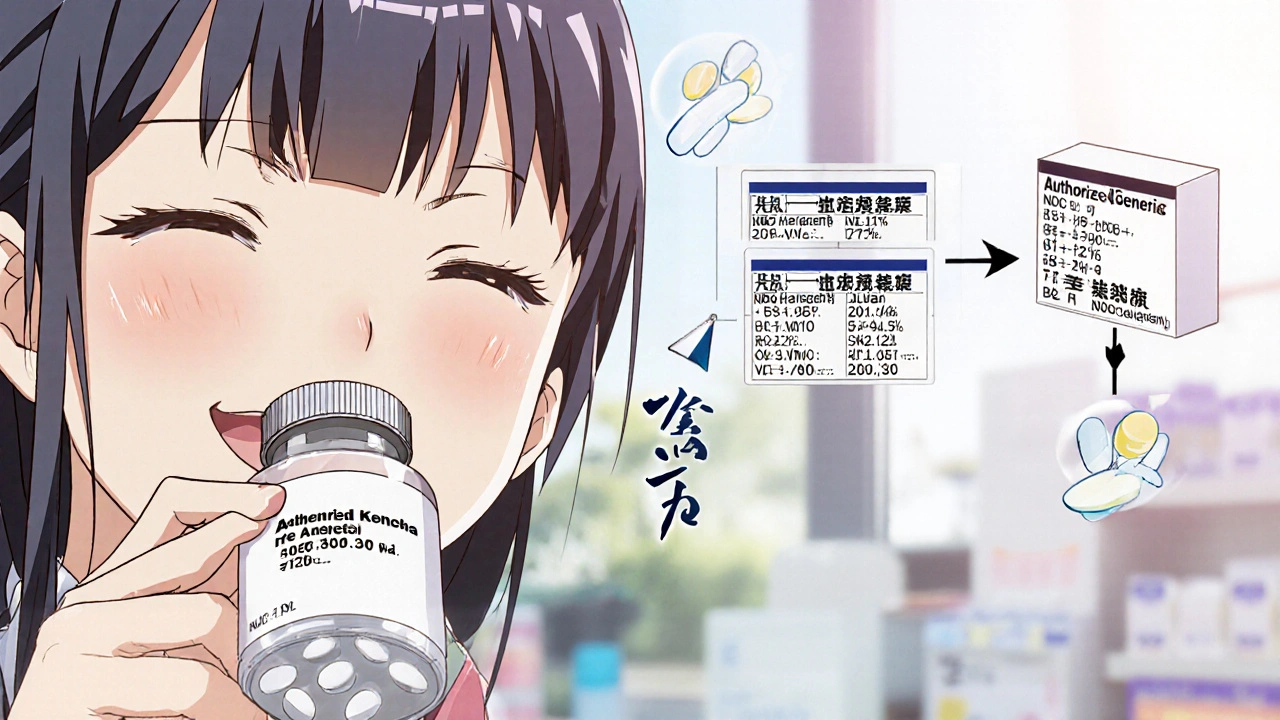
Ask your pharmacist: “Is this an authorized generic?” They can pull up the NDC in their system and cross-check it with the FDA list. Most pharmacy software now flags authorized generics automatically.
And if you’re worried about the different label? Remember: it’s not a different drug. It’s the same medicine, just sold under a different name. Patients in a 2022 Medscape survey reported 92.6% satisfaction with authorized generics-same effectiveness, same side effects, same results.
For patients who’ve had bad experiences with regular generics-like unexpected side effects or inconsistent results-authorized generics offer a trusted alternative. For pharmacies, they reduce returns and patient complaints. For the system, they keep prices down without sacrificing quality.
The FDA is working to make this even easier. By Q2 2024, authorized generics will be clearly marked in the National Drug Code Directory, so pharmacists won’t have to dig through lists anymore.
Yes. Authorized generics are made in the same facility, with the same ingredients, under the same quality controls as the brand-name drug. The FDA inspects the same manufacturing sites. There’s no difference in safety or effectiveness.
Yes, if it’s an authorized generic. The label change is intentional and required by law. The pill inside is identical. The only difference is who’s listed as the distributor. Always verify using the NDC code against the FDA’s official list.
Because they’re made by the original brand manufacturer and often sold during the first 180 days of generic market exclusivity, when competition is still limited. They’re cheaper than the brand but not as cheap as the first-wave generics that come later.
No. The Orange Book only lists drugs approved under ANDA or NDA. Authorized generics are marketed under the original NDA, so they’re not listed as separate entries. That’s why you need the FDA’s Authorized Generic List instead.
Absolutely. Ask your pharmacist: “Is there an authorized generic version of this drug?” If one exists, they can often switch your prescription without needing a new prescription from your doctor. It’s a simple change that could save you money without changing your treatment.
And if you’re a pharmacy professional: invest 4 hours in training on authorized generics. It’s not just about compliance-it’s about reducing patient confusion and improving trust. The tools are there. The data is clear. All you need to do is look.

Suzan Wanjiru
23 11 25 / 12:46 PMI used to think generics were all the same until I got my pregabalin switched and my anxiety spiked. Turns out it was a regular generic, not authorized. Checked the NDC-same product code as Lyrica but different labeler. Now I always verify. Life changing info.
Kezia Katherine Lewis
25 11 25 / 06:58 AMThe NDC distinction is critical from a pharmacoeconomic standpoint. Authorized generics leverage the original NDA’s bioequivalence data, eliminating the need for redundant ANDA submissions. This regulatory efficiency reduces market entry friction while preserving therapeutic fidelity. The FDA’s distinction between NDA- and ANDA-derived products is not merely bureaucratic-it’s clinically significant.
Henrik Stacke
25 11 25 / 08:44 AMOh my god, I just realized I’ve been taking the same pills for years but with different labels. I thought the blue pill was the brand and the white one was the cheap one-but they’re literally the same thing? I’ve been freaking out over packaging for no reason. This is wild. I feel like I’ve been living in a drug-induced conspiracy.
Manjistha Roy
27 11 25 / 03:09 AMI have been teaching pharmacy students for over 15 years, and I cannot emphasize enough: always check the NDC code, never trust the label. Many students confuse distributor names with manufacturers. This is a common and dangerous misconception. The FDA’s list is the only reliable source. Always verify. Always.
Kane Ren
28 11 25 / 13:01 PMJust asked my pharmacist for an authorized generic of my blood pressure med and saved $40 this month. No side effects, no drama. Same pill, same results. Why don’t more people know this? It’s like finding out your favorite coffee is actually the same bean, just in a cheaper bag.
Charmaine Barcelon
30 11 25 / 12:25 PMYou people are so naive. Just because the pill looks the same doesn’t mean it’s safe. I had a friend who took an authorized generic and got a rash. The brand never did that. So stop pretending they’re identical. The FDA doesn’t test every batch. You’re playing Russian roulette with your health.
Karla Morales
1 12 25 / 02:49 AMOMG I just checked my NDC and it’s an authorized generic!! 🤯 I’ve been saving $50/month and didn’t even know it. Also, the pill looks exactly like the brand-same little scratch on the side. I’m crying. This is the best medical discovery since penicillin. 🙌💊 #AuthorizedGenericLife
Javier Rain
1 12 25 / 17:10 PMListen, if you’re paying full price for a brand when the exact same pill is sitting on the shelf for half the cost-you’re getting scammed. Pharmacies don’t tell you this because they make more on the brand. But you? You’re smarter now. Go check your NDC. Do it today. Your wallet will thank you.
Laurie Sala
1 12 25 / 19:31 PMI’ve been on this med for 8 years. I’ve cried over the packaging changes. I’ve Googled every pill imprint. I thought I was going crazy. Now I find out it was never the drug… it was just the label. I feel so betrayed. By who? The system? The doctors? The FDA? I don’t know anymore.
Lisa Detanna
3 12 25 / 07:04 AMThanks for this. I’ve been telling my patients for years to check the NDC, but most don’t listen. Now I have a clear, simple guide to share. The FDA list is gold. I’m printing this out and putting it in my waiting room. People deserve to know the truth about what’s in their body.
Demi-Louise Brown
4 12 25 / 01:58 AMAuthorized generics represent a clinically optimal solution. The identical formulation ensures therapeutic continuity, while the reduced cost enhances adherence. Verification via NDC product and package codes is a best practice for both prescribers and dispensers.
Suresh Ramaiyan
5 12 25 / 11:09 AMIt’s funny how we fear the unknown in medicine. We trust a brand because of its name, not its chemistry. But the pill doesn’t care what you call it. The body only knows the molecule. Maybe the real lesson here isn’t about generics-it’s about how much we let branding control our health choices. The truth is quiet. It’s on the label. It’s in the NDC. We just have to look.