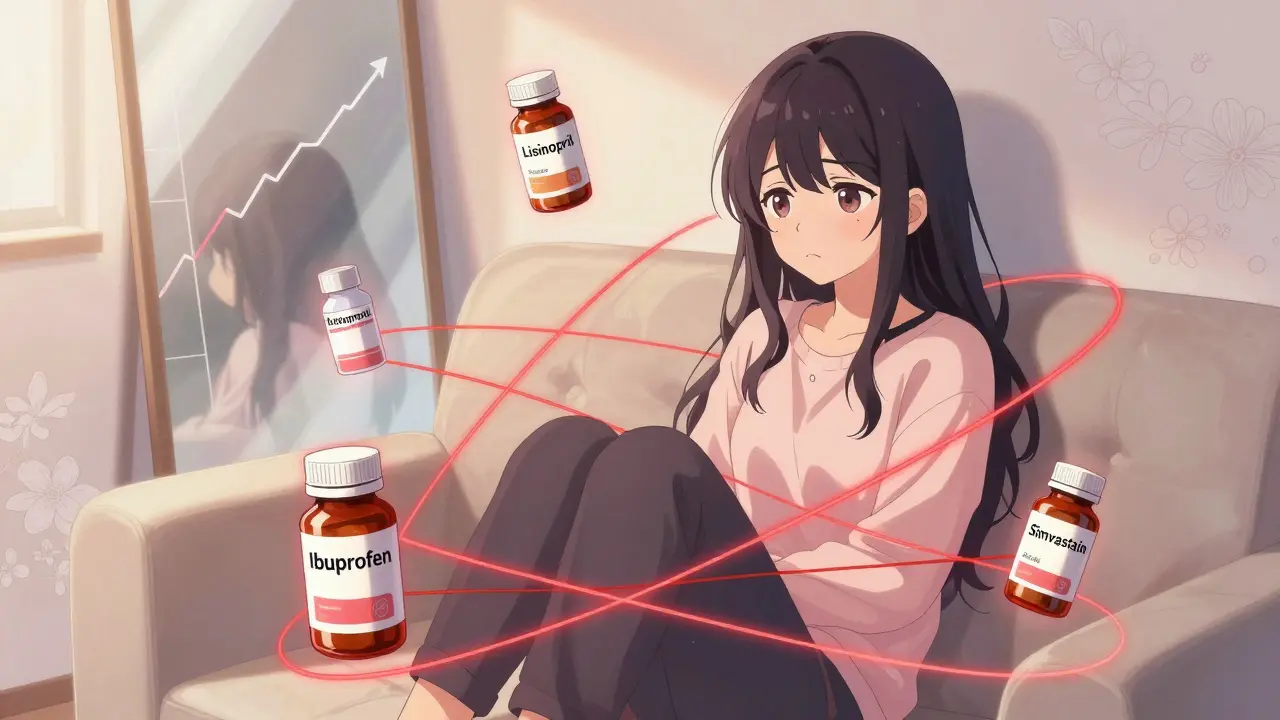
High blood pressure affects nearly half of all adults in the U.S., and for many, taking daily medication is non-negotiable. But what most people don’t realize is that the very pills meant to protect their heart can become dangerous when mixed with common over-the-counter drugs, supplements, or even other prescriptions. A simple ibuprofen for a headache could undo weeks of blood pressure control. A sleep aid or antidepressant might push heart rate into dangerous territory. These aren’t rare edge cases-they’re everyday risks that land people in the ER.
Hypertension medications work by targeting specific systems in your body: how your kidneys handle fluid, how your blood vessels relax, how your heart beats. When another drug interferes with those same systems, things go sideways fast. It’s not just about one pill interacting with another-it’s about how multiple drugs pile up. Nearly 40% of adults over 65 with high blood pressure take five or more medications. That’s a recipe for collisions.
Take NSAIDs, for example. These are the go-to pain relievers for millions: ibuprofen, naproxen, aspirin. They seem harmless. But they block enzymes your kidneys need to filter blood properly. That means less fluid gets flushed out, your blood pressure rises, and your antihypertensive meds lose power. Studies show NSAIDs can reduce the effectiveness of ACE inhibitors, beta-blockers, and diuretics by 5 to 12 mmHg systolic-enough to push someone back into dangerous territory. In fact, 15-20% of treatment-resistant hypertension cases are directly tied to hidden NSAID use.
Most people don’t think of ibuprofen as a blood pressure drug. But it’s one of the most dangerous offenders. A 2022 FDA safety alert found that 12% of emergency visits for adverse drug events in hypertensive patients involved NSAIDs. And 78% of those were from OTC versions-meds people grab without telling their doctor.
If you’re on an ACE inhibitor or ARB, combining it with an NSAID doesn’t just blunt the effect-it can spike potassium levels. That’s because both types of drugs reduce kidney excretion of potassium. When they team up, serum potassium can jump above 5.0 mEq/L in 25-30% of patients. High potassium doesn’t always cause symptoms, but when it does, it can trigger irregular heart rhythms, muscle weakness, or even cardiac arrest.
What should you use instead? Acetaminophen (Tylenol). It doesn’t interfere with kidney function or blood pressure control. For mild to moderate pain, it’s just as effective-without the risk. A 2023 Drug Interaction Checker found acetaminophen has 85-90% efficacy for pain relief with no significant interaction profile in hypertensive patients.
Beta-blockers like metoprolol, atenolol, and propranolol slow the heart and lower blood pressure. But they’re among the most interaction-prone drugs out there. Propranolol alone interacts with over 200 medications, according to FDA labeling.
One of the scariest combinations is with antidepressants-especially tricyclics like amitriptyline. Together, they can cause a dramatic drop in blood pressure when standing up, leading to dizziness, falls, and fractures in older adults. Studies show this combo increases fall risk by 35% in elderly patients.
Another hidden danger: alcohol. Mixing beta-blockers with even one drink can double the chance of orthostatic hypotension. That’s when your blood pressure plummets after standing. One study found a 15-20% increase in episodes among patients who drank regularly while on beta-blockers.
And then there’s digitalis (digoxin). Used for heart rhythm issues, it can build up in the blood when paired with beta-blockers, increasing the risk of dangerous bradycardia (slow heart rate) by 25-30%. Patients on this combo need regular heart rate checks and blood tests.
ACE inhibitors (like lisinopril) and ARBs (like losartan) are favorites because they protect the kidneys and reduce protein loss in urine. But they’re also the most likely to cause hyperkalemia-especially when combined with other drugs.
Potassium supplements? Avoid them. Salt substitutes that contain potassium chloride? Also risky. Even natural potassium-rich diets (bananas, spinach, sweet potatoes) can tip the scale when paired with these meds. The result? Serum potassium levels climb. You might feel nothing at first. But if it hits 6.0 mEq/L or higher, you’re looking at a medical emergency.
And don’t forget lithium. Used for bipolar disorder, lithium is cleared by the kidneys. ACE inhibitors reduce kidney filtration, causing lithium to build up. Toxicity risk jumps by 30-40%. Patients on this combo need monthly blood tests to check lithium levels.

Drugs like amlodipine and diltiazem are great for lowering blood pressure. But when taken with certain statins-especially simvastatin-the risk of rhabdomyolysis skyrockets. That’s when muscle tissue breaks down, releasing toxins into the blood that can fry your kidneys.
The ALLHAT-LLT trial showed amlodipine increases simvastatin exposure by 77%. That’s why the FDA mandated in 2016 that simvastatin doses be capped at 10 mg daily when taken with diltiazem or verapamil. Higher doses? That’s a red flag.
Even worse is amiodarone (Cordarone), a heart rhythm drug. When combined with simvastatin above 20 mg, rhabdomyolysis risk jumps 5 to 7 times. Many patients don’t realize they’re on both until they start feeling muscle pain or dark urine. That’s when it’s often too late.
Herbal supplements are not safe just because they’re “natural.” St. John’s wort, often used for mild depression, speeds up liver metabolism and can cut the effectiveness of beta-blockers and calcium channel blockers by up to 50%. Licorice root? It mimics aldosterone, causing sodium retention and potassium loss-exactly the opposite of what you want if you’re on diuretics.
Even common vitamins can cause trouble. Vitamin E in high doses (over 400 IU) can thin the blood and amplify the effects of anticoagulants like warfarin. And ginseng? It can raise blood pressure in some people, directly counteracting your meds.
Older adults. People taking five or more medications. Those with kidney disease. Anyone who self-medicates with OTC painkillers. And surprisingly-people who think their doctor knows everything they’re taking.
A 2023 National Ambulatory Medical Care Survey found that only 38% of primary care providers routinely ask about OTC meds during hypertension visits. That means over 60% of patients are flying blind. Many assume their pharmacist knows, or that their doctor reviewed their full list. They don’t.
It’s not all bad news. New tools are emerging to help. Mayo Clinic’s AI system predicted dangerous drug interactions with 88% accuracy-far better than standard electronic alerts. The FDA is now tracking 17 genetic markers that influence how people metabolize blood pressure drugs. Someone with a CYP2D6 poor metabolizer variant, for example, might need a 25-30% lower dose of metoprolol if they’re also on fluoxetine.
Electronic health records now flag potential interactions, but alert fatigue is real. Doctors see so many pop-ups that they start ignoring them. That’s why patient involvement is critical. You are your own best advocate.
Hypertension medication isn’t just about taking a pill every day. It’s about understanding how that pill talks-or clashes-with everything else in your body. The biggest threat isn’t the drug itself. It’s the hidden combinations no one talks about.
Don’t assume your doctor knows you’re taking ibuprofen for your back pain. Don’t assume your pharmacist caught the interaction between your statin and your calcium channel blocker. Don’t assume that because something’s sold over the counter, it’s safe.
Take control. Write it down. Ask the questions. Your heart will thank you.
It’s not recommended. Ibuprofen and other NSAIDs can reduce the effectiveness of most blood pressure medications by 5-12 mmHg systolic and increase your risk of kidney damage and high potassium. Acetaminophen (Tylenol) is a safer alternative for pain relief in people with hypertension.
Avoid St. John’s wort, licorice root, ginseng, and high-dose vitamin E. These can interfere with how your meds work-either by lowering their effect or raising your blood pressure. Even natural potassium supplements can be dangerous if you’re on ACE inhibitors or ARBs.
Yes. Alcohol can worsen dizziness and low blood pressure when combined with beta-blockers, diuretics, or alpha-blockers. It can also raise blood pressure over time. Limit alcohol to one drink per day, and avoid it entirely if you’re prone to dizziness or have heart rhythm issues.
Watch for sudden dizziness, especially when standing; unexplained muscle pain or weakness; dark urine; swelling in your ankles or feet; irregular heartbeat; or a sudden rise in blood pressure despite taking your meds. These can signal serious issues like rhabdomyolysis, hyperkalemia, or medication failure. Call your doctor immediately if you notice any of these.
Yes-if you’re taking ACE inhibitors, ARBs, or potassium-sparing diuretics, get your potassium checked every 3 to 6 months. Up to 30% of people on these meds develop high potassium levels, especially if they’re also taking NSAIDs or salt substitutes. High potassium can cause dangerous heart rhythms and often has no symptoms until it’s too late.
Absolutely. Pharmacist-led medication reviews reduce hypertension-related drug interactions by 40-45%. Always ask your pharmacist to review your full list of medications-prescription, OTC, and supplements-each time you pick up a new one. They’re trained to spot hidden risks your doctor might miss.
Yes. Acetaminophen (Tylenol) is the safest OTC option for people with high blood pressure. It doesn’t interfere with blood pressure meds or kidney function. For chronic pain, talk to your doctor about non-drug options like physical therapy, heat therapy, or low-impact exercise.
Some calcium channel blockers and statins, when taken together, can cause rhabdomyolysis-a condition where muscle tissue breaks down and releases toxins into the bloodstream. This is most dangerous with simvastatin doses above 10 mg when combined with diltiazem or verapamil. If you feel unexplained muscle pain, weakness, or dark urine, stop the meds and call your doctor immediately.

Janette Martens
30 12 25 / 10:24 AMso i took ibuprofen for my back pain for 3 weeks n my bp spiked to 180/110... my doc was like oh u prob didnt tell me u were takin that... yeah cuz i thought it was harmless 😭
Marie-Pierre Gonzalez
30 12 25 / 16:12 PMThank you for this comprehensive and vital reminder. As a healthcare professional, I cannot stress enough the importance of disclosing all OTC medications and supplements. Many patients assume their pharmacist or physician has access to a complete list-this is rarely the case. A simple, written list brought to every appointment can prevent life-threatening complications. 🙏
Louis Paré
31 12 25 / 00:38 AMLet’s be real-this article reads like a pharmaceutical pamphlet written by a guy who gets kickbacks from Tylenol. NSAIDs aren’t the villains here. The real issue is that doctors overprescribe antihypertensives like candy and then blame patients for using ibuprofen to function. Maybe if we stopped treating blood pressure like a death sentence, people wouldn’t need to self-medicate.
Samantha Hobbs
1 01 26 / 07:55 AMomg i just realized i’ve been taking naproxen with my lisinopril for 2 years 😳 i thought it was fine bc i dont feel bad... im gonna call my dr right now
Nicole Beasley
3 01 26 / 07:46 AMThis is so important!! 🚨 I had a friend who went to the ER with hyperkalemia because she was taking potassium supplements + losartan + salt substitute... she didn’t even know salt substitutes had potassium 😭 please, please, please talk to your pharmacist!
sonam gupta
5 01 26 / 04:26 AMin india we use asa for pain not ibuprofen and still get bp issues so its not just the drug its the whole system
Julius Hader
7 01 26 / 01:16 AMI’ve been telling people this for years. People think if it’s on the shelf, it’s safe. That’s like saying if it’s in a grocery store, it’s healthy. Acetaminophen isn’t perfect, but it’s the least bad option. And yes-your pharmacist is your secret weapon. Don’t be shy. Ask them.
Vu L
8 01 26 / 23:35 PMLmao this whole post is fearmongering. I’ve been taking ibuprofen with my beta-blocker for 10 years. My BP is perfect. My kidneys are fine. The real danger is trusting every internet article written by a guy who thinks he’s a doctor.
James Hilton
9 01 26 / 21:37 PMAmericans: taking 7 meds, 3 supplements, and 2 OTC painkillers... then wondering why they feel like a zombie. Meanwhile, in Japan, people drink green tea and walk. Just saying.
Hakim Bachiri
11 01 26 / 00:00 AMI mean... I get it. But let’s not pretend this is some revolutionary insight. The FDA has been warning about NSAID-hypertension interactions since 2005. The real tragedy? The fact that people still don’t know this-because they’re too busy scrolling TikTok to read their prescription labels. Also, ‘acetaminophen is safe’? Tell that to the 2000 people who die annually from liver toxicity from Tylenol overdose. We’re trading one risk for another. Maybe the real solution is... lifestyle? But that’s too hard, right?