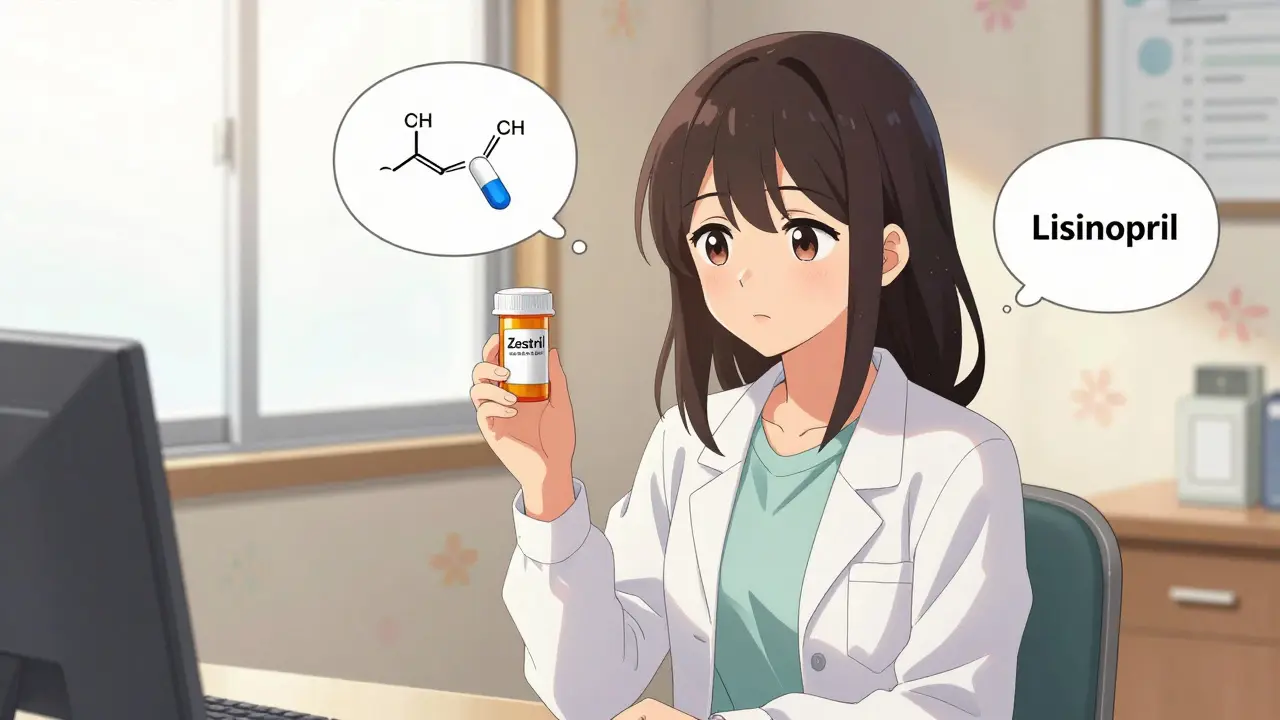
When you pick up your prescription, do you ever wonder why your doctor prescribed one version of a drug over another? Maybe you saw the name on the bottle and thought, "Wait, isn’t this supposed to be the same thing?" You’re not alone. Most people don’t realize that the generic version of their medication is chemically identical to the brand-name drug they’ve heard advertised on TV. But here’s the thing: generic medications aren’t cheaper because they’re weaker. They’re cheaper because they don’t need to pay for ads, fancy packaging, or 20 years of research. The FDA requires that generic drugs contain the exact same active ingredient, in the same strength, and work the same way in your body as the brand-name version. That means if you’re taking a generic version of lisinopril for high blood pressure, it’s doing the exact same job as the brand-name Zestril. The only differences? The shape, color, and filler ingredients-things that don’t affect how the medicine works. So why do some people feel like generics don’t work as well? Often, it’s because the pill looks different. You’ve been taking a blue capsule for years, and suddenly you get a white tablet. Your brain says, "This isn’t the same." That’s not the drug changing-it’s your perception. Studies show that 89% of patients notice no difference in effectiveness when switching to generics. But that 11%? They’re the ones who get anxious, skip doses, or call their doctor in a panic. And that’s where the conversation matters. Your doctor isn’t just prescribing a pill. They’re prescribing a treatment plan. And part of that plan includes understanding your concerns, your budget, and your history. If you’ve had a bad reaction to a generic before-even if it was just a weird headache or nausea-it’s worth mentioning. Some people report changes in side effects when switching between generic manufacturers. That’s not because one is "better." It’s because the inactive ingredients (like dyes or binders) vary between companies. For most people, this doesn’t matter. But if you have a rare allergy or sensitivity, it can. Then there’s the money. Generic drugs cost 80-85% less than brand-name versions. In 2023, Americans saved over $8 billion in out-of-pocket costs just by using generics. That’s $45 less per prescription on average. If you’re taking multiple meds, that adds up fast. But cost isn’t always the deciding factor. For drugs with a narrow therapeutic index-like warfarin, levothyroxine, or certain seizure medications-doctors sometimes prefer to stick with one version, brand or generic, because tiny changes in absorption can matter. Even then, the FDA says approved generics are safe and effective. The real issue isn’t science-it’s consistency. If you’ve been stable on a brand-name drug for years, switching might not be worth the risk of disruption. Here’s what you should ask your doctor next time you’re handed a prescription:
Most of the time, switching to a generic is a smart, safe move. But there are exceptions. For certain medications, even small differences in how the body absorbs the drug can lead to big problems. These are called narrow therapeutic index (NTI) drugs. With NTI medications, the difference between a dose that works and a dose that’s dangerous is tiny.
Examples include:
For these, your doctor might recommend staying on the same version-brand or generic-once you’ve found one that works. That’s not because generics are inferior. It’s because your body has adapted to a specific absorption rate. Switching between different generic manufacturers could cause small fluctuations in blood levels. While studies show these changes are usually within safe limits, some patients report feeling off after a switch. If you’ve been stable for months or years, your doctor may prefer not to rock the boat.
That said, the FDA maintains that even for NTI drugs, approved generics are safe and effective. The real issue isn’t the drug-it’s consistency. If you’ve been on the same generic for a year, don’t switch unless you need to. If you’re on the brand-name version and it’s working fine, you don’t have to switch. But if cost is a problem, talk to your doctor. There may be a way to stay on a consistent generic version without compromising your health.
Let’s say you switched to a generic and now you’re feeling different. Maybe your headaches are worse. Your anxiety is higher. Your blood pressure isn’t as controlled. The first thing to do? Don’t stop taking it. Don’t assume the generic is broken. Don’t blame yourself.
Instead, write down what changed. When did the symptoms start? Did you switch meds, or just the brand? Did you start a new supplement? Did your sleep or diet change? Sometimes, it’s not the drug-it’s everything else.
Bring this info to your doctor. Say: "I switched to the generic version of my med, and since then, I’ve noticed [symptom]." Your doctor might check your blood levels, adjust the dose, or switch you back. In rare cases, you might need to stick with the brand. But more often, the issue is psychological. You expect to feel different, so you notice things you didn’t before. That’s called the nocebo effect-the opposite of placebo.
Still, your feelings matter. If you’re not sleeping, feeling dizzy, or anxious after a switch, it’s real-even if it’s not caused by the drug itself. Your doctor can help you figure out why.
Medication costs are one of the biggest reasons people skip doses or stop taking their pills. But you don’t have to choose between your health and your budget. Here’s how to save:
Remember: a $5 generic that you take every day is better than a $100 brand-name pill that sits in your cabinet because you can’t afford it.

blackbelt security
24 01 26 / 02:13 AMJust switched my blood pressure med to generic last month. Same exact results, saved me $42 a month. My wallet’s doing a happy dance.
Stop overthinking it. The science’s solid.
Patrick Gornik
25 01 26 / 15:34 PMLet’s deconstruct the neoliberal pharmacopeia, shall we? The FDA’s ‘bioequivalence’ standard is a statistical mirage-90% CI confidence intervals don’t account for inter-individual pharmacokinetic variance, especially in polymorphic CYP450 metabolizers.
Meanwhile, Big Pharma’s patent evergreening schemes have turned generic substitution into a performative austerity ritual disguised as cost-saving. The real scandal? We’re told to trust the pill’s chemical formula while ignoring the sociopolitical architecture that commodifies human biology.
And yet-here we are, reduced to debating blue vs. white tablets like it’s a metaphysical choice. The nocebo effect? That’s just the psyche screaming against the alienation of medical paternalism.
Meanwhile, your $0.12 generic tablet carries the same active ingredient as the $3.49 brand, but you’re still paying for the brand’s mythos. The real question isn’t efficacy-it’s whether we’ve internalized corporate branding as physiological truth.
And don’t get me started on biosimilars. They’re not generics. They’re pharmacological fan fiction written by patent lawyers.
Tommy Sandri
26 01 26 / 04:13 AMIt is worth noting that the regulatory frameworks governing generic medications in the United States are among the most rigorous in the world. The FDA’s ANDA (Abbreviated New Drug Application) process mandates bioequivalence testing, manufacturing inspections, and post-market surveillance equivalent to that of originator products.
While patient concerns are valid and should be addressed with clinical sensitivity, the empirical evidence overwhelmingly supports the therapeutic interchangeability of approved generics. The economic impact on public health outcomes is substantial and demonstrable.
Healthcare systems that prioritize generic utilization report improved medication adherence and reduced hospitalization rates. This is not merely fiscal policy-it is preventive medicine.
Luke Davidson
26 01 26 / 09:47 AMI used to be scared of generics too-until my grandma switched from brand-name levothyroxine to generic and her TSH levels stayed perfect for 3 years straight
She didn’t even notice the pill looked different
Turns out the real villain wasn’t the generic-it was the fear we were taught to feel about saving money
Also, my pharmacist once showed me how to use GoodRx and I saved $70 on my cholesterol med
That’s a free dinner out. Do that every month and you’re basically getting paid to be healthy
Also shoutout to pharmacists-they’re the unsung heroes who actually answer your dumb questions without judgment
Y’all are doing great just by asking
Keep talking. Keep asking. Keep living.
Karen Conlin
27 01 26 / 19:31 PMLet me tell you something-my sister was on warfarin for years. Switched generics twice. First time, her INR spiked. Second time, dropped. We thought it was the med, but it was the filler-she’s allergic to cornstarch and one brand used it, the other didn’t.
So yeah, generics aren’t ‘bad’-but consistency matters. If you’re stable on one, don’t switch unless you have to.
And if your doctor doesn’t ask about your allergies or sensitivities? Find a new one.
Also-ask for the manufacturer name on the bottle. Write it down. If you’re on a narrow index drug, stick with the same one. No shame in that.
And if cost is keeping you from your meds? Talk to your pharmacist. They’ve got tricks. I’ve seen them get people free meds through programs I didn’t even know existed.
You’re not being ‘cheap’-you’re being smart. And you deserve to be healthy without going broke.
asa MNG
28 01 26 / 12:28 PMok so i switched to generic cymbalta and now i feel like a zombie??? like my brain is made of wet cardboard??
also my pill is blue now not green and i swear its not working same
my doc said "its the same chem" but bro i feel different
also i think the pharmacy gave me a different brand again last week and now i got a headache and my dog is staring at me weird
pls help
also why do they make the pills so big??
Heather McCubbin
29 01 26 / 04:15 AMPeople are so naive about generics
You think the FDA is protecting you?
They’re just letting big pharma outsource the dirty work to overseas factories that get inspected once every 5 years
And then they wonder why people get weird side effects
And don’t even get me started on how they let generics use dyes that are banned in Europe
And you’re just like ‘oh it’s the same chem’
NO. IT’S NOT
It’s the same active ingredient but the rest? It’s a chemical soup
And you’re the lab rat
Wake up
They don’t care if you feel weird
They care about the profit margin
And you’re just happy you saved $5
Pathetic
Shanta Blank
29 01 26 / 08:44 AMOkay but have you ever been on a generic that made you feel like your soul was being slowly extracted through your left ear?
Like you’re not depressed anymore-you’re just… empty.
Like your thoughts are happening underwater?
That happened to me on generic sertraline.
Switched back to brand. Instantly, my brain came back.
It wasn’t the dose.
It wasn’t my life.
It was the filler.
And now I pay $120 a month for something that should cost $5.
But at least I’m not a ghost.
Some things are worth the cost.
Even if your bank account screams.
Chloe Hadland
30 01 26 / 19:41 PMI just wanted to say thank you for writing this
I was too scared to ask my doctor about generics because I thought they’d think I was cheap
But now I’m gonna bring up cost next time
And if I get a new pill? I’m gonna ask the pharmacist what changed
And if I feel weird? I’m writing it down
Not because I think I’m crazy
But because my health matters
And so does my peace of mind
Thank you for giving me permission to speak up
You’re not alone in this
Amelia Williams
1 02 26 / 13:07 PMMy dad’s on 5 different meds. 4 are generic. One’s brand because it’s a narrow index drug and he’s been on it for 12 years.
He’s 78. Stable. Healthy.
But he used to panic every time the pill changed color.
So I made him a little notebook: ‘Med Name - Pill Color - Manufacturer - Date Switched’
Now he looks at it like a treasure map.
He says it makes him feel in control.
Turns out, the real magic wasn’t in the pill.
It was in the system.
And the conversation.
And knowing he wasn’t alone in wondering if the blue one was ‘less than’ the green one.
It’s not about the drug.
It’s about feeling safe.
And you can do that with generics too.
Just be smart. Be curious. Be kind to yourself.
Viola Li
3 02 26 / 02:40 AMGeneric drugs are a scam designed to make people feel guilty for wanting quality
Why should I settle for something that doesn’t even have the same logo?
And don’t tell me about ‘bioequivalence’-I’ve seen people switch and end up in the ER
It’s not my fault if Big Pharma wants to cut corners
And if my doctor pushes generics, they’re not my doctor-they’re a corporate agent
My health isn’t a line item on a spreadsheet
And if you think it is, you haven’t lived with chronic illness
Buy the brand. Pay the price.
Because your life isn’t a cost-saving experiment