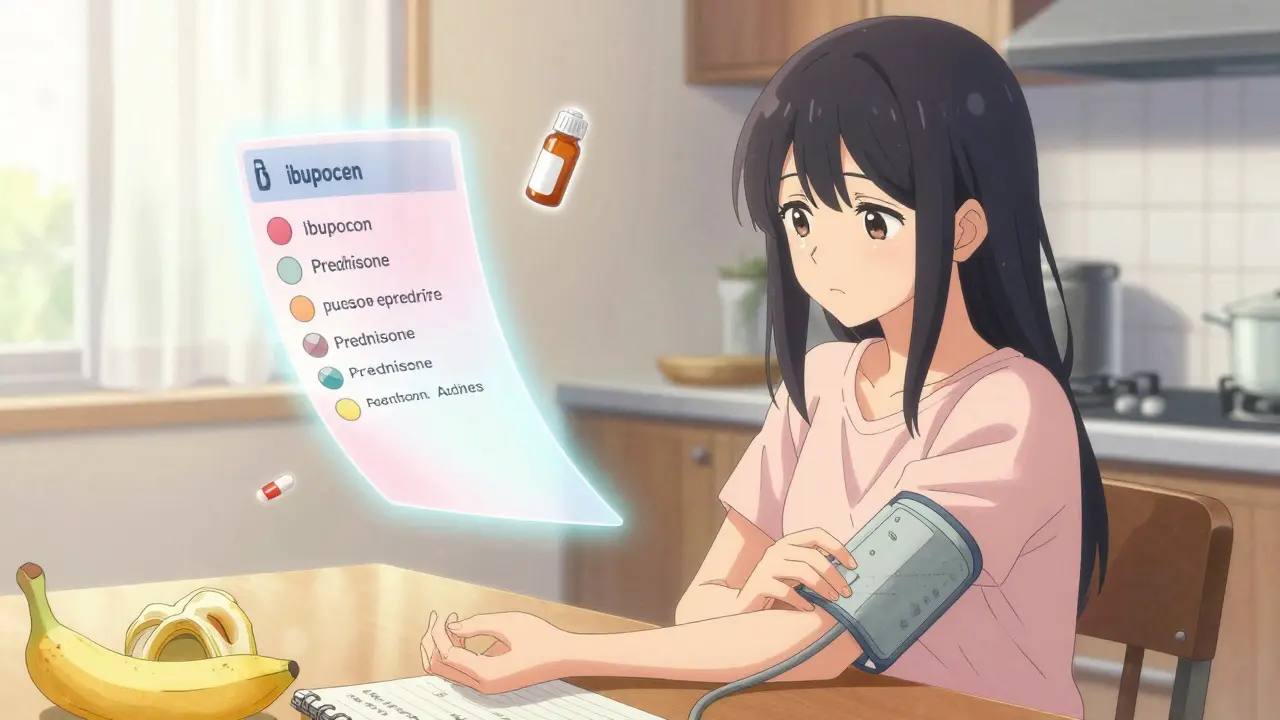
Enter medications you're currently taking. Common culprits include pain relievers, steroids, antidepressants, decongestants, and ADHD medications.
Many people assume high blood pressure is just a result of aging, poor diet, or stress. But what if your medicine - the very thing meant to help you - is secretly raising your blood pressure? It’s more common than you think. Around 2-5% of all hypertension cases are caused by medications, and millions of Americans experience this without even realizing it. The problem? Most patients and even some doctors don’t connect the dots between a new prescription and a rising number on the blood pressure cuff.
Even herbal supplements like St. John’s Wort can interfere with blood pressure control. Many patients don’t tell their doctors about these because they assume “natural” means “safe.” It doesn’t.
These aren’t side effects you can ignore. They’re physiological changes with measurable consequences.
The American Heart Association recommends this simple protocol:
For high-risk patients - those with existing hypertension, kidney disease, or on multiple BP-raising drugs - ambulatory blood pressure monitoring (ABPM) is gold standard. This device tracks your pressure over 24 hours, including during sleep. The diagnostic cutoff? Average daytime pressure above 135 mm Hg or 24-hour average above 130 mm Hg.
Home monitoring works too - but only if done right. Use a validated cuff, sit quietly for 5 minutes before measuring, and take two readings in the morning and two at night for seven days straight. Then average the last six days’ readings. Don’t rely on single readings or pharmacy machines.
For steroid users: Check your pressure daily for the first month. Watch for orthostatic changes - if your systolic pressure drops more than 20 mm Hg when you stand up, that’s a red flag. About 35% of steroid-induced hypertension patients show this pattern.

Step 1: Review all your meds
A 2023 study found that 15-20% of patients labeled as having “resistant hypertension” were actually reacting to medications they didn’t even think were a problem - like OTC painkillers or cold pills. Your doctor needs a full list: prescriptions, supplements, OTCs, even occasional use.Step 2: Try to stop or reduce the culprit
If possible, ditching the offending drug works. For NSAID users, 60-70% see their blood pressure return to normal within 2-4 weeks after switching. For decongestants, it’s about 40-50%. Try acetaminophen instead of ibuprofen. Use saline nasal sprays instead of pseudoephedrine. Ask for non-decongestant allergy meds.Step 3: Switch to safer alternatives
For pain: Celecoxib (Celebrex) raises BP by only 2.4 mm Hg on average - half the impact of ibuprofen. For depression: SSRIs like sertraline have less effect on BP than SNRIs. For ADHD: Non-stimulant options like guanfacine or atomoxetine may be better.Step 4: Use the right blood pressure meds
If you need to keep the drug causing the problem (like prednisone for lupus), treat the high BP - but choose wisely. Beta-blockers? Avoid them. They’re only 45% effective against drug-induced hypertension because they don’t fix vasoconstriction.Instead, use:
Combination therapy is needed in 35-45% of cases. Don’t be afraid to use two drugs if needed.
These changes work even when you’re on corticosteroids or antidepressants. They don’t replace medication - they support it.
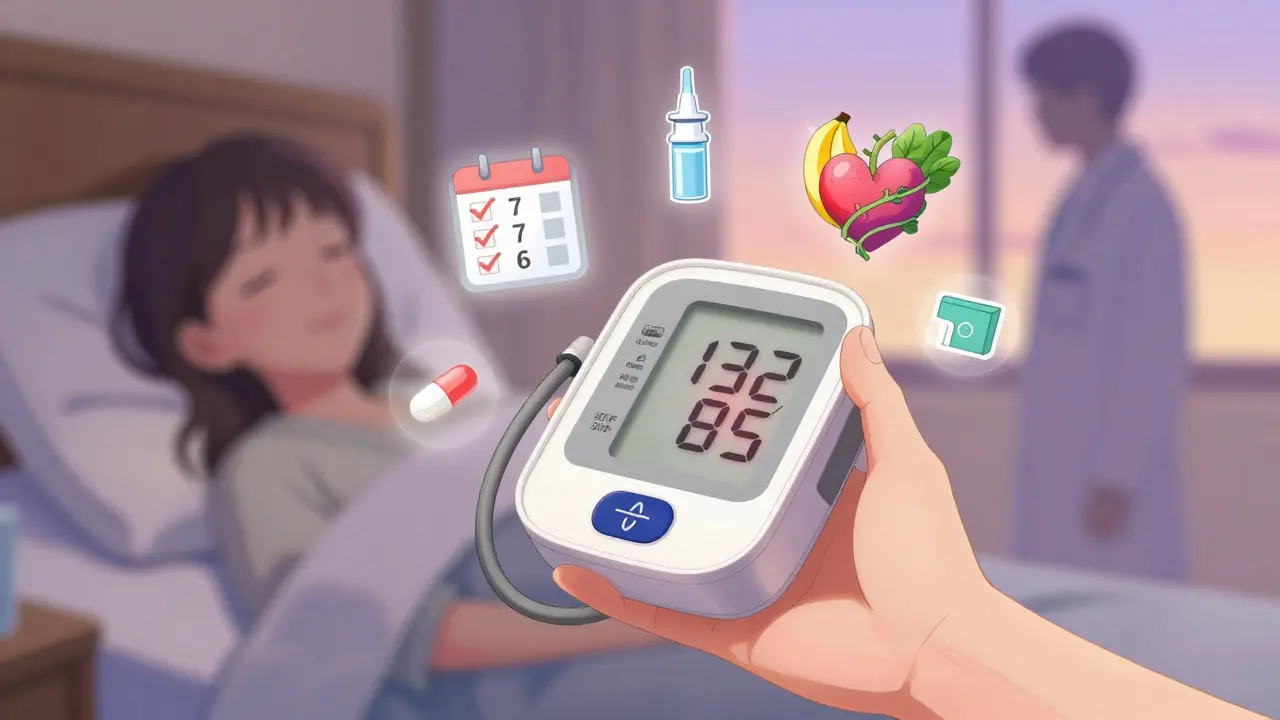
One patient on Zocdoc shared: “My doctor caught that my sinus med was causing 160/100 readings. Switched me to a non-decongestant version - my BP normalized in three weeks.” That’s the kind of win that happens when someone pays attention.
The gap isn’t just in knowledge - it’s in systems. Only 38% of U.S. hospitals have formal protocols to screen for medication-induced hypertension. The American Heart Association’s 2023 checklist is out there. But if your doctor doesn’t use it, you have to ask.
Don’t wait for a crisis. Blood pressure doesn’t cause symptoms until it’s dangerously high. By then, it’s already damaging your heart, kidneys, and brain.
Yes. Ibuprofen and naproxen, commonly used for headaches or arthritis, can raise systolic blood pressure by 5-10 mm Hg in people with existing hypertension. Studies show 12% of hypertensive patients experience dangerous spikes after just two weeks of regular use. Even occasional use can cause temporary spikes, especially if taken daily.
Never stop a prescribed medication without talking to your doctor. For some drugs - like NSAIDs or decongestants - stopping can reverse the effect. But for others - like corticosteroids for autoimmune disease - stopping could make your original condition worse. Your doctor can help you weigh risks and find safer alternatives.
Use a validated upper-arm cuff monitor. Sit quietly for 5 minutes, feet flat, back supported. Take two readings in the morning and two at night for seven days. Ignore the first day’s readings and average the remaining six. Record the numbers. Don’t rely on wrist or finger monitors - they’re unreliable.
Beta-blockers slow your heart rate but don’t relax blood vessels. Many drugs that raise BP - like decongestants and steroids - work by constricting arteries. Calcium channel blockers and diuretics are better because they directly counteract that constriction and fluid buildup. Studies show only 45% of patients respond to beta-blockers, compared to 72% with calcium channel blockers.
Yes. St. John’s Wort, licorice root, ephedra, and even some energy-boosting herbs can increase blood pressure. St. John’s Wort, for example, can interfere with medications and trigger spikes. Many patients don’t mention these to their doctors because they think “natural” means safe - but that’s not true.
It varies. For NSAIDs and decongestants, improvement often starts within days and normalizes in 2-4 weeks. For corticosteroids, it can take 4-8 weeks as your body readjusts. Antidepressant-induced hypertension may take longer - up to 6 weeks. Always monitor with your doctor, not just assume it will fix itself.
The bottom line? High blood pressure from meds is preventable. But only if you know to look for it. Don’t wait for a stroke or heart attack to realize your medicine might be the problem. Ask. Monitor. Advocate. Your blood pressure - and your future - depends on it.

Tobias Mösl
2 03 26 / 22:02 PMLet me get this straight - you’re telling me my ibuprofen for back pain is quietly sabotaging my heart? And my doctor never mentioned this? 😂 Classic. I’ve been taking 800mg daily for 3 years. My BP’s been creeping up since last year. I just thought I was getting old. Turns out I’m just a walking pharmacology experiment. Now I’m Googling every pill I’ve ever taken. Next up: my ‘natural’ turmeric supplements. Bet they’re secretly pumping adrenaline into my veins. I’m not surprised. Big Pharma doesn’t want you to know this. They make billions off your hypertension meds while you’re still popping Advil like candy.
Lebogang kekana
4 03 26 / 06:10 AMBro, I’m from South Africa and we don’t even have access to proper BP monitors - but I still know this is real. My aunt was on prednisone for lupus, went from 118/76 to 178/104 in 3 weeks. She thought she was just ‘feeling puffy’. No one told her. She ended up in the ER with a mini-stroke. This isn’t theory. This is life. If you’re on meds, check your BP. Like, now. Don’t wait for your next appointment. Your life doesn’t care about your doctor’s schedule.
Jessica Chaloux
5 03 26 / 09:48 AMI just cried reading this 😭 I’ve been on venlafaxine for 18 months and my BP spiked to 162/98 last month. My doctor said ‘maybe stress’ - but I knew. I’ve been googling ‘why do I feel like my veins are exploding’ for weeks. Turns out it was the SNRI. I switched to sertraline and in 10 days, my BP dropped 20 points. I’m so relieved. If you’re on antidepressants and your BP is weird - don’t ignore it. You’re not crazy. You’re just being poisoned by a pill labeled ‘helpful’.
Mariah Carle
5 03 26 / 17:12 PMIt’s not the drugs. It’s the system. We’ve been conditioned to trust white coats like they’re oracles - but medicine is a profit engine, not a healing art. The fact that 78% of doctors don’t screen for drug-induced hypertension? That’s not negligence. That’s design. Your body is a data point. Your BP is a metric. Your silence? That’s the real side effect. We don’t need more pills. We need to stop believing in systems that treat us like broken machines. Wake up. Your blood pressure isn’t just a number - it’s your soul screaming for autonomy.
Justin Rodriguez
6 03 26 / 11:38 AMJust want to add a practical note: If you’re on NSAIDs and have hypertension, switch to acetaminophen. Not perfect, but way safer. Also - if you’re using OTC cold meds, check the label for ‘pseudoephedrine’ or ‘phenylephrine’. Those are the hidden culprits. I had a patient last month who was taking DayQuil daily for allergies. His BP was 170/100. Switched to saline spray. In 10 days, down to 128/80. No meds needed. Just awareness. And a good pharmacist.
Raman Kapri
8 03 26 / 00:02 AMThis article is statistically misleading. You cite a 2022 meta-analysis but fail to mention that the sample size was skewed toward elderly patients with comorbidities. Also, 12% spike? That’s within the margin of error for home BP monitors. And you ignore confounding factors like weight gain, alcohol intake, and sedentary lifestyle. The real issue is lazy medicine - not the drugs. Blaming medications distracts from the root cause: poor lifestyle choices. Your ‘top offenders’ list reads like fearmongering disguised as science.
Megan Nayak
8 03 26 / 09:41 AMOh, so now it’s ‘medications’? What’s next? Are vaccines causing hypertension? Are vaccines causing hypertension? Are vaccines causing hypertension? I’m not saying it’s impossible - but let’s be real. The moment someone says ‘this drug causes X’, it becomes a cult. People stop thinking. They stop checking their own labs. They stop exercising. They stop eating vegetables. And then they blame the pill. Meanwhile, their sodium intake is 5,000mg/day and they sit on the couch for 12 hours. This isn’t science. It’s a panic button for people who want to avoid responsibility.
Tildi Fletes
9 03 26 / 21:12 PMThank you for this meticulously referenced and clinically grounded analysis. The data presented aligns with the 2023 AHA Scientific Statement on iatrogenic hypertension, particularly the subsection on pharmacologic contributors. I would further recommend that patients maintain a medication reconciliation log, updated quarterly, and share it with their primary care provider and pharmacist. Additionally, ambulatory blood pressure monitoring remains the gold standard for diagnosis in polypharmacy patients. The proposed protocol - baseline, 1–2 weeks, 4–6 weeks, quarterly - is evidence-based and should be institutionalized. For those on corticosteroids, concurrent thiazide diuretic therapy is often underutilized and may mitigate volume expansion. This is not alarmism; it is precision medicine.