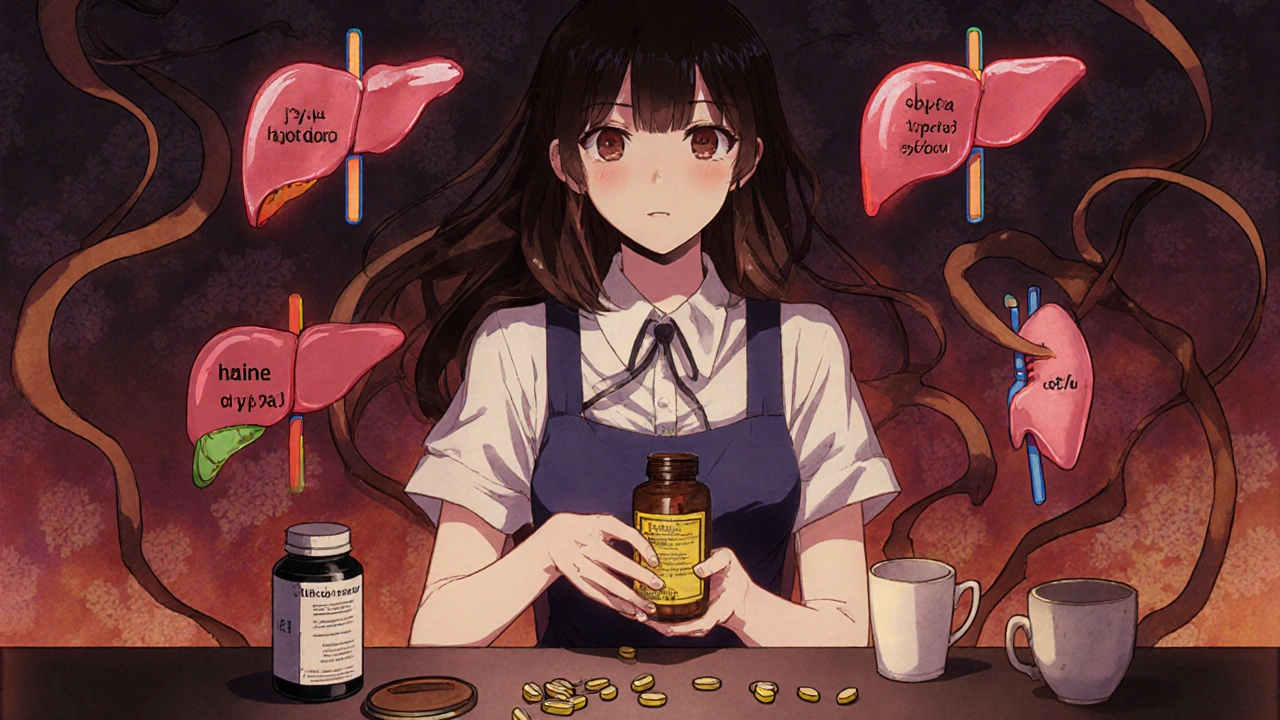
Enter your current medications to check for potential interactions with goldenseal. Goldenseal inhibits several liver enzymes that process many common medications.
Results will appear here after checking your medications.
Many people turn to goldenseal when they feel a cold coming on or when they want to boost their immune system. It’s sold in health food stores, online, and even in some pharmacies. But what most users don’t realize is that this popular herb can interfere with the medications they’re already taking-sometimes in dangerous ways. The real issue isn’t just that goldenseal might not work as advertised. It’s that it can quietly mess with how your liver processes your prescriptions, leading to side effects you never saw coming.
Goldenseal (Hydrastis canadensis) is a small perennial plant native to the eastern U.S. and southern Canada. For over a century, Native American tribes used its root and rhizome to treat wounds, infections, and digestive troubles. Today, it’s marketed as a supplement for colds, sinus infections, and immune support. But here’s the catch: the U.S. Food and Drug Administration (FDA) has never approved goldenseal for any medical use. There’s no solid evidence it actually prevents or treats infections in humans.
What it does contain, though, are powerful alkaloids-mainly berberine and hydrastine. These compounds are what give goldenseal its color and its biological activity. Berberine, in particular, is found in concentrations ranging from 0.5% to 8% in commercial products. That’s a huge range. One bottle might have barely enough to matter. Another could pack a punch that alters how your body handles drugs.
Your liver uses a group of enzymes called cytochrome P450 (CYP) to break down most of the medications you take. About 75% of all prescription drugs rely on these enzymes to be cleared from your body. Goldenseal doesn’t just gently slow this process-it slams the brakes on several key enzymes at once.
Research shows goldenseal strongly inhibits five major CYP enzymes:
That’s not just one or two drugs. That’s dozens, maybe hundreds, depending on what you’re taking. When goldenseal blocks these enzymes, your medications don’t get broken down properly. They build up in your bloodstream. Think of it like traffic backing up on a highway. The cars (your drugs) pile up because the exit ramps (the enzymes) are closed.
For example, if you take simvastatin for cholesterol, and you start taking goldenseal, your statin levels can spike. That raises your risk of muscle damage and kidney failure. If you’re on metoprolol for high blood pressure, goldenseal can make your heart rate drop dangerously low. And if you’re on warfarin, your INR (a measure of blood clotting) can jump by 1.5 to 2.0 points-enough to cause internal bleeding.
Some drugs are especially vulnerable to goldenseal’s effects. Here’s a short list of common medications that can become unsafe when mixed with goldenseal:
Even over-the-counter drugs aren’t safe. Taking goldenseal with Tylenol can overload your liver because it blocks CYP2E1-the enzyme that normally clears acetaminophen. That’s why some ER visits for liver injury involve people who thought they were just taking a “natural” cold remedy.
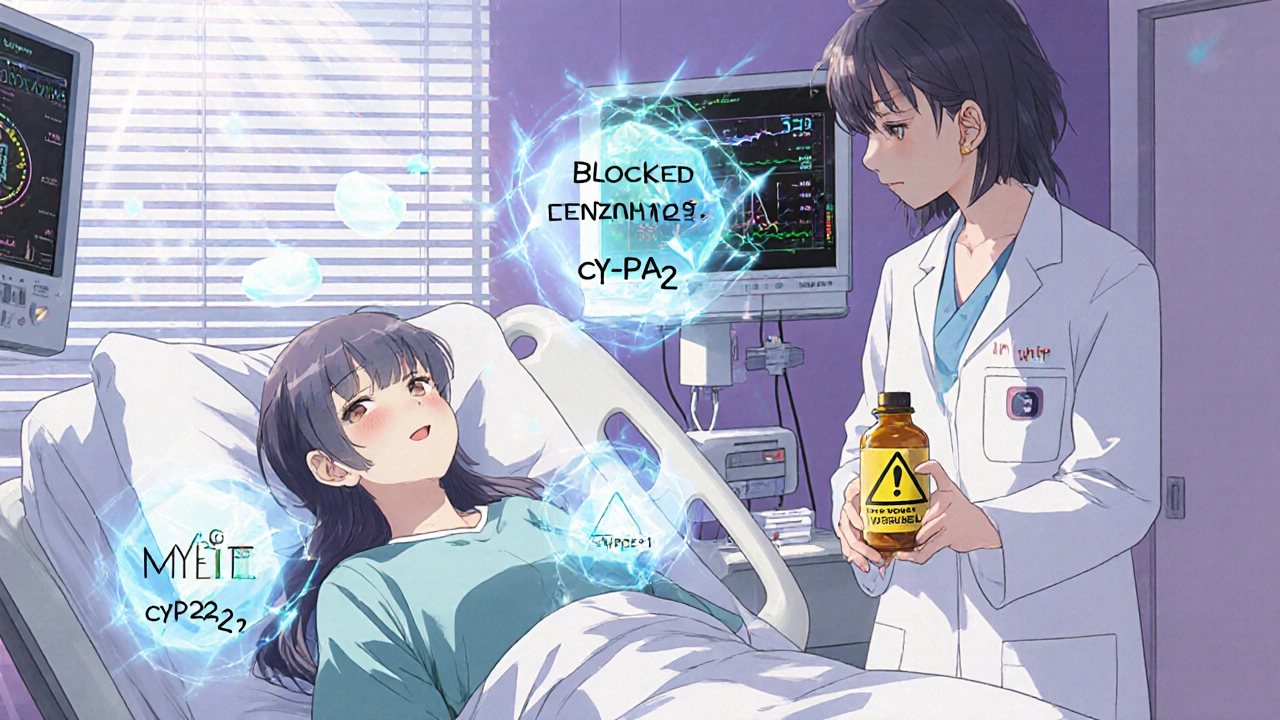
It’s not theoretical. People are getting hurt.
In January 2023, a Reddit user named “HypertensionWarrior” shared that after taking goldenseal with lisinopril (a blood pressure pill), they experienced severe dizziness and nearly passed out. Their blood pressure dropped to 85/50. They ended up in the ER.
A 2022 case report in Pharmacy Times described a 68-year-old man with type 2 diabetes. He started taking goldenseal for a sinus infection. Within four weeks, his HbA1c jumped from 6.8% to 8.2%. Why? Goldenseal interfered with how his body absorbed metformin. His blood sugar went out of control-not because he ate too much sugar, but because the herb blocked his medication.
On Amazon, 62% of positive reviews for goldenseal include the phrase: “only used when not on any prescription meds.” That’s not a coincidence. It’s a warning from users who learned the hard way.
People often think, “If St. John’s wort causes interactions, why is goldenseal any different?” The answer is scope.
St. John’s wort mainly induces one enzyme (CYP3A4), which makes drugs less effective. Goldenseal inhibits five enzymes at once. That’s a broader, more unpredictable risk. Grapefruit juice is another common offender, but it mainly affects CYP3A4. Goldenseal hits CYP3A4, CYP2D6, CYP2C9, CYP1A2, and CYP2E1. That’s like turning off five different lights in your house at once instead of just one.
According to a 2020 review in Drug Metabolism Reviews, goldenseal ranks as the third-highest risk herb for drug interactions-behind only St. John’s wort and grapefruit juice. But unlike grapefruit juice, which you’d have to drink a whole glass of to cause trouble, just one goldenseal capsule (500 mg) can trigger a reaction.
Even if you wanted to be careful, you can’t. Goldenseal supplements are wildly inconsistent.
A 2022 study by the United States Pharmacopeia (USP) found that only 38% of goldenseal products contained berberine within 20% of what was listed on the label. Some had almost none. Others had toxic levels. There’s no standardization. No quality control. No way to know what you’re actually swallowing.
That’s why experts like Dr. Richard Nahin from the National Center for Complementary and Integrative Health say: “The concentration of berberine in commercial goldenseal supplements is highly variable, making dose-dependent interactions unpredictable.”
You can’t say, “I’ll take half a capsule.” Because half a capsule might have zero berberine-or enough to send you to the hospital.

If you’re taking any prescription or over-the-counter medication, the safest choice is to avoid goldenseal entirely.
Here’s a simple rule: if your medication has “CYP” in its metabolism profile, don’t take goldenseal. The American Pharmacists Association recommends the “5 CYP Rule”: if you take anything metabolized by CYP3A4, CYP2D6, CYP2C9, CYP1A2, or CYP2E1-skip it.
And if you’ve already been taking goldenseal? Stop. Wait at least two weeks before starting any new medication. Goldenseal’s effects linger. Even after you quit, the enzymes stay suppressed for 7 to 14 days.
Always tell your doctor or pharmacist about every supplement you take-not just the ones you think matter. Many people don’t mention herbs because they assume they’re “safe.” They’re not.
Some people swear by using goldenseal for just 3-5 days during a cold. It’s true that short-term use without other medications carries less risk. But even then, you’re still exposing yourself to unknown variability. And if you’re on any meds-even a daily aspirin or antacid-there’s still a chance.
There’s no safe window if you’re on chronic medication. No “low dose” that’s guaranteed harmless. The science doesn’t support it.
The National Institutes of Health launched a $2.3 million clinical trial in September 2023 to study goldenseal’s interactions with 10 common medications. Results aren’t expected until late 2025. Until then, the data we have is clear: the risks outweigh any unproven benefits.
Meanwhile, the European Medicines Agency has banned goldenseal from medicinal products. The FDA still allows it as a supplement-but has issued warning letters to 12 companies for making illegal health claims.
As healthcare providers get better at spotting these interactions, goldenseal use among patients on chronic meds is expected to drop by 25% by 2027. That’s not because it’s going away-it’s because people are finally learning the truth.
Goldenseal isn’t a miracle herb. It’s a hidden risk. And if you’re on medication, you don’t need another variable in your health equation. Skip it. Your liver-and your prescriptions-will thank you.

Elaina Cronin
22 11 25 / 05:04 AMWhile I appreciate the thoroughness of this post, I must emphasize that the complete absence of regulatory oversight for herbal supplements is not merely an inconvenience-it is a systemic failure of public health policy. The fact that consumers are left to navigate lethal pharmacological interactions based on unverified label claims is indefensible. This is not ‘alternative medicine’-it is pharmaceutical negligence dressed in organic packaging.
Willie Doherty
24 11 25 / 00:32 AMLet’s analyze the CYP enzyme inhibition profile quantitatively. CYP3A4 inhibition by berberine has an IC50 of approximately 1.8 μM in vitro. A standard 500mg goldenseal capsule contains ~10mg berberine-assuming 2% concentration-which yields a plasma concentration of ~0.5 μM after absorption. This is below the IC50, suggesting the clinical significance may be overstated. However, chronic use, hepatic accumulation, and inter-individual metabolic variability complicate this model. The real danger lies in the lack of pharmacokinetic data in polypharmacy populations.
Darragh McNulty
24 11 25 / 18:55 PMThank you SO much for posting this!! 🙏 I was literally about to buy goldenseal for my cold last week-thank god I saw this first!! My grandma takes warfarin and I’ve seen her get dizzy after mixing herbs with meds. This is the kind of info we NEED more of. Seriously, everyone reading this-skip the herbal nonsense and just rest, hydrate, and talk to your pharmacist. You’ll live longer 😊
David Cusack
26 11 25 / 10:24 AMIt's interesting-though not surprising-that the FDA has not approved goldenseal, yet it remains on shelves as if it were a pharmaceutical. The regulatory arbitrage is breathtaking. The industry exploits the DSHEA loophole- Dietary Supplement Health and Education Act of 1994-wherein products are presumed safe until proven dangerous. But dangerous they are. The lack of standardization is not an oversight-it is a feature. Profitability depends on ambiguity. And yet, the public still believes in ‘natural’ as synonymous with ‘safe.’ A tragic, enduring delusion.
Clifford Temple
26 11 25 / 21:44 PMWhy do we even let this crap be sold here? In America, we have science. We have the FDA. We have regulations. But somehow, some idiot in a yoga studio in Oregon is selling poison as a ‘natural immune booster’ and people are buying it like it’s organic kale. This isn’t freedom-it’s stupidity on a national scale. Ban it. Now.
Corra Hathaway
28 11 25 / 15:07 PMOMG YES. I used to take goldenseal like it was candy during flu season… until my pharmacist pulled me aside and said, ‘Honey, you’re on lisinopril-this combo could kill you.’ I cried. Then I threw out every bottle. Now I just eat soup, sleep, and trust my doctor. You’re not a superhero-you’re a human with a liver. Treat it like one 💪❤️
Shawn Sakura
28 11 25 / 23:41 PMsooo i just wanna say thank you for this post. i was just about to buy goldenseal for my sinus thing. my doc put me on metformin last year and i didnt even think about interactions. i thought herbal = safe. dumb. i’m gonna go tell my pharmacist tomorrow. you saved me from a bad day 😅
Sammy Williams
29 11 25 / 07:33 AMMy uncle was on cyclosporine after his transplant. He took goldenseal for a ‘detox’ and ended up in the hospital with kidney failure. He’s fine now, but he’ll never take another herb without checking with his transplant team. This isn’t a ‘maybe’-it’s a hard no. Don’t gamble with your meds. Ever.
Daisy L
1 12 25 / 05:28 AMLet’s be real-goldenseal is the herbal equivalent of a toddler playing with a live wire. It’s not ‘natural healing.’ It’s biochemical chaos wrapped in a pretty root. And the fact that Amazon lets sellers slap ‘boosts immunity!’ on bottles full of unpredictable berberine concentrations? That’s not capitalism. That’s criminal negligence. Someone needs to sue these companies into oblivion.
Franck Emma
2 12 25 / 10:11 AMI took goldenseal with my antidepressants. I almost died. My brain felt like it was melting. My heart raced. I called 911. I didn’t know it could do that. Now I don’t touch anything that isn’t prescribed. Ever.
Noah Fitzsimmons
4 12 25 / 02:41 AMOf course you’re warning people about goldenseal-because the supplement industry is terrified of educated consumers. Meanwhile, Big Pharma is quietly happy you’re scared of herbs, so you’ll keep buying their overpriced, patent-protected pills with 17 side effects listed in 8-point font. The real problem? We’ve been conditioned to distrust nature and trust corporations. This post is a Trojan horse. Don’t fall for it.