
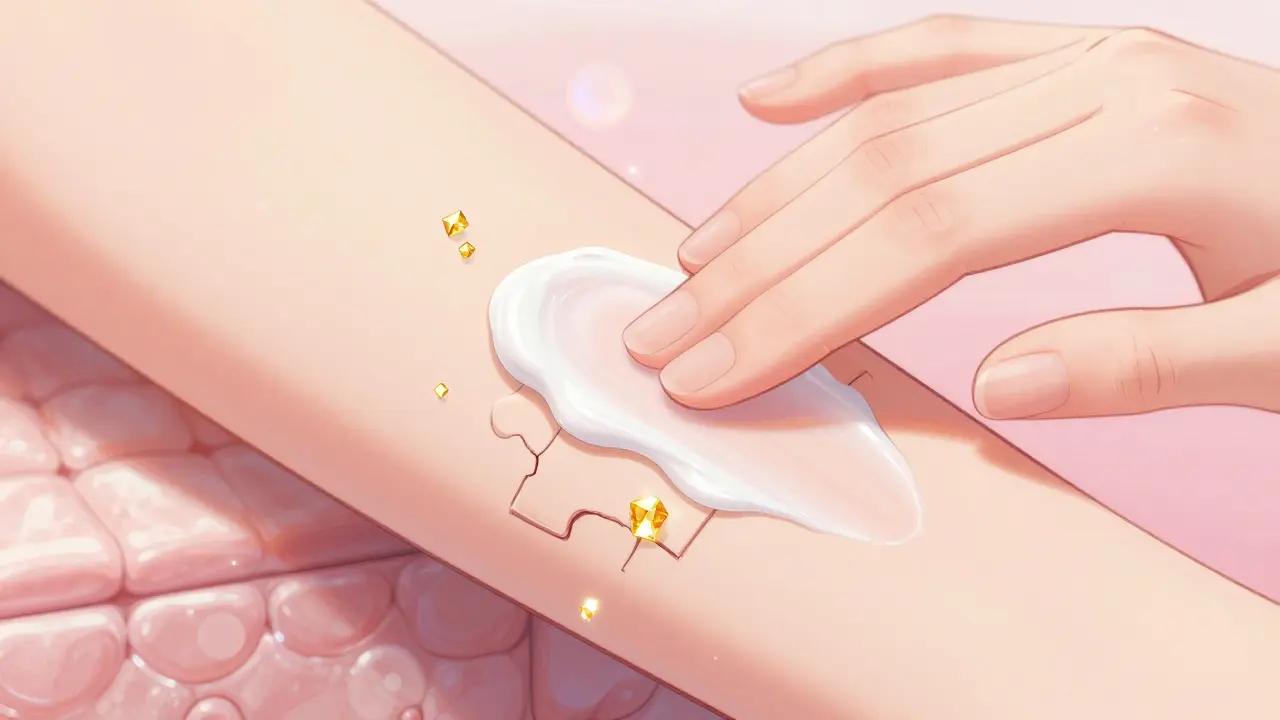
Imagine your skin is like a brick wall. In a healthy person, the "bricks" are skin cells, and the "mortar" is a rich mix of fats that keeps moisture in and irritants out. But for someone with eczema, that mortar is crumbling. When this barrier breaks down, water leaks out and allergens leak in, triggering the classic cycle of dryness, inflammation, and those maddening itches that keep you up at night. To stop this, we don't just need to treat the itch-we need to rebuild the wall.
To understand how to fix the skin, we have to look at what's actually missing. The outer layer of your skin, known as the stratum corneum, is where the magic happens. This layer relies on a precise blend of lipids: ceramides, cholesterol, and free fatty acids. Specifically, ceramides is a group of waxy lipid molecules that make up about 50% of the skin's intercellular matrix, acting as the primary sealant for the skin barrier.
People with atopic dermatitis (the medical term for chronic eczema) often have a 30-50% deficiency in these ceramides. This isn't just a minor dip; it's a structural failure. Without enough ceramides, your skin experiences a massive increase in transepidermal water loss. Essentially, your skin "leaks" hydration into the air, leaving it parched and vulnerable to everything from harsh soaps to pollen.
But here is the catch: you can't just slather on any cream and hope for the best. Research shows that the skin needs a specific 3:1:1 molar ratio of ceramides, cholesterol, and fatty acids to actually heal. If a product only has one of these ingredients, it might feel moisturizing, but it won't actually repair the structure. This is why barrier repair focusing on physiological lipids is a game-changer compared to old-school ointments.
When you start looking for products, you'll notice a big divide between what you buy at the drugstore and what a doctor prescribes. Traditional moisturizers, like plain petrolatum, act as "occlusives." They sit on top of the skin to stop water from leaving, but they don't add the building blocks the skin needs to fix itself.
Then there are the physiological lipid-based emulsions. Prescription options like EpiCeram and TriCeram are designed to mimic the skin's natural chemistry. Clinical trials have shown these can reduce water loss more effectively and provide sustained repair for over 72 hours. On the other hand, popular OTC brands like CeraVe have brought ceramide science to the masses, making it much easier for the average person to maintain their skin daily.
| Feature | Petrolatum/Occlusives | Ceramide-Dominant (OTC) | Physiological Lipids (Prescription) |
|---|---|---|---|
| Primary Action | Blocks water loss | Supplements lipids | Restores 3:1:1 ratio |
| Repair Speed | Slow/Surface level | Moderate | Faster structural recovery |
| Cost | Low | Moderate | High |
| Best Use Case | Temporary protection | Daily maintenance | Severe barrier failure |
You can buy the most expensive ceramide cream in the world, but if your bathing routine is wrong, you're essentially washing your progress down the drain. Many people with eczema avoid bathing because it seems to make the itch worse. The reality is that the *way* we bathe is usually the problem.
Experts now recommend the "soak and seal" technique. The goal is to hydrate the skin with water and then lock that water in immediately with a barrier-repair cream. If you wait too long after drying off, the water evaporates and takes your skin's internal moisture with it.

One of the biggest frustrations for people dealing with eczema is that barrier repair isn't an overnight fix. If you use a steroid cream, you might see a rash disappear in three days. But steroids don't fix the "brick and mortar" problem; they just turn off the alarm system (inflammation).
Ceramides work differently. They are rebuilding a physical structure. Most clinical data suggests it takes about 4 to 6 weeks of consistent, twice-daily application to see a significant difference in skin resilience. Some users report a feeling of "tightness" during the first week-this is often just the skin adjusting as the barrier begins to stabilize.
If you're in the middle of a severe flare, you'll likely still need your prescription medication to calm the inflammation. However, using ceramide repair alongside your treatment helps you transition away from steroid dependence over time. There are documented cases of patients reducing their steroid use from daily to once weekly after two months of a strict ceramide routine.
Not all "ceramide" products are created equal. Many companies put the word on the label for marketing, but use concentrations that are too low to actually change the skin's biology. Look for products that mention "essential lipids" or a balance of ceramides, cholesterol, and fatty acids.
Another common mistake is applying moisturizer only when the skin feels dry. For true barrier repair, consistency is everything. Your skin doesn't know it's "healing" unless it has a constant supply of these lipids. Think of it like a daily vitamin for your skin; skipping days allows the gaps in your barrier to reopen.
Yes, but ceramides are for maintenance and repair, not for stopping an acute attack. During a flare, you typically need anti-inflammatory medication (like corticosteroids) to reduce swelling and itching. Once the inflammation is under control, ceramide-dominant creams help prevent the next flare by sealing the barrier.
Not always. Natural ceramides and specific physiological formulations often show up to 40% greater repair capacity in trials compared to simple petrolatum or some synthetic "pseudo-ceramides." The key is the 3:1:1 ratio of lipids, regardless of the source.
Limit bathing to once daily. Over-bathing, especially with hot water and harsh soaps, strips the skin of its remaining natural lipids. Stick to the "soak and seal" method: 10-15 minutes of lukewarm water followed by immediate moisturizing.
Some users experience a temporary sensation of tightness or mild tingling during the first week of use. This is often a result of the skin barrier transitioning as the lipid layers are reorganized. If this persists or causes a rash, consult your dermatologist.
Lukewarm is best, specifically 32°C (90°F) or lower. High temperatures cause vasodilation, which can increase itching and further deplete the skin's natural oils, making the barrier even leakier.

Leave a comments