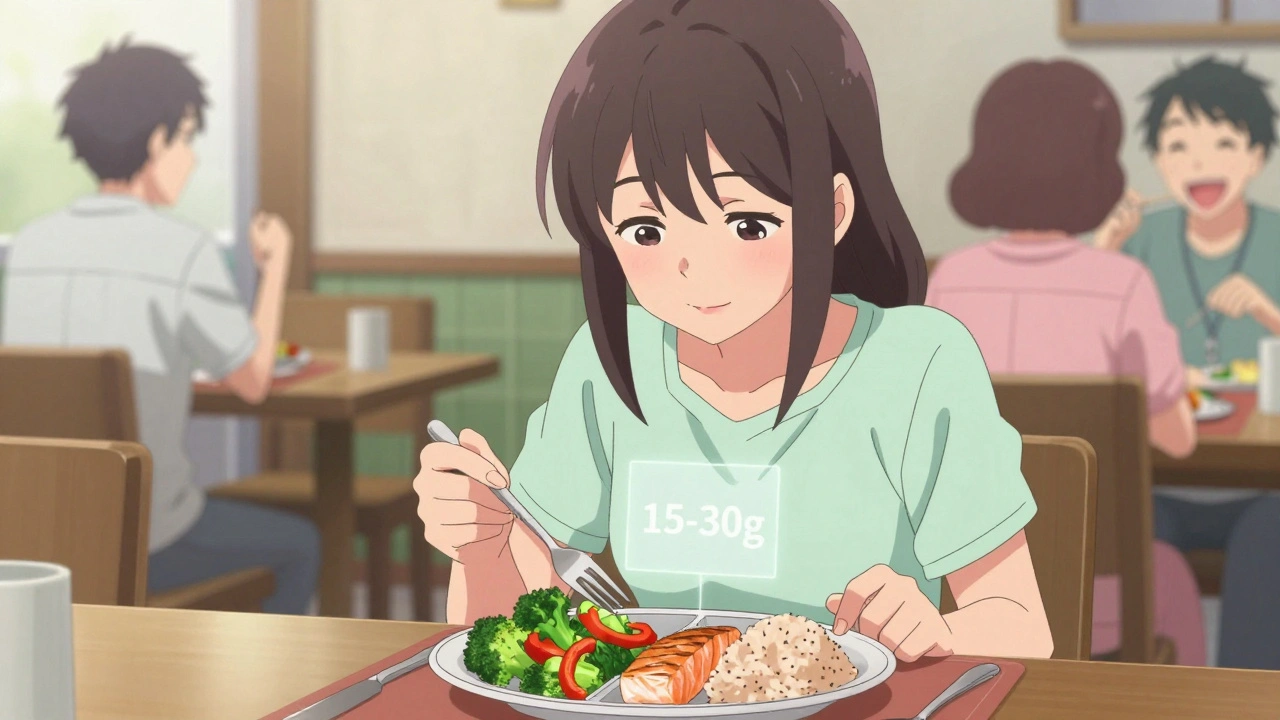
Going out to eat doesn’t have to mean giving up control over your blood sugar. With diabetes, dining at restaurants can feel like walking a tightrope-too many carbs, too much food, and suddenly your numbers are soaring. But it doesn’t have to be that way. The key isn’t avoiding restaurants altogether. It’s knowing what to look for, how to ask for what you need, and how to keep portions in check-even when the plate is huge.
Use the Plate Method, Not Guesswork
The
Diabetes Plate Method is one of the simplest, most reliable tools for eating out. You don’t need a calculator or an app. Just picture a nine-inch plate. Fill half of it with non-starchy vegetables: broccoli, spinach, green beans, peppers, or mushrooms. These add volume and fiber without spiking your blood sugar. Then, divide the other half: one quarter for lean protein like grilled chicken, fish, or tofu. The last quarter is for carbs-rice, pasta, potatoes, or bread. Stick to 15 to 30 grams of carbs in this section. That’s about half a cup of rice or one small roll. Most restaurants serve way more than that. Ask for half a side of rice instead of a full scoop. You’ll cut your carb intake by nearly half.
Watch Out for Hidden Carbs
Sauces, dressings, and glazes are the silent carb bombers. A tablespoon of teriyaki sauce? That’s 10 grams of carbs. Creamy Caesar dressing? Another 5 to 8 grams. Even "healthy" options like honey-glazed salmon or sweet-and-sour chicken can pack in 20 to 30 extra grams of carbs without you realizing it. Always ask for sauces and dressings on the side. Use just one or two tablespoons. Skip anything labeled "crispy," "breaded," "creamed," or "au gratin." Those words mean breading, butter, or cheese-each adding carbs and calories. Instead, choose grilled, baked, steamed, or roasted. If you’re unsure, ask the server what’s in the sauce. Most restaurants will tell you.
Portion Sizes Are Not Normal
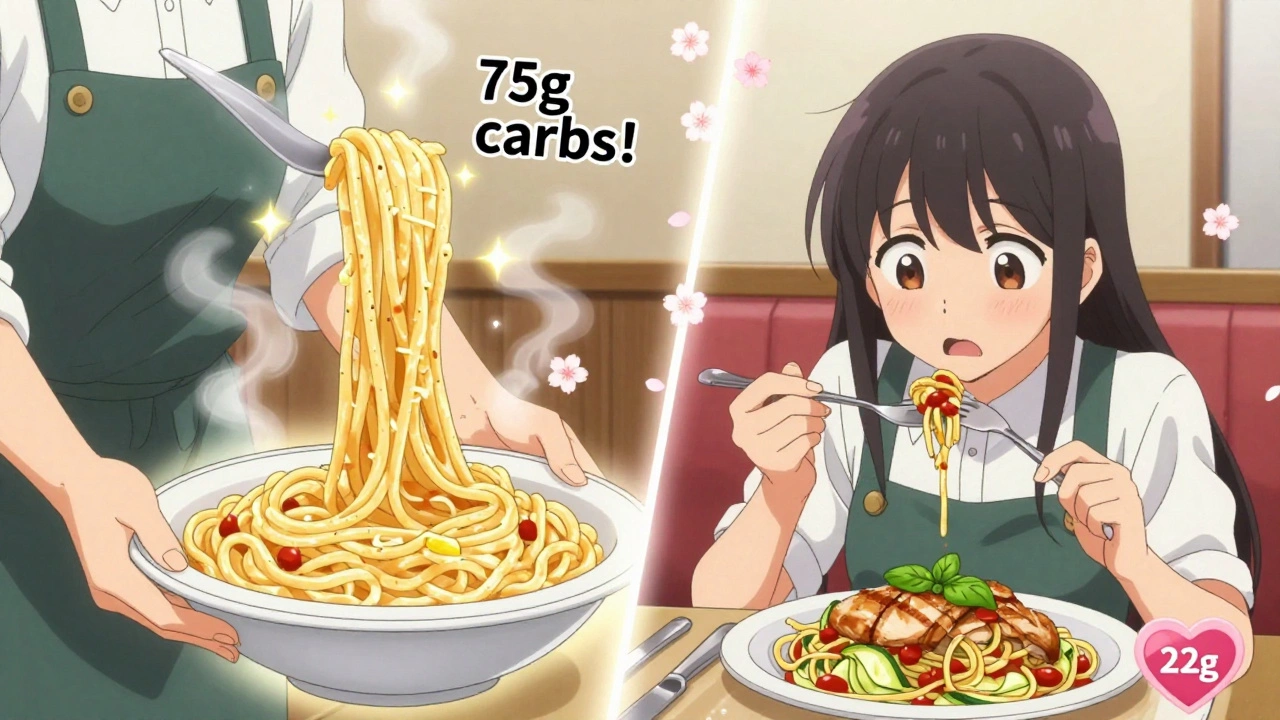
A typical restaurant entrée is two to three times the size of a standard meal. That’s not a meal-that’s a carb overload. A single serving of pasta at a restaurant can be 3 cups, equaling 75 grams of carbs. That’s more than most people with diabetes should eat in an entire day. Solution? Share your meal. Order an appetizer-sized portion as your main. Split an entree with a friend. Or, ask the server to box up half your food before bringing it to the table. That way, you’re not tempted to finish it all. Studies show people eat 30% more when food is right in front of them. Remove the temptation before it starts.
Fast Food Is a Minefield
Fast food chains make it easy to grab something quick, but they’re also packed with hidden carbs. A Big Mac? 46 grams of carbs. A chicken sandwich? Around 50 grams. Even a "salad" can turn into a carb bomb if it comes with croutons, crispy chicken, and creamy dressing. Stick to grilled chicken salads with vinaigrette on the side. Skip the fries-opt for a side salad or apple slices if available. Many chains now list nutrition info online. Check the menu before you go. Choose items under 45 grams of carbs. Some chains now label meals as "diabetes-friendly" or "low-carb." Look for those. But don’t trust the label alone-always double-check the carb count.
Asian, Mexican, and Italian-How to Navigate
Different cuisines have different traps. In Mexican restaurants, skip the chips and salsa. Order fajitas with grilled meat and extra vegetables. Skip the rice and beans, or ask for half a portion. In Italian places, avoid bread baskets and pasta. Choose grilled seafood or chicken with marinara sauce (not creamy Alfredo). Ask for spaghetti squash instead of pasta. In Asian restaurants, avoid fried rice, lo mein, and sweet sauces. Go for steamed fish or chicken with vegetables. Ask for brown rice instead of white, and request sauce on the side. Many stir-fries are cooked in sugar-heavy sauces. A simple "no sugar, no soy sauce" request can cut 20+ grams of carbs.
Plan Ahead, Don’t Guess
Don’t walk into a restaurant hungry and desperate. That’s when you order the first thing that looks good-and it’s usually the carb-heavy option. Check the menu online before you leave. Many restaurants post full nutrition info. Use apps like the ADA’s "Restaurant Ready" tool, which gives verified carb counts for over 15,000 menu items. Pick two or three options ahead of time. That way, when you’re there, you’re not making a snap decision. You’re sticking to your plan. People who plan ahead are 58% more likely to stick to their carb goals, according to clinical data from Parkview Health.
Bring Backup Supplies
Meal delays happen. A server forgets your order. The kitchen is backed up. If you’re on insulin, waiting too long can drop your blood sugar dangerously low. Always carry fast-acting glucose-glucose tablets, juice boxes, or even candy. Keep 15 grams of carbs on hand. That’s enough to treat a low without overdoing it. Also bring your glucose meter. Test before you eat and again two hours after your meal. That gives you real feedback on how your body reacts to restaurant food. Over time, you’ll learn which dishes spike you and which ones keep you steady.

It’s Okay to Ask for Changes
You’re not being difficult. You’re managing your health. Most servers are used to special requests. Ask for vegetables instead of fries. Ask for no butter on your steak. Ask for half the sauce. Ask for a to-go box right away. Most restaurants will accommodate you. If someone gives you a hard time, remember: your health comes first. You’re not asking for a favor-you’re asking for a standard, reasonable accommodation. And you’re not alone. Millions of people with diabetes do this every day.
What Works for One Might Not Work for You
Not everyone with diabetes reacts the same way to carbs. Some people can handle 60 grams of carbs per meal without a spike. Others see big jumps at 30 grams. Your carb target depends on your medication, activity level, age, and body. If you’re on insulin, you need to count carbs precisely. If you’re on metformin, you might have more flexibility. Talk to your doctor or a certified diabetes educator to find your personal carb range. Then, use restaurant meals as a chance to test and learn. Keep a log: what you ate, how many carbs, and your blood sugar two hours later. After a few outings, patterns will show up. You’ll start to know what works for you.
Success Isn’t Perfect-It’s Progress
You won’t nail every meal. Sometimes you’ll eat too much. Sometimes you’ll be surprised by hidden carbs. That’s okay. The goal isn’t perfection. It’s better choices over time. People who consistently use portion control and smart carb choices reduce their A1C by 0.8% to 1.2% in just six months, according to the American Diabetes Association. That’s a big win. It means less risk of nerve damage, kidney problems, and vision issues. Every time you choose grilled over fried, veggies over rice, or half a portion over a full plate-you’re protecting your future.
Can I still eat pasta when dining out with diabetes?
Yes, but be smart. A full serving of pasta at a restaurant can have 75+ grams of carbs. Ask for half a portion, or swap it for spaghetti squash or zucchini noodles. Choose tomato-based sauces over creamy ones. Always pair it with a large portion of vegetables and lean protein to slow down carb absorption.
Are salads always a safe choice for diabetics?
Not always. Many salads come with croutons, fried chicken, cheese, and creamy dressings that can add 30-50 grams of carbs. Stick to grilled chicken or shrimp, skip the toppings you don’t need, and ask for vinaigrette on the side. Use just one or two tablespoons.
Should I avoid buffets entirely?
Buffets are the hardest place to control portions. Unlimited access to bread, rice, pasta, and desserts leads to blood sugar spikes. Research shows average blood sugar levels rise 65 mg/dL higher after buffet meals compared to plated meals. If you go, fill your plate with vegetables and lean protein first. Limit yourself to one small serving of carbs. Don’t go back for seconds.
What if the restaurant doesn’t have low-carb options?
Even if the menu looks limited, you can still make smart swaps. Ask for grilled chicken or fish with extra vegetables instead of fries or rice. Skip the bread. Order a side salad with oil and vinegar. Most kitchens will accommodate these requests-even at steak houses or diners. Don’t be afraid to ask.
Do I need to count carbs every time I eat out?
If you’re on insulin, yes-carb counting is essential. If you’re on metformin or other non-insulin meds, you can use the plate method as a guide. But always check your blood sugar after meals to see how your body responds. Over time, you’ll get better at estimating without counting every gram.
How can I handle social pressure to eat more?
It’s common to feel awkward saying no. Try this: "I’m watching my portions for my health," or "I’m saving room for dessert later." Most people understand. You can also order first, so others don’t pressure you into matching their choices. Or, bring a friend who supports your goals. You’re not alone-68% of people with diabetes say they feel self-conscious eating out, but most diners are more focused on their own meals than yours.
What to Do Next
Start small. Pick one restaurant you go to often. Look up its menu online. Pick one dish that’s under 45 grams of carbs. Order it next time. Bring your glucose meter. Test before and after. Write down what happened. Do that once a week. In a month, you’ll feel more confident. In three months, you’ll have a list of go-to meals you love-and that won’t wreck your numbers. Eating out with diabetes isn’t about restriction. It’s about making choices that fit your life, your health, and your taste buds.

Annie Gardiner
6 12 25 / 20:54 PMOkay but have you ever tried eating at a place where the menu literally says "sugar-free" but the sauce has high-fructose corn syrup as #2 ingredient? I call bs on all these "smart carb" guides when restaurants are actively lying to us. I mean, who even decides what "healthy" means anymore? It’s all marketing. I’ve stopped trusting anything with a fork in it.
Rashmi Gupta
6 12 25 / 21:02 PMI grew up in Mumbai where we ate rice with every meal-and I’m 52, and my A1C is 5.6. Maybe the problem isn’t the carbs… maybe it’s the portion sizes and the stress. Or maybe Western medicine just wants us to fear food. I don’t know. But I stopped counting grams and started listening to my body. It works better.
Andrew Frazier
7 12 25 / 01:05 AMLMAO so now we’re supposed to ask for "no soy sauce" at a Chinese place? Next they’ll want us to bring our own chopsticks and demand the chef wear gloves. This is why America’s dying. You can’t fix biology with requests. Just eat steak and broccoli like a real adult. Stop being a victim. You want control? Take control. Or go back to eating Twinkies.
Mayur Panchamia
7 12 25 / 09:48 AMBro… you think you’re clever with your "plate method"? In India, we’ve been eating half a plate of rice with dal and veggies for centuries-no apps, no charts, no consultants. We didn’t need a 2000-word essay to know that fried food + sugar = diabetes. You’re overcomplicating it. Just eat like your ancestors did. Simple. Clean. Real. Not this… corporate wellness theater.
brenda olvera
8 12 25 / 11:36 AMI love this so much. I used to dread eating out but now I just ask for extra veggies and call it a win. Last week I had grilled salmon with roasted Brussels sprouts and no rice. I felt amazing. No guilt. No shame. Just good food. You’re not broken. You’re just learning. And that’s beautiful. Keep going. You’ve got this.
olive ashley
9 12 25 / 01:40 AMDid you know the ADA gets funding from Big Pharma and Big Food? That’s why their "diabetes-friendly" labels exist-to keep you buying their products. They want you dependent on glucose tablets and insulin. The real solution? Ketogenic diet. Zero carbs. No exceptions. They don’t want you to know that. They profit when you’re sick. Check the sources. Always.
Chris Park
10 12 25 / 10:37 AMLet’s be clear: the entire Western medical-industrial complex is built on managing symptoms, not curing disease. Carbs are not the enemy. Insulin resistance is. And insulin resistance is caused by chronic inflammation from processed oils, seed oils, and artificial sweeteners. Your "plate method" ignores the root cause. You’re treating the symptom with a napkin. Meanwhile, the real poison is in the vegetable oil they fry everything in.
Nigel ntini
12 12 25 / 05:04 AMOne of the most practical, compassionate guides I’ve read on this topic. Seriously. You’ve turned fear into strategy. I’ve shared this with my diabetes support group-everyone loved it. Keep writing. Your voice matters. And remember: progress over perfection. You’re not just managing diabetes-you’re reclaiming your joy in food. That’s powerful.