
When a teenager stops talking at the dinner table, or a 12-year-old starts sleeping all day and skipping school, it’s easy to blame moodiness or puberty. But when these signs last more than two weeks, they might be something deeper: depression. The numbers don’t lie-about 1 in 5 adolescents in the U.S. experience depression before age 18. And it’s not just about feeling sad. It’s about losing interest in friends, grades, hobbies, even food. It’s about hopelessness that doesn’t go away. The good news? There are real, evidence-backed ways to help. Two of the most important are family therapy and medications like fluoxetine and escitalopram. But which one works? And do they have to be used alone?
Why Family Therapy Isn’t Just "Talking It Out"
Family therapy for depression isn’t about blaming parents or forcing kids to say "I’m sorry." It’s about fixing broken patterns. Think of it like a team sport where one player is injured, but the whole team’s strategy is flawed. You can’t fix the player’s injury if the rest of the team keeps making the same bad passes.
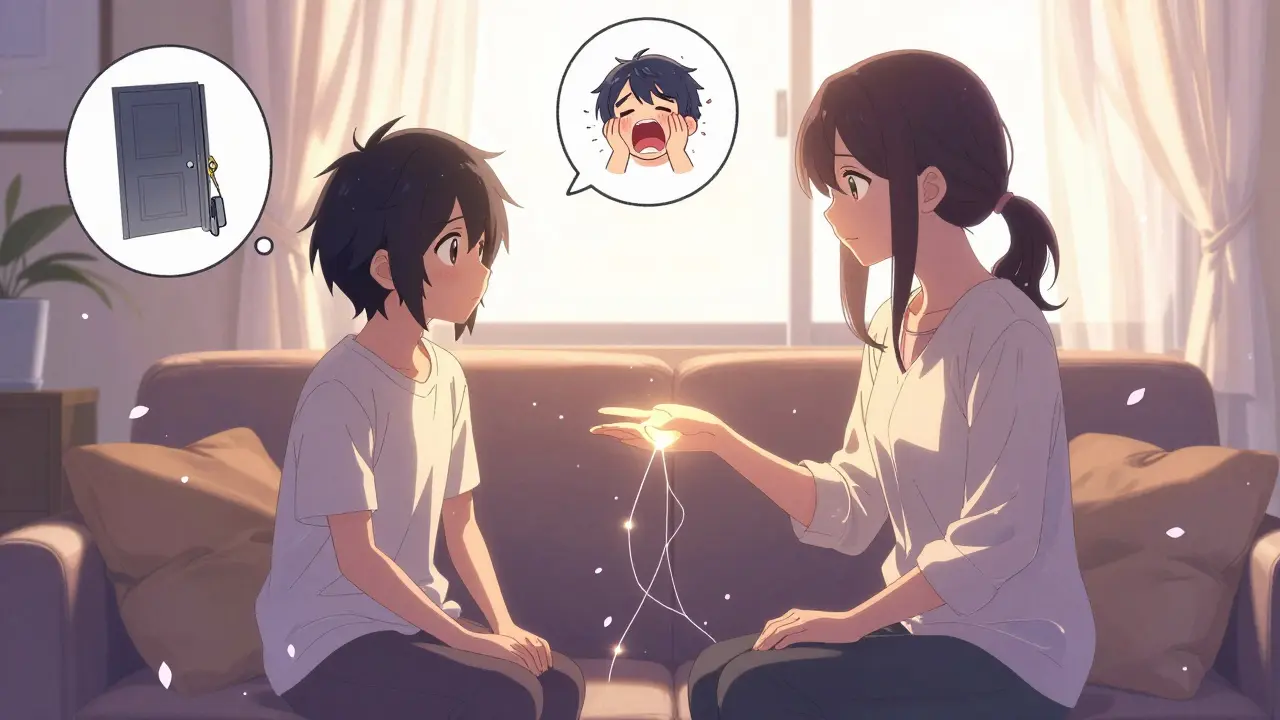
There are different types of family therapy, but two stand out for depression: Attachment-Based Family Therapy (ABFT) and Structural Family Therapy. ABFT focuses on repairing the emotional bond between parent and child. When kids feel unheard, unsafe, or unloved, their brains go into survival mode-and that’s a breeding ground for depression. ABFT helps parents learn how to listen without fixing, validate without judging, and reconnect without pressure.
A 2022 study from Jefferson Digital Commons showed that teens in ABFT had significantly lower suicidal thoughts after 12 weeks than those getting standard care. One mom in Philadelphia told her therapist, "I didn’t realize I was shutting her down every time she cried. I thought I was being strong. Turns out, I was making it worse."
Structural therapy, on the other hand, looks at power dynamics. Is the teenager running the household? Are parents too distant? Are siblings caught in the middle? A therapist might ask, "Who decides what time bedtime is? Who gets to say no to phone use?" If the answer is "no one," or "the teen," that’s a red flag. Healthy families have clear, flexible roles-not rigid control, not chaos.
When Medications Actually Help-And When They Don’t
The FDA has only approved two antidepressants for teens: fluoxetine (Prozac) and escitalopram (Lexapro). That’s it. Other SSRIs? Not backed by enough safety data in young people. Why? Because antidepressants can, in rare cases, trigger increased suicidal thoughts in the first few weeks. That’s why the FDA added a black box warning in 2004-the strongest warning they have.
But here’s the truth: for moderate to severe depression, these meds can be life-saving. A 2021 analysis of over 3,000 teens found that those on fluoxetine were twice as likely to show major improvement in mood and daily functioning compared to placebo. The catch? It takes 4 to 6 weeks to work. And during that time, weekly check-ins with a doctor are non-negotiable. Side effects? Headaches, nausea, trouble sleeping-common, but usually fade. About 1 in 3 teens stop taking them because of side effects, according to the Treatment for Adolescents with Depression Study.
Medication isn’t a magic pill. It doesn’t fix family fights, school stress, or loneliness. But it can take the edge off the fog so therapy can actually work. A 15-year-old who can’t get out of bed might not be able to sit through a therapy session. But after 3 weeks of fluoxetine? Suddenly, they can. That’s the bridge.
Combining Both: The Best of Both Worlds
The Agency for Healthcare Research and Quality found something clear: combining therapy and medication works better than either alone. Not just a little better-significantly better. Teens who got both fluoxetine and family therapy showed faster symptom relief, better school attendance, and lower relapse rates over a year.
Why? Because medication helps the brain function better. Therapy helps the environment around the brain get healthier. One changes chemistry. The other changes relationships. Together? They change outcomes.
A 2023 study from the Children’s Hospital of Philadelphia tracked 142 teens over 6 months. Those in combined treatment were 47% more likely to be in remission at 6 months than those in therapy alone. And here’s the kicker: families who did therapy together reported less conflict six months later-even if they didn’t start out that way.
What Doesn’t Work (And Why)
Not every family therapy session goes well. Some therapists take sides. Some parents show up but don’t listen. Some teens feel judged. In online forums like Reddit’s r/TeenDepression, 68% of teens said therapy helped-but only when both sides showed up honestly. The rest? "My mom just nodded and said she’d try harder. Then nothing changed."
Same with meds. If a teen is forced into taking pills without being involved in the decision, they’re more likely to stop. Or hide them. Or feel ashamed. The best results come when teens understand why they’re taking it, and feel like they have some control.
Also, don’t expect quick fixes. Family therapy usually takes 12 to 16 sessions. Medication takes weeks. If you’re looking for instant results, you’ll be disappointed-and that’s when people give up.
Real-Life Barriers No One Talks About
Let’s be real. Getting help isn’t just about what works-it’s about whether you can get it.
In rural areas, only 19% of families have access to trained family therapists. In cities? It’s 38%. Waitlists for certified therapists can be 12 to 18 months long. That’s a year. A kid can’t wait a year to feel better.
Cost is another issue. Insurance doesn’t always cover family therapy. And even if it does, finding a therapist who takes your plan? Hard. Meanwhile, generic fluoxetine costs about $10 a month. Escitalopram? Around $15. That’s affordable. But if you don’t have a doctor who knows how to prescribe it safely? You’re stuck.
Then there’s culture. In some families, mental health = weakness. Talking about feelings = drama. Therapy = admitting failure. That’s why some therapists now work with cultural liaisons-people who help bridge the gap between clinical advice and family values.
What’s New in 2026
The landscape is shifting fast. In 2024, the National Institute of Mental Health funded a $4.7 million push to expand ABFT into 15 community clinics. Early results? A 58% drop in suicidal thoughts in just 12 weeks.
Digital tools are helping too. Apps like SparkTorney now offer video sessions with family therapists-no commute, no waiting. Completion rates are 72% for online therapy versus 58% for in-person. That’s huge.
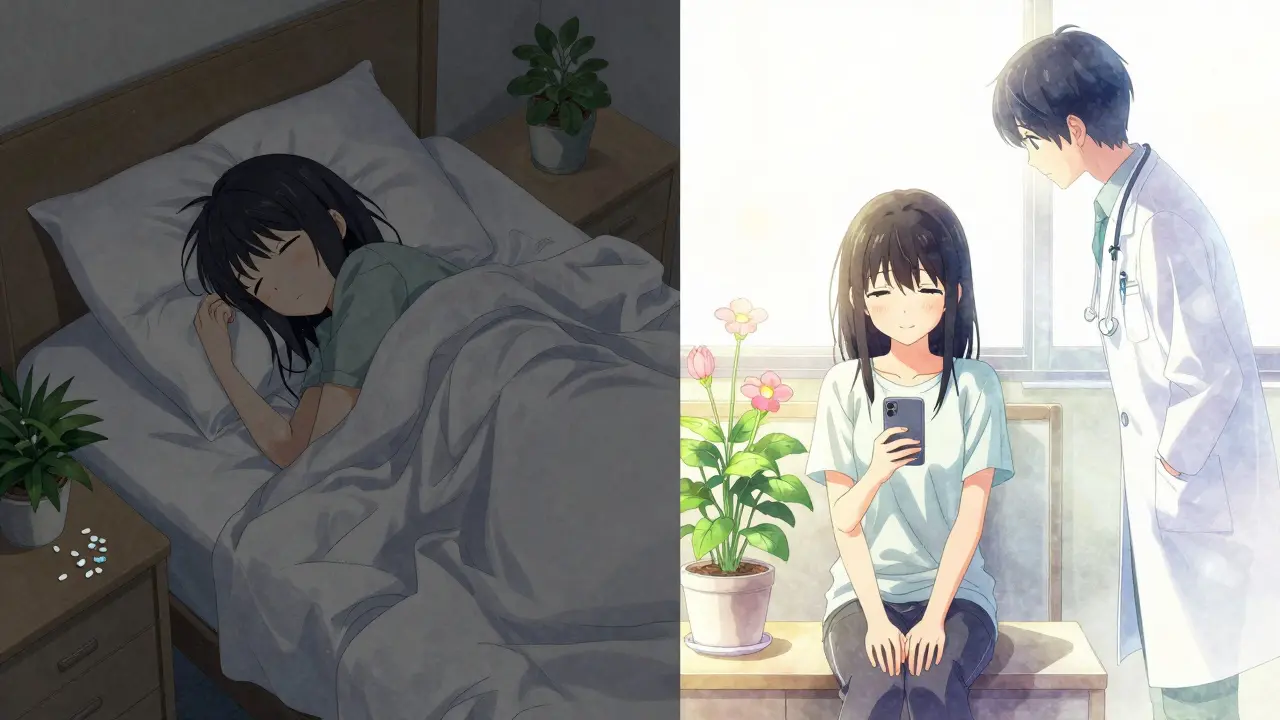
And the FDA approved reSET-O in 2023-a digital therapeutic that tracks mood, sleep, and social activity. It doesn’t replace therapy, but it gives therapists real-time data. A teen who says "I’m fine" but hasn’t left the house in four days? The app tells the therapist. That’s powerful.
What Parents and Teens Should Do Now
If you’re worried about a child or teen:
- Don’t wait. Depression doesn’t get better on its own.
- See a pediatrician or mental health provider. Ask: "Could this be depression?"
- Ask about screening tools. They’re quick, free, and accurate.
- If therapy is recommended, ask: "Is this evidence-based?" Look for ABFT, CBT, or structural family therapy.
- If meds are suggested, ask: "Is it fluoxetine or escitalopram?" Avoid anything else for now.
- Ask about monitoring. Weekly check-ins for the first 8 weeks are critical.
- Join a support group. NAMI and local youth mental health nonprofits offer free parent workshops.
Frequently Asked Questions
Can family therapy help even if the teen doesn’t want to go?
Yes-but it works best when the teen is willing. If they refuse, therapists often start with parents alone. They teach communication skills, set boundaries, and change how they respond to the teen’s behavior. Often, that shift alone improves the teen’s mood. Think of it like turning down the volume on a noisy room. The teen might not say "thank you," but they’ll start breathing easier.
Are SSRIs safe for teens?
Fluoxetine and escitalopram are the only two SSRIs approved for teens, and they’re considered safe when monitored. The FDA’s black box warning about increased suicidal thoughts applies mostly to the first 4-6 weeks. That’s why weekly check-ins are required. After that, the risk drops. For teens with moderate to severe depression, the benefits of treatment usually outweigh the risks. Never stop medication suddenly-always talk to the prescribing doctor.
How long does family therapy take?
Most programs last 12 to 16 weeks, with weekly 50-90 minute sessions. Some teens show improvement in as few as 8 sessions, especially with strategic or structural therapy. Attachment-based therapy (ABFT) usually takes longer-16 sessions or more-because it digs deeper into emotional wounds. Progress isn’t linear. There will be setbacks. That’s normal.
What if my family won’t participate?
Therapy can still help. Some therapists work with just the teen and one parent. Others offer individual therapy while gently encouraging family involvement. If no one else will come, focus on what you can control: your own communication, your boundaries, your support. Sometimes, one person’s change starts a ripple effect.
Can exercise or diet help with teen depression?
Yes-but not as a replacement. Regular physical activity (even 30 minutes of walking 4 days a week) has been shown to reduce depressive symptoms. Good sleep, less screen time before bed, and balanced meals help too. But if depression is severe, these alone won’t be enough. They’re support tools-not cures. Think of them like adding vitamins to a treatment plan, not replacing the medicine.

J. Murphy
25 03 26 / 10:17 AMMeh. I've seen this before. Teen gets sad, parents panic, throw meds and therapy at them. Most just need to get off their phone and play basketball. Depression isn't a disease. It's a phase.
Jesse Hall
26 03 26 / 04:09 AMThis is so important. 💙 I wish more parents knew how much just listening matters. My little sister started talking again after our mom stopped trying to 'fix' everything. Just sat with her. No advice. Just presence. Game changer.
Donna Fogelsong
26 03 26 / 14:15 PMThey're hiding the truth. SSRIs are part of a pharma agenda to chemically pacify youth. The FDA approval? A cover. Look at the funding sources. ABFT? Just another tool to make families dependent on the system. Wake up.
Sean Bechtelheimer
27 03 26 / 10:07 AMI know someone who took Prozac and started crying in the shower every day. Then they stopped. Then they got worse. They say it's 'rare' but it happened to my cousin. Who's counting? The system doesn't care. 😔
Kevin Y.
28 03 26 / 00:04 AMThank you for writing this with such clarity and compassion. The data is compelling, and the practical advice is exactly what families need. I’ve shared this with my local PTA. We’re organizing a free webinar with a licensed ABFT therapist next month. Let’s get this right.
Raphael Schwartz
28 03 26 / 16:31 PMMedication is for losers. Just tell kids to man up. We didn’t have all this depression crap when I was a teen. We had chores. We had discipline. We had respect. Now everything’s a mental health crisis. Pathetic.
winnipeg whitegloves
28 03 26 / 18:01 PMI’m from Winnipeg and we get 6 months of winter. I’ve seen teens here go dark. The ones who got help? They didn’t just get therapy or meds. They got a warm coat, a hot meal, and someone who didn’t look away. Sometimes the real treatment is just showing up. Not a session. Not a script. Just being there.
Marissa Staples
29 03 26 / 15:28 PMI wonder if we’re pathologizing normal adolescent pain. Isn’t it possible that depression in teens is less a chemical imbalance and more a rational response to a world that’s collapsing around them? Climate anxiety. Social media hell. Economic despair. Maybe they’re not broken. Maybe the system is.
Agbogla Bischof
29 03 26 / 20:52 PMIn Nigeria, we have zero access to ABFT. But we have church. And community. And elders who sit with you until the silence stops hurting. Medication? Sometimes available. Therapy? Rare. But connection? Always. You don’t need a clinic to hold space. You just need a human who refuses to look away.
Caroline Bonner
30 03 26 / 19:21 PMI just want to say thank you for mentioning the digital tools-SparkTorney and reSET-O are game-changers for families like mine. My daughter refused to go to therapy in person, but she’d sit with her tablet for 20 minutes every night and log her mood. The therapist saw patterns we never noticed. We went from silent to talking in 3 weeks. I cried when she said, 'I think I’m starting to feel like me again.'
Linda Foster
31 03 26 / 03:05 AMThis is a well-researched and thoughtfully structured overview. I appreciate the emphasis on evidence-based interventions and the acknowledgment of systemic barriers. I recommend this resource to all colleagues in pediatric care. A model of clinical communication.
Rama Rish
31 03 26 / 22:52 PMIn India, we say 'beta, padh le'-study hard. But no one says 'beta, kya hua?' What you feel matters. My cousin took escitalopram. We didn't know how. We just knew she stopped sleeping. Now she's in college. Still quiet. But smiling. Slow is still progress.
Kevin Siewe
2 04 26 / 21:40 PMI’ve been a therapist for 18 years. The combo of meds + family therapy works. Not because it’s trendy. Because it’s neurologically and relationally sound. The brain needs balance. The family needs structure. You can’t fix one without the other. Don’t let the noise drown out the science.
Chris Farley
2 04 26 / 23:31 PMDepression is a liberal invention. They want your kids on pills so they can control them. ABFT? That’s just social engineering with couches. Real men don’t cry. Real families don’t need therapists. Stop infantilizing youth.
Katie Putbrese
4 04 26 / 16:52 PMI’m a mom of two. My oldest is 17. She tried therapy. I went once. I cried. I didn’t know what to say. So I stopped. Now I feel guilty. But I also feel like they didn’t help me. They just told me to 'be better.' How? I need tools. Not guilt. I need someone to tell me how to talk to her without sounding like a robot.