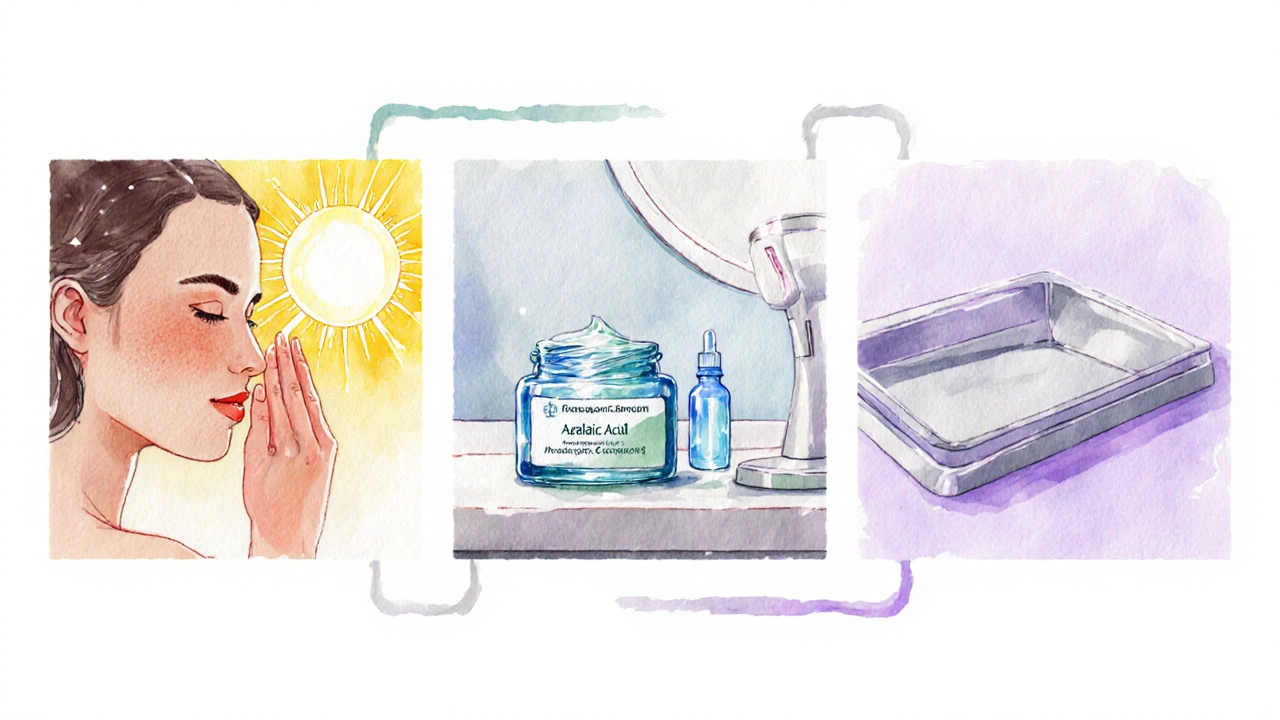
Non-negotiable foundation - daily broad-spectrum SPF 30+
Prescription creams targeting pigment production
Chemical peels, lasers for stubborn cases
| Agent | Mechanism | Effectiveness | Side Effects | Monthly Cost |
|---|---|---|---|---|
| Hydroquinone | Inhibits tyrosinase | 30-70% after 12 weeks | Irritation, rare ochronosis | $15-30 |
| Azelaic Acid | Blocks melanin & reduces inflammation | 20-40% in 8 weeks | Mild tingling, dryness | $20-40 |
| Retinoids | Speeds cell turnover | 15-35% after 12 weeks | Peeling, photosensitivity | $25-50 |
| Kojic Acid | Chemo-inhibits tyrosinase | 10-25% after 12 weeks | Allergic reactions | $10-25 |
Weeks 0-2: Start SPF 50+, wear hat daily, gentle cleanser
Weeks 2-8: Nightly 4% hydroquinone + 0.05% tretinoin; morning azelaic acid under sunscreen
Weeks 8-12: Assess response; add bi-weekly 20% glycolic peel if needed
Months 3-6: Continue sunscreen/topicals; consider Nd:YAG laser for deep pigment
Months 6-12: Maintenance phase - 2% hydroquinone 2-3 nights/week, daily sunscreen
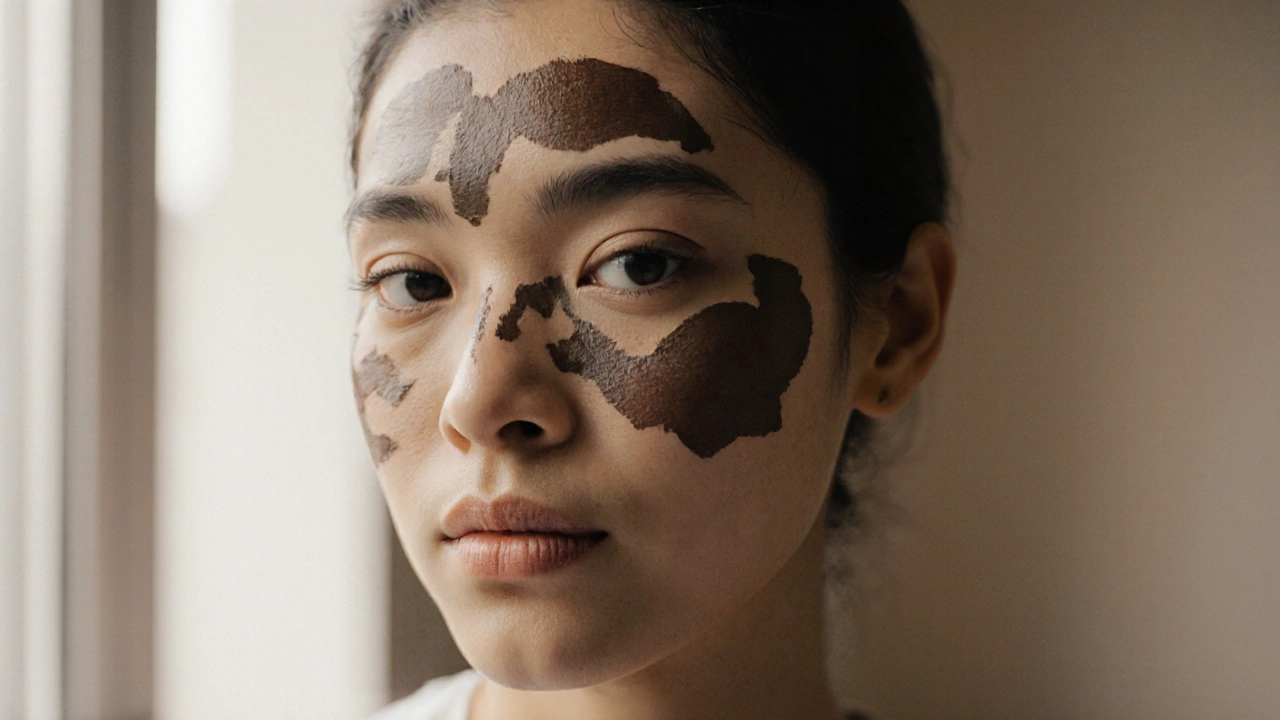
Melasma is a chronic skin condition that creates brown‑gray patches, most often on the cheeks, forehead, and upper lip. It tends to flare up with sun exposure, hormonal changes, or certain cosmetics. If you’re wondering whether it can be cured, the short answer is: it’s manageable, but true “cure” is rare. What you can get, however, is lasting control that keeps the spots from worsening and often makes them fade enough to be barely noticeable.
Melasma isn’t just a surface‑level pigment issue. It involves melanocytes (the cells that make melanin), hormonal receptors, and sometimes inflammation. That’s why stopping it with a single over‑the‑counter cream rarely works. The condition thrives on three main triggers:
Understanding these drivers helps you pick a treatment plan that tackles the root causes, not just the surface color.
Think of melasma care as a three‑step routine: protect, treat, and maintain.
Skipping any one of these steps can let the condition bounce back, even after months of visible improvement.
Broad‑spectrum sunscreen with at least SPF 30 is a must‑have. Look for formulations that shield against UVA, UVB, and visible light (HEVL). A good habit is applying sunscreen 15 minutes before heading out and re‑applying every two hours.
Some dermatologists also recommend physical barriers like wide‑brimmed hats, UPF clothing, and sunglasses. Even on cloudy days, up to 80% of UV rays can reach your skin, so make sunscreen a daily ritual.
Here’s a quick snapshot of the most common prescription‑strength ingredients. Each works by either inhibiting melanin production or speeding up skin turnover.
| Agent | Mechanism | Typical Effectiveness | Common Side Effects | Cost (US$) |
|---|---|---|---|---|
| Hydroquinone | Inhibits tyrosinase, the key enzyme in melanin synthesis | 30‑70% lightening after 12‑weeks | Irritation, rare ochronosis with long use | 15‑30 per month |
| Azelaic acid | Blocks melanin production & reduces inflammation | 20‑40% improvement in 8‑weeks | Mild tingling, dryness | 20‑40 per month |
| Retinoids (e.g., tretinoin) | Speeds up cell turnover, disperses melanin | 15‑35% after 12‑weeks | Peeling, photosensitivity | 25‑50 per month |
| Kojic acid | \nChemo‑inhibits tyrosinase | 10‑25% after 12‑weeks | Allergic reactions in sensitive skin | 10‑25 per month |
Most dermatologists start with a low‑strength hydroquinone (2‑4%) combined with a retinoid or azelaic acid. The combo boosts results while limiting irritation.
If topicals plateau after 3‑4 months, many turn to in‑office procedures. The choice depends on skin type, depth of pigment, and how quickly you want results.
Procedures can kick‑start fading, but they’re not a standalone cure. You still need daily sunscreen and a maintenance regimen to keep results.
Since estrogen can stimulate melanocytes, women often see melasma flare during pregnancy, while on oral contraceptives, or during hormone replacement therapy. If you suspect hormones are a trigger, talk to your dermatologist about alternative birth‑control options or adjusting hormone dosages. In some cases, switching to a non‑estrogenic contraceptive reduces new pigment formation.
This roadmap isn’t one‑size‑fits‑all, but it shows how combining protection, prescription creams, and occasional procedures can keep melasma under control for the long haul.
Sticking to a realistic, gradual plan beats quick‑fix shortcuts every time.
If you notice any of the following, book an appointment:
A board‑certified dermatologist can run a skin‑type assessment, rule out other pigment disorders, and tailor a regimen that fits your lifestyle and budget.
Melasma is unlikely to disappear forever, but with disciplined sun protection, the right melasma treatment, and occasional professional procedures, most people achieve a stable, significantly lighter complexion. Think of it as a marathon, not a sprint - consistency beats intensity.
Occasionally, pregnancy‑related melasma fades after hormones normalize, but most cases persist. Even if it lightens on its own, protecting the skin prevents rebound.
Short‑term (up to 4‑6 months) at 2‑4% is considered safe under dermatologist supervision. For longer periods, doctors often rotate with azelaic acid or retinoids to avoid ochronosis.
Ingredients like licorice extract, mulberry, or vitamin C can brighten skin modestly, but they rarely match prescription strength. Use them as adjuncts, not replacements.
Initially every 4‑6 weeks to gauge response, then every 3‑6 months for maintenance and to adjust sunscreen or treatment concentration as needed.
Improper settings, especially on darker skin, can trigger post‑inflammatory hyperpigmentation, which can look like melasma flare‑ups. Choose an experienced dermatologist who uses melasma‑friendly laser parameters.

Harshitha Uppada
4 10 25 / 17:15 PMLife is just a flicker on the skin, a reminder that perfection is a myth. If you think a cream will erase the cosmos, you’re dreamin.
Randy Faulk
4 10 25 / 20:02 PMIn clinical practice, a systematic approach integrating rigorous photoprotection, evidence‑based topicals, and judicious procedural interventions yields the most sustainable remission of melasma. The literature supports the use of 4% hydroquinone combined with a retinoid for synergistic melanin inhibition, while azelaic acid offers a tolerable alternative for sensitive epidermis. Moreover, periodic assessment every six weeks is essential to fine‑tune concentrations and mitigate adverse effects.
Brandi Hagen
4 10 25 / 22:49 PMEmbarking on the melasma odyssey is akin to navigating a labyrinth of hormonal tides, UV assaults, and the ever‑looming specter of societal expectations. 🌞 The first decree is unyielding sun protection; without SPF 50+ the entire regimen crumbles like a sandcastle at high tide. Next, the alchemy of hydroquinone and tretinoin forms the backbone of pigment suppression, acting like a double‑edged sword that carves out darkness while coaxing turnover. Azelaic acid steps in as the diplomatic envoy, soothing inflammation and curbing melanin synthesis without the harsh sting of higher‑dose agents. Retinoids, though notorious for peeling, accelerate epidermal renewal, ushering away stubborn chromophores with relentless vigor. For those whose skin type whispers caution, kojic acid offers a milder, albeit slower, descent into lightness, a humble foot soldier in the pigment war. 👩⚕️ However, patience is the cardinal virtue; dismissing a treatment after eight weeks is akin to abandoning a marathon at the three‑mile mark. The procedural arsenal-chemical peels, Q‑switched Nd:YAG lasers, and microneedling-serves as the tactical strike when topicals plateau, delivering concentrated assaults on deep melanin reservoirs. Yet, these interventions demand an experienced hand; misapplied laser settings can flare melasma into a vengeful hyperpigmented nightmare. Hormonal fluctuations, particularly estrogen spikes during pregnancy or contraception, act as hidden commanders, rallying melanocytes into rebellion; consulting a dermatologist about alternative hormonal regimens can dismantle this covert command. Consistent application of broad‑spectrum sunscreen remains the sentinel, guarding against both UVA and visible light, the stealthy aggressors that many overlook. Lifestyle tweaks-wearing wide‑brimmed hats, seeking shade, and steering clear of photosensitizing cosmetics-fortify the defensive perimeter. When the journey feels arduous, remember that melasma is a chronic condition, not a fleeting blemish, demanding a marathon mindset rather than a sprint mentality. 🎯 The ultimate victory lies not in a mythical cure but in achieving a stable, aesthetically pleasing equilibrium where the pigment recedes into the background of daily life. 🌟 Stay vigilant, adapt your regimen, and the shadows will gradually surrender to the light.
isabel zurutuza
5 10 25 / 01:35 AMWow another sunscreen reminder because we clearly forgot the sun exists.
James Madrid
5 10 25 / 04:22 AMYou’ve got a solid plan laid out-start with protection, then layer the actives, and finally assess for procedural tweaks. Stick to the schedule and track progress weekly; consistency beats intensity every time. If irritation shows up, dial back the concentration rather than quitting altogether.
Justin Valois
5 10 25 / 07:09 AMHonestly the "systematic approach" sounds like a corporate buzzword parade, and anyone who's tried hydroquinone knows it can roast your face like a summer grill.
Jessica Simpson
5 10 25 / 09:55 AMWhile the epic description captures the drama, it's worth noting that not every patient tolerates aggressive combos-some need a gentler start with azelaic acid alone before layering retinoids.
Ryan Smith
5 10 25 / 12:42 PMSure, and the "secret agenda" behind SPF is probably just Big Pharma trying to sell us more lotion, right?
John Carruth
5 10 25 / 15:29 PMEven if the language feels like corporate jargon, the underlying science still holds-hydroquinone remains a gold standard when monitored properly. Patience and proper follow‑up can transform the perceived burn into measurable lightening. Remember, the goal is steady progress, not instant miracles. Keep communicating with your dermatologist to fine‑tune the regimen.
Melodi Young
5 10 25 / 18:15 PMGreat rundown!
Tanna Dunlap
5 10 25 / 21:02 PMWhile enthusiasm is appreciated, glamorizing aggressive skin treatments borders on enabling a culture of perpetual self‑scrutiny. We should promote realistic expectations over quick fixes.
Troy Freund
5 10 25 / 23:49 PMIn the grand tapestry of our bodies, melasma is just a fleeting pattern, a reminder that impermanence is the only constant. Embrace the journey, not just the destination. A thoughtful routine respects both science and the subtle art of self‑acceptance.
Mauricio Banvard
6 10 25 / 02:35 AMAnd don't forget the hidden nano‑particles in sunscreen that some claim are part of a covert agenda to control skin pigmentation-maybe that's why melasma acts up after a "protective" day.
Paul Hughes
6 10 25 / 05:22 AM😉
Mary Latham
6 10 25 / 08:09 AMHonestly, I think the whole melasma hype is overblown; a lot of people just need to chill and stop obsessing over every little spot.
Marie Green
6 10 25 / 10:55 AMI hear you I’ve seen many feel the same way. Take it easy on yourself and maybe try a simple routine.