
Ever wonder how generic drug companies get their products approved so fast-sometimes in half the time it takes for brand-name drugs? The secret isn’t secret anymore: it’s called a bioequivalence waiver. And yes, under the right conditions, the FDA will let you skip human trials entirely. No blood draws. No volunteers. No six-month clinical studies. Just a few well-designed lab tests and a solid science case. This isn’t a loophole. It’s science-backed regulation.
What Exactly Is a Bioequivalence Waiver?
A bioequivalence waiver, or biowaiver, is when the FDA allows a drugmaker to prove two products are therapeutically equivalent without running an in vivo (in the body) study. Normally, to show a generic drug works like the brand version, companies must give it to healthy volunteers, take blood samples, and measure how much drug enters the bloodstream over time. It’s expensive. It’s slow. And for some drugs, it’s completely unnecessary.
The FDA says: if you can prove through lab testing that your drug dissolves the same way as the original, under conditions that mimic the human gut, then you don’t need to test it in people. This only works for a narrow set of drugs, but those drugs make up a huge chunk of the generic market.
Why Does This Exist?
Imagine you’re making a generic version of a common painkiller like ibuprofen. The original drug dissolves completely in 15 minutes. Your version? Same active ingredient. Same dose. Same excipients. Same dissolution profile. Why put 24 people through blood draws to prove it’s the same? It’s not just wasteful-it’s unethical.
The FDA’s goal isn’t to make things harder for generic companies. It’s to make sure patients get safe, effective drugs without unnecessary testing. A single in vivo bioequivalence study costs between $250,000 and $500,000. It takes 6 to 12 months. For a company making dozens of generics, that adds up fast. Biowaivers cut that cost and time dramatically. In 2022, over 18% of all generic drug applications used a biowaiver. That’s not a small fraction-it’s a major part of how generics stay affordable.
Which Drugs Qualify?
Not every drug can get a waiver. The FDA’s system is built around the
Biopharmaceutics Classification System (BCS) a scientific framework that categorizes drugs based on solubility and intestinal permeability. There are four classes, but only two are eligible for biowaivers:
- BCS Class I: High solubility, high permeability. These are the golden tickets. Drugs like atenolol, metoprolol, and levothyroxine fall here. If your drug is in this class, and your dissolution profile matches the brand within strict limits, you’re likely eligible.
- BCS Class III: High solubility, low permeability. This is trickier. The drug doesn’t cross cell membranes easily, so absorption depends on concentration, not permeability. The FDA will consider a waiver here-but only if your drug has the exact same excipients (fillers, binders, coatings) as the reference product. No exceptions.
What’s Required to Get Approved?
It’s not enough to say, “Our drug dissolves like the brand.” You have to prove it. The FDA requires:
- Dissolution testing in at least three pH environments: pH 1.2 (stomach), pH 4.5 (upper intestine), and pH 6.8 (lower intestine). You must test 12 units of each formulation.
- Timing. Samples must be taken at 10, 15, 20, 30, 45, and 60 minutes. This captures how the drug releases over time.
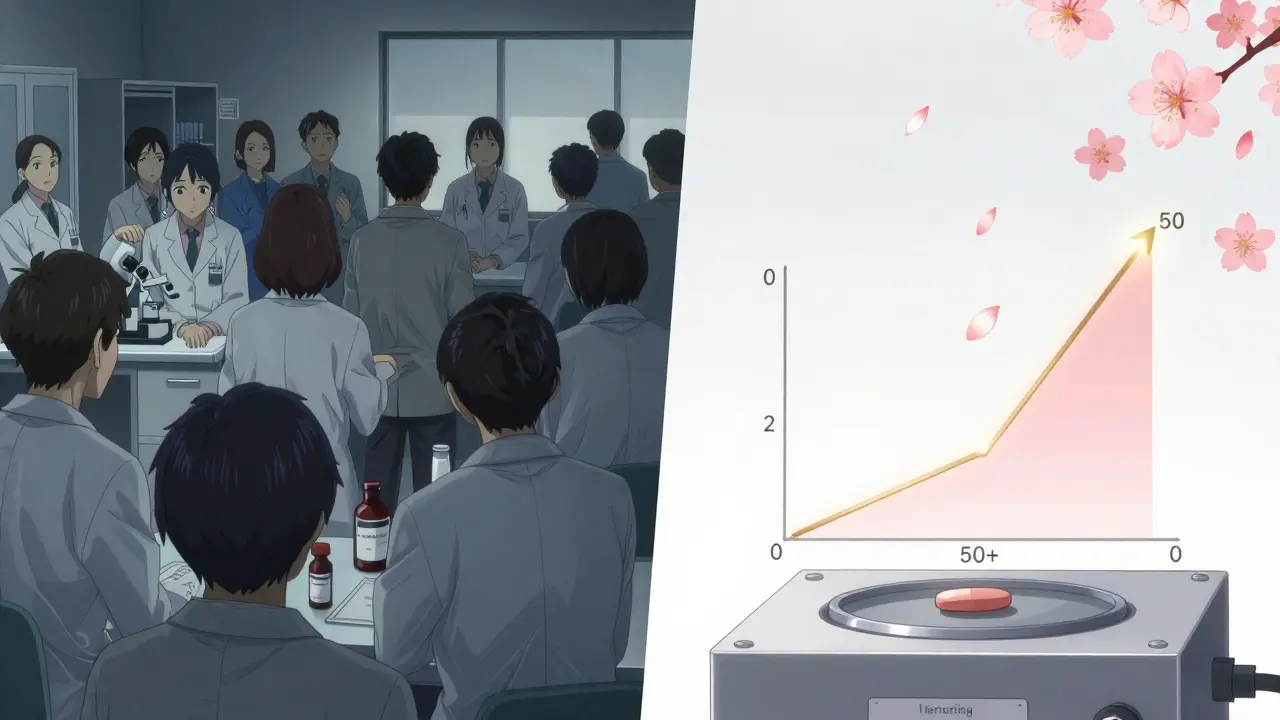
- f2 similarity factor. This statistical tool compares your drug’s dissolution curve to the brand’s. For a waiver, the f2 value must be 50 or higher. Think of it as a match score-50+ means the curves are practically identical.
- BCS classification proof. You must show your drug meets solubility and permeability thresholds. For solubility: the highest dose in the lowest pH must dissolve in 250 mL or less. For permeability: at least 90% of the dose must be absorbed in humans.
For Class III drugs, you also need to prove absorption isn’t affected by where in the gut the drug dissolves. If your drug’s absorption changes depending on whether it hits the duodenum or ileum, you’re out of luck.
What Doesn’t Qualify?
Here’s where most companies get tripped up:
- Modified-release drugs. Time-release pills, patches, or capsules? No waivers. The science isn’t there yet.
- Narrow therapeutic index drugs. These are drugs where a tiny difference in dose can cause toxicity or failure. Think warfarin, lithium, or digoxin. The FDA is extremely cautious here. Only a few exceptions exist-like certain antiepileptics under special guidance.
- Drugs with complex excipients. If your generic uses a different coating, binder, or stabilizer than the brand-even if it’s chemically similar-you’ll need an in vivo study.
- BCS Class II and IV. Low solubility? Forget it. These drugs rely on complex formulations to dissolve. You can’t skip human testing here.
How Common Are Waivers?
In 2022, 18% of all ANDA submissions for solid oral dosage forms used a biowaiver. That’s up from 12% in 2018. The trend is clear: more companies are using them, and the FDA is approving more of them. Of the applications that included complete data, 78% were approved. That’s a high success rate-if you do the work right.
One generic manufacturer reported saving $4.2 million over three years by using 12 biowaivers. Each waiver cut approval time by 8 to 10 months. That’s not just cost savings-it’s faster access for patients.
Why Do Some Waivers Get Rejected?
The biggest reason? Poor dissolution methods. In 2021, 35% of rejected applications failed because the dissolution test couldn’t tell the difference between formulations. If your method can’t detect a 5% difference in dissolution, the FDA won’t trust it. They need a test that’s sensitive enough to catch formulation flaws-without being too strict.
Another issue? Inconsistent interpretation. A 2022 survey by PhRMA found 42% of companies felt FDA review divisions applied the rules differently. One division might approve a waiver another rejects, even with identical data. That’s why the FDA recommends early consultation through its Pre-ANDA program. Companies that meet with regulators before submitting see a 22% higher approval rate.
What’s Next?
The FDA isn’t stopping here. In 2023, they launched a pilot program to explore biowaivers for some narrow therapeutic index drugs. They’re also working on expanding eligibility for BCS Class III drugs with more flexible excipient rules. By 2027, analysts predict biowaivers could be used in 25-30% of all generic applications.
But challenges remain. Over 85% of complex generics-like inhalers, injectables, or topical creams-still can’t use biowaivers. The science for those isn’t mature enough. Right now, it’s all about solid oral tablets and capsules. And even within that, only the simplest drugs qualify.
Who Benefits?
Patients get faster access to affordable drugs. Generic manufacturers save millions and bring products to market faster. Regulators reduce unnecessary human testing. Everyone wins-when the science holds up.
It’s not magic. It’s not a shortcut. It’s a carefully designed, evidence-based pathway. And for the right drugs, it’s the most efficient way to prove they work the same way.
Can a bioequivalence waiver be used for liquid or injectable drugs?
No. Bioequivalence waivers are currently limited to immediate-release solid oral dosage forms-like tablets and capsules. Liquids, injectables, inhalers, and topical products don’t have validated in vitro methods that reliably predict in vivo performance. The science behind those delivery systems is more complex, and the FDA has not approved biowaivers for them.
How long does it take to develop a dissolution method for a biowaiver?
Developing a discriminatory dissolution method typically takes 2 to 3 months for experienced teams. After that, you need another 1 to 2 months to run comparative studies across multiple pH conditions and validate the method. The whole process, from start to submission, often takes 6 to 9 months.
Is the f2 similarity factor the only criterion for approval?
No. The f2 value must be 50 or higher, but it’s not enough on its own. You must also prove the drug meets BCS Class I or Class III criteria, use physiologically relevant dissolution media, test at least 12 units per formulation, and match the excipient profile exactly (for Class III). The f2 score is just one part of a larger scientific package.
Why doesn’t the FDA allow biowaivers for all drugs?
Because not all drugs behave predictably in the body. For drugs with low solubility (BCS Class II/IV), absorption depends on complex factors like bile, gut motility, and food effects. In vitro tests can’t capture that variability. Only for high-solubility, high-permeability drugs (Class I) is dissolution the rate-limiting step-making lab tests reliable predictors of performance.
Can a biowaiver be used for a new drug application (NDA)?
Yes, but only in limited cases. The FDA allows biowaivers for NDAs when a sponsor is making a minor formulation change after the original drug’s bioavailability has already been established in vivo. It’s not used to skip the first in vivo study, but to avoid repeating it for small changes.
Are biowaivers accepted internationally?
Yes. The International Council for Harmonisation (ICH) published Guideline M9 in January 2021, which aligns U.S., EU, and Japanese standards for BCS-based biowaivers. Most major regulatory agencies now accept the same framework, making global submissions more consistent.
Do I need a specialist to apply for a biowaiver?
Highly recommended. Successful applications require deep expertise in biopharmaceutics, dissolution method development, and regulatory writing. Teams with at least 5 years of formulation experience have significantly higher approval rates. Many companies hire consultants or partner with labs specializing in BE testing to get it right the first time.
Final Thought
Bioequivalence waivers aren’t about cutting corners. They’re about using smarter science. For drugs that dissolve predictably and absorb reliably, human trials add no value-only cost and delay. The FDA’s system rewards companies that invest in quality science, not just paperwork. And that’s how we get better, cheaper medicines faster.

Callum Duffy
4 03 26 / 21:31 PMThe precision of the FDA's framework here is genuinely impressive. It's rare to see regulation that's both scientifically rigorous and practically pragmatic. The BCS classification system is elegant in its simplicity-targeting only those drugs where dissolution is truly the rate-limiting step. No emotional appeals, no bureaucratic padding. Just clean science.
Levi Viloria
6 03 26 / 15:17 PMIt's kind of beautiful how this system rewards good formulation work. You can't cut corners here-you have to do the math, run the tests, prove it. And when you do, the FDA trusts you. That’s a rare kind of mutual respect between industry and regulators.
Dean Jones
6 03 26 / 23:53 PMLet’s be real-this isn’t about saving money. It’s about eliminating unnecessary human experimentation. We’re talking about drugs like atenolol, where we’ve known the pharmacokinetics for decades. Putting healthy volunteers through blood draws just to confirm what we already know via dissolution profiles is not just inefficient-it’s ethically questionable. The FDA’s stance here reflects a maturity in regulatory science that most agencies haven’t reached yet. The fact that 78% of properly submitted waivers get approved speaks volumes about how well the system works when applied correctly. It’s not a loophole. It’s a refinement.
Helen Brown
7 03 26 / 22:24 PMSo you're telling me they just let drug companies skip human testing? What's next? Letting them skip the FDA entirely? This sounds like corporate greed dressed up as science.
John Cyrus
9 03 26 / 10:15 AM18% of generics using waivers? That's not progress that's a red flag. You think they're all clean? Half of them are cutting corners with fake dissolution curves. I've seen the reports. The FDA's too cozy with Big Pharma now. This isn't science it's a backdoor for cheap knockoffs
Tobias Mösl
10 03 26 / 05:43 AMLet me break this down for you. The FDA isn’t being smart-they’re being lazy. They’re outsourcing patient safety to a statistical f2 score. You know what happens when you rely on dissolution curves alone? You get drugs that work in the lab but fail in the gut. I’ve seen it. I’ve reviewed the post-market adverse event data. There’s a spike in therapeutic failures in Class III waivers where excipients were "similar" but not identical. The FDA is gambling with lives under the guise of efficiency. And don’t even get me started on how they approve waivers for drugs with different fillers but claim "no impact". Bullshit. It’s all bullshit.
tatiana verdesoto
11 03 26 / 14:24 PMThis is actually one of the most patient-centered policies I’ve seen in pharma regulation. It’s not just about cost-it’s about reducing burden. Imagine being a parent whose child needs a daily generic thyroid med. Every month they wait because of a redundant blood draw? That’s real suffering. This system lets those meds reach people faster without compromising safety. The science is solid, the data is transparent, and the outcome is human. That’s what good policy looks like.
Ethan Zeeb
13 03 26 / 04:14 AMThe real issue isn’t the waiver system-it’s the lack of enforcement. Companies that get waivers should be subject to random, unannounced audits of their dissolution labs. Right now, there’s zero oversight after approval. If the FDA truly believes in this, they should require quarterly public reporting of dissolution data from all waiver-approved products. Transparency is the only check we have.
Lebogang kekana
13 03 26 / 07:35 AMThis is the kind of innovation we need more of! Imagine if every industry had this level of smart regulation-no unnecessary red tape, just science and results. The FDA is leading the way. More countries should copy this. We’re talking about millions saved and lives improved. This isn’t just policy-it’s progress.
Raman Kapri
13 03 26 / 11:42 AMThe BCS framework is fundamentally flawed. It assumes dissolution rate equals bioavailability. But in populations with GI motility disorders, irritable bowel, or post-bariatric anatomy, this assumption collapses. You cannot generalize across all human physiology with a single dissolution curve. The FDA’s approach is reductionist. It ignores the diversity of human biology. This is not science-it is industrial standardization disguised as medical rigor.
Tildi Fletes
14 03 26 / 22:17 PMFor those unfamiliar with the f2 similarity factor: it’s calculated using the mean dissolution at each time point, comparing the test and reference formulations. A value of 50+ indicates similarity with 90% confidence under the assumption of normal distribution. The method is validated by the ICH and has been peer-reviewed in journals like AAPS PharmSciTech. It’s not a magic number-it’s a statistically robust tool, and when combined with BCS classification and physiologically relevant media, it’s highly predictive. Many academic labs have replicated these results with >95% concordance to in vivo data. The skepticism is understandable, but the evidence is overwhelming.
Divya Mallick
15 03 26 / 18:06 PMLet me tell you something-this is why America is falling behind. You think this waiver nonsense is innovation? It’s surrender. We used to make the best drugs in the world. Now we’re letting Indian and Chinese labs skip human trials with some pH buffer test and call it science. They don’t even have proper QA systems. And the FDA just says "okay"? This isn’t progress-it’s cultural surrender. We’re outsourcing safety because it’s cheaper. And when the next crisis hits-when someone dies because their generic didn’t dissolve right-you’ll see who’s to blame. Not the company. Not the lab. The regulators who traded integrity for efficiency. This is how empires die.