
This calculator estimates your risk of respiratory depression when mixing alcohol and opioids based on medical research. Remember: no amount of alcohol is safe when taking opioids.
When you mix alcohol and opioids, you're not just doubling the risk-you're multiplying it. The combination doesn't just make you feel more relaxed or sleepy. It can shut down your breathing. Completely. And fast.
The U.S. Food and Drug Administration (FDA) put out a black-box warning in 2016-the strongest possible alert-for all prescription opioids. It said clearly: don’t drink alcohol while taking them. That warning wasn’t based on theory. It came from hard data. In 2022, over 107,000 people in the U.S. died from drug overdoses. Of those, more than 81% involved multiple substances, and alcohol was a major player in nearly half of all opioid-related deaths.
Even small amounts matter. A study showed that 20mg of oxycodone alone reduced breathing by 28%. Add alcohol to reach a blood alcohol level of just 0.1%-that’s the legal limit for driving in most U.S. states-and breathing dropped another 19%. Worse, apnea episodes-times when breathing stops completely-became more frequent, especially in older adults.
Even methadone, used in addiction treatment, becomes deadly when mixed with alcohol. One study found that people on methadone who drank alcohol had 4.6 times the risk of fatal overdose compared to those who didn’t drink.
Fentanyl is especially tricky. Its potency means even tiny amounts can be lethal. When alcohol is in the system, the body’s ability to handle even a normal dose of fentanyl drops sharply. In Texas, alcohol co-involvement in fentanyl-related deaths jumped from 9% in 2010 to 17% by 2019. That’s a near doubling in less than a decade.
Here’s the sequence:
What’s terrifying is that people often don’t realize they’re in danger until it’s too late. There’s no dramatic gasping or struggle. People just slip into unconsciousness. Their breathing slows, then fades. If no one intervenes, they die quietly.
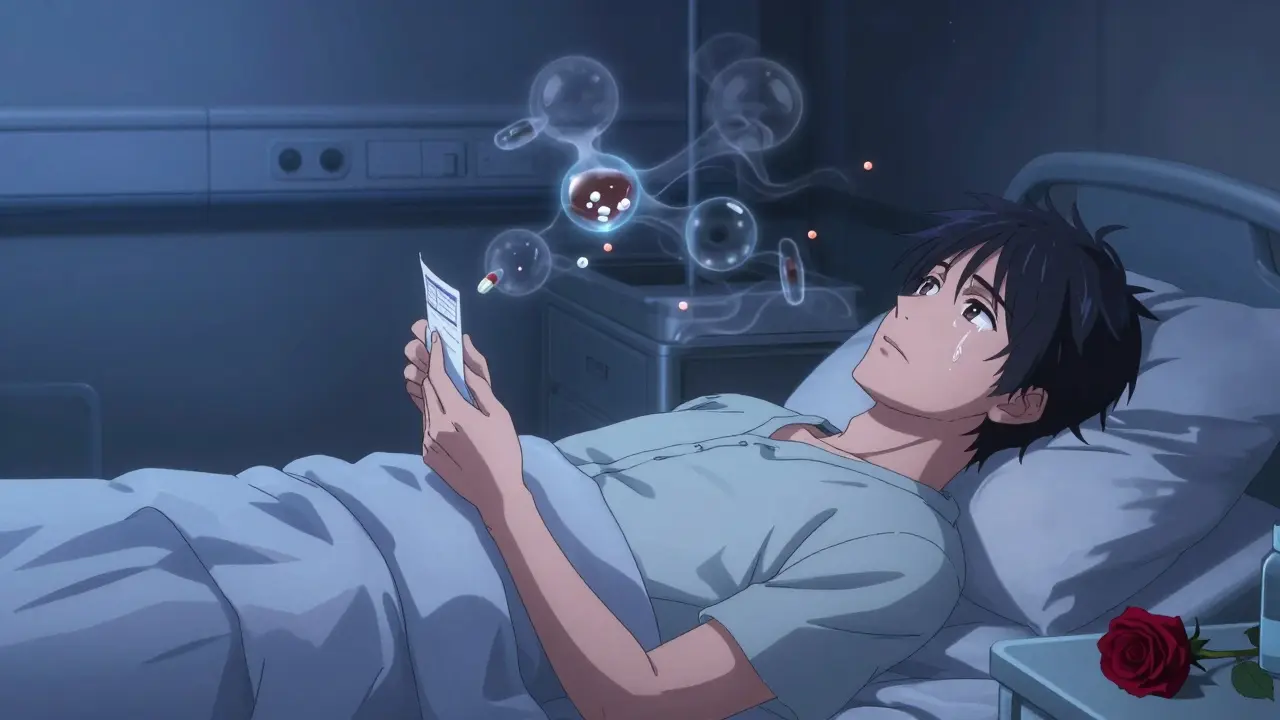
People with alcohol use disorder are 3.2 times more likely to overdose on opioids, according to the American Society of Addiction Medicine. Many don’t realize they’re at risk because they’re taking their opioid as prescribed. They might have a glass of wine with dinner, or a beer after work. They think it’s harmless.
Patients on long-term opioid therapy for chronic pain are especially vulnerable. They’re often older, may have other health conditions, and may be taking other sedatives like benzodiazepines. When alcohol joins the mix, it creates a triple threat. In 2021, nearly 14% of opioid overdose deaths also involved benzodiazepines-and alcohol was often present too.
These aren’t abstract numbers. These are people. Parents. Siblings. Friends. Someone’s child who thought one drink wouldn’t hurt. Someone’s parent who took their painkiller as directed and had a glass of wine to unwind. It didn’t take much. Just one evening. One bad decision. One moment of carelessness.
In January 2023, SAMHSA launched the “Don’t Mix” campaign with $15 million in funding to raise awareness. Their goal? A 10% drop in alcohol-opioid co-involved overdoses by 2025.
Doctors are now required to screen for alcohol use disorder before prescribing opioids. Naloxone-the overdose reversal drug-is being distributed more widely, especially to people who use both substances. In Massachusetts, 23% of naloxone reversals in 2022 involved alcohol and opioids.
And new science is emerging. Researchers at the University of Pittsburgh found a potential early warning sign: reduced heart rate variability. This biomarker could predict an alcohol-opioid overdose 30 minutes before breathing stops. That could lead to wearable devices that alert users-or emergency responders-before it’s too late.
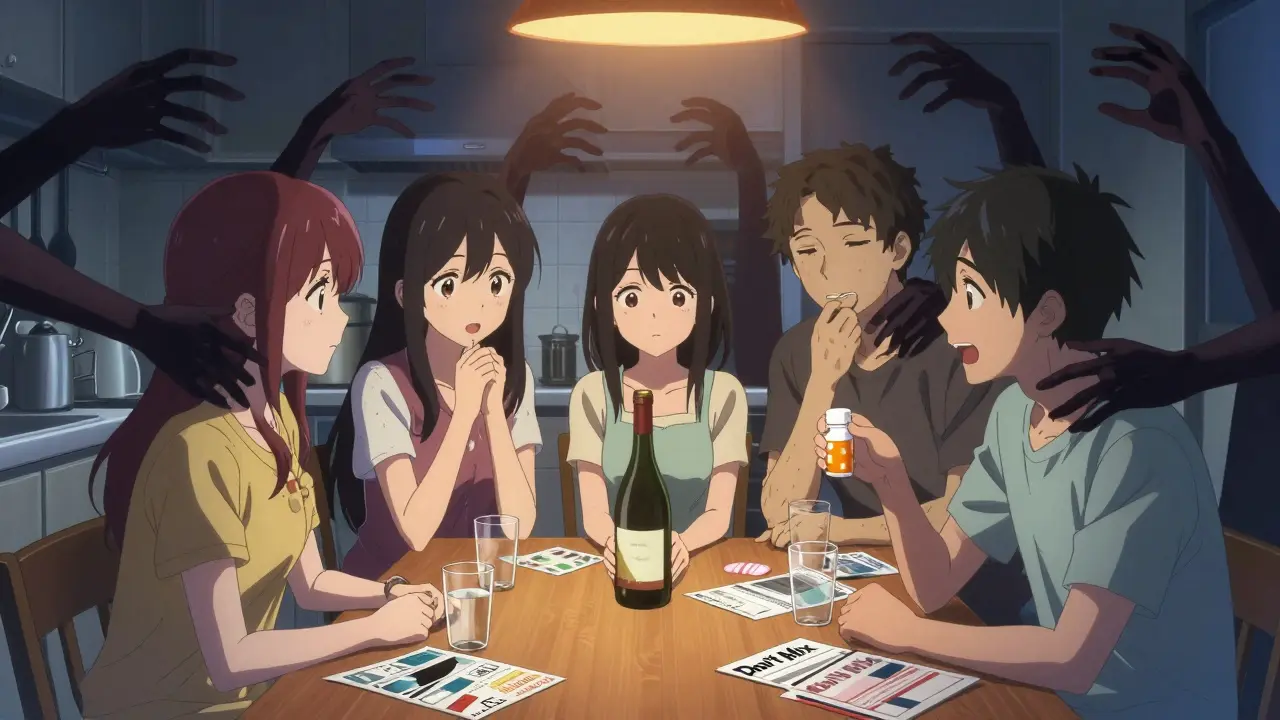
If someone you care about uses opioids and alcohol:
Doctors, pharmacists, and public health officials are working to fix the system. But until then, the safest choice is simple: don’t mix them.
If you’re struggling with opioid use or alcohol use, help is available. You’re not alone. And you don’t have to face this alone.
Yes. Even if you’re taking your opioid exactly as directed by your doctor, drinking alcohol can still cause a fatal overdose. The danger comes from how the two substances interact in your body, not from how much you take. A single drink can be enough to push your breathing past the point of no return.
No. There is no safe amount of alcohol when you’re taking opioids. The risk starts at the first sip. Even small amounts of alcohol can significantly increase respiratory depression. The FDA and CDC both state that mixing any alcohol with opioids is unsafe.
Call 911 immediately. Give naloxone if you have it. Naloxone can reverse the opioid effect, but it won’t reverse alcohol. Even after giving naloxone, the person still needs emergency medical care. Alcohol continues to depress breathing, and the overdose risk remains until the alcohol leaves their system.
Naloxone reverses the opioid part of the overdose, but it does nothing for alcohol. If alcohol is present, breathing may still stop after naloxone wears off-especially since alcohol stays in the system longer than most opioids. That’s why emergency care is always required after any overdose involving alcohol.
No. Codeine is an opioid, even in cough syrups. The FDA specifically warns against using opioid cough medicines with alcohol. Many people don’t realize these syrups contain opioids. Mixing them with alcohol can cause sudden respiratory failure-even in young, healthy people.
It depends on how long you’ve stopped. Opioids can stay in your system for days, depending on the type and dose. Even after you feel fine, traces may still be present. Wait at least 72 hours after your last dose before drinking alcohol. For long-acting opioids like methadone, wait at least a week. When in doubt, ask your doctor.
But awareness saves lives. If you’re reading this, you now know the risks. Share this information. Talk to your family. Tell your friends. Keep naloxone in your home if you or someone you love uses opioids. And if you’re struggling, reach out. Help exists. Recovery is possible. And no one should die because they didn’t know.

Kunal Majumder
10 01 26 / 09:47 AMMan, I had no idea one beer could be this deadly with painkillers. My dad’s on oxycodone and he always has a glass of wine with dinner. Gonna talk to him tonight. Thanks for laying it out like this.
Jaqueline santos bau
11 01 26 / 04:05 AMUgh, why do people keep doing this? It’s not rocket science. You take pills for pain, you don’t drink. End of story. I swear, some folks treat their lives like a game of Russian roulette and then act shocked when they lose.
Aurora Memo
11 01 26 / 13:04 PMThis is such an important post. I work in ER and see the aftermath all too often. People think "I only had one drink" or "I’m just taking it as prescribed"-but the science doesn’t care about your intentions. The body just reacts. Please share this with anyone you know on opioids.
chandra tan
13 01 26 / 11:56 AMIn India, we don’t talk about this enough. My cousin’s uncle died last year after mixing tramadol with whiskey. Family said he "just wanted to relax". No one told him it was deadly. This needs to be in schools, in clinics, on TV. Awareness saves lives.
Christine Milne
14 01 26 / 23:48 PMAccording to the CDC’s 2023 National Vital Statistics Report, the synergistic respiratory depression effect between ethanol and mu-opioid receptor agonists is statistically significant at p < 0.001, with a hazard ratio of 4.87 (95% CI: 4.21–5.64). This is not anecdotal. It is epidemiological fact. The FDA’s black-box warning is under-enforced.
Bradford Beardall
16 01 26 / 07:28 AMWait-so even codeine in cough syrup counts? I used to mix Robitussin AC with vodka in college. Holy crap. That’s terrifying. I’m lucky I’m still here.
Jake Kelly
17 01 26 / 03:33 AMMy mom’s on methadone. She never drinks, but I’m going to print this out and put it on the fridge. Better safe than sorry. Thanks for the clarity.
Ashlee Montgomery
17 01 26 / 04:38 AMThe brain’s respiratory control center is one of the oldest parts of our nervous system. It evolved to keep us alive while we slept. Opioids and alcohol don’t just impair it-they sabotage it. And the worst part? You don’t feel it happening until it’s too late. That’s why we need better public education. Not just warnings. Real understanding.
neeraj maor
18 01 26 / 19:15 PMThey’re hiding the truth. The real reason they warn against alcohol is because Big Pharma doesn’t want people using kratom or CBD as alternatives. This whole thing is a money grab. Alcohol is natural. Opioids are synthetic. They’re scared people will find safer options.
Ritwik Bose
18 01 26 / 19:29 PMRespectfully, this is a critical public health issue. The data presented is robust and peer-reviewed. I urge all readers to consider this not as a moral failing, but as a biochemical reality. 🙏
Paul Bear
19 01 26 / 16:33 PMIt’s not just about alcohol. It’s about polypharmacy. When you combine CNS depressants-opioids, benzos, alcohol-you’re essentially turning off your autonomic nervous system’s fail-safes. The LD50 isn’t additive; it’s multiplicative. And if you’re over 50, with comorbidities? You’re playing with fire in a gasoline-filled room.
lisa Bajram
21 01 26 / 03:57 AMOMG this needs to be a viral TikTok. I’m making a reel right now-"1 drink + 1 pill = 1 funeral"-with the breathing stats and that Texas fentanyl data. People need to SEE this. Not just read it. We’ve got to make it impossible to ignore.
Dwayne Dickson
23 01 26 / 02:28 AMWow. So the entire opioid epidemic is just… a marketing failure? We’re not educating people, we’re just shaming them. And then we act surprised when they die? Brilliant public health strategy. 🙄
Ted Conerly
24 01 26 / 21:24 PMIf you’re on opioids, keep naloxone in your purse, your glovebox, your desk drawer. It’s free at most pharmacies. It’s not a death sentence-it’s a lifeline. And if you’re worried about someone, just say it: "I care about you. I don’t want to lose you." That’s all it takes to start the conversation.