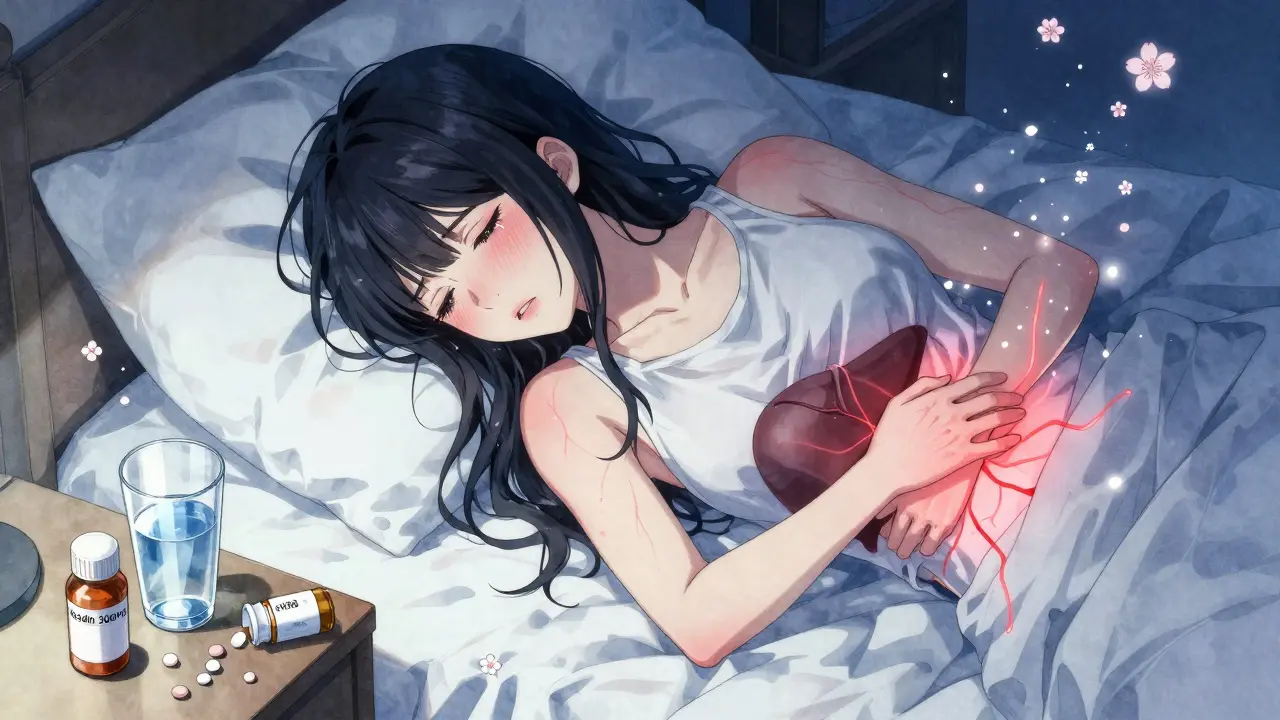
You might think acetaminophen is harmless because it’s sold over the counter. But taking just a few extra pills can turn a common pain reliever into a silent killer. Acetaminophen - known as paracetamol in many countries and sold under brands like Tylenol - is in more than 600 medications, including cold remedies, sleep aids, and prescription painkillers like Vicodin. The liver breaks it down safely… until you cross the line. Once you hit more than 4,000 mg in 24 hours - that’s eight 500 mg pills - your liver can’t keep up. A toxic byproduct called NAPQI builds up, burning through your liver’s natural defenses. Without treatment, this leads to massive liver cell death.
Most people feel fine after an overdose. That’s the problem. You might get a little nauseous, feel like throwing up, or lose your appetite. But 30-40% of people feel nothing at all. No pain. No jaundice. No warning signs. This is when most people think, “I’m fine,” and go to bed. But inside, the damage is already starting. The liver is quietly overwhelmed. By the time symptoms show up, it’s often too late to wait. If you took more than 10 pills in one go - even if you feel okay - get checked. Don’t wait.
Now the pain hits. Right under your ribs on the right side - sharp, constant, deep. That’s your liver screaming. Nausea and vomiting come back, worse than before. Your skin might feel clammy. Blood tests will show your liver enzymes (ALT) climbing fast. Normal ALT is 7-56 IU/L. In overdose, it can jump to over 10,000. This is the window where treatment still works best. If you’re here and you took acetaminophen in the last 24 hours, you need N-acetylcysteine (NAC) - now. Delaying even a few hours cuts your survival chances dramatically.
This is where things turn critical. Your skin and eyes turn yellow - jaundice. You feel confused, dizzy, maybe even disoriented. Your blood won’t clot right - you might bruise easily or bleed from your gums. Your kidneys start to fail. One in two people with severe liver damage also develop kidney failure. Your INR (a blood clotting test) shoots past 1.5. At this stage, you’re in the ICU. Without treatment, death is likely. But even here, NAC can still help. It’s not magic, but it buys time. Some patients need a liver transplant. The King’s College Criteria help doctors decide: if your blood pH is below 7.3, your INR is over 6.5, and your creatinine is above 3.4 mg/dL, your chances without a transplant are near zero.
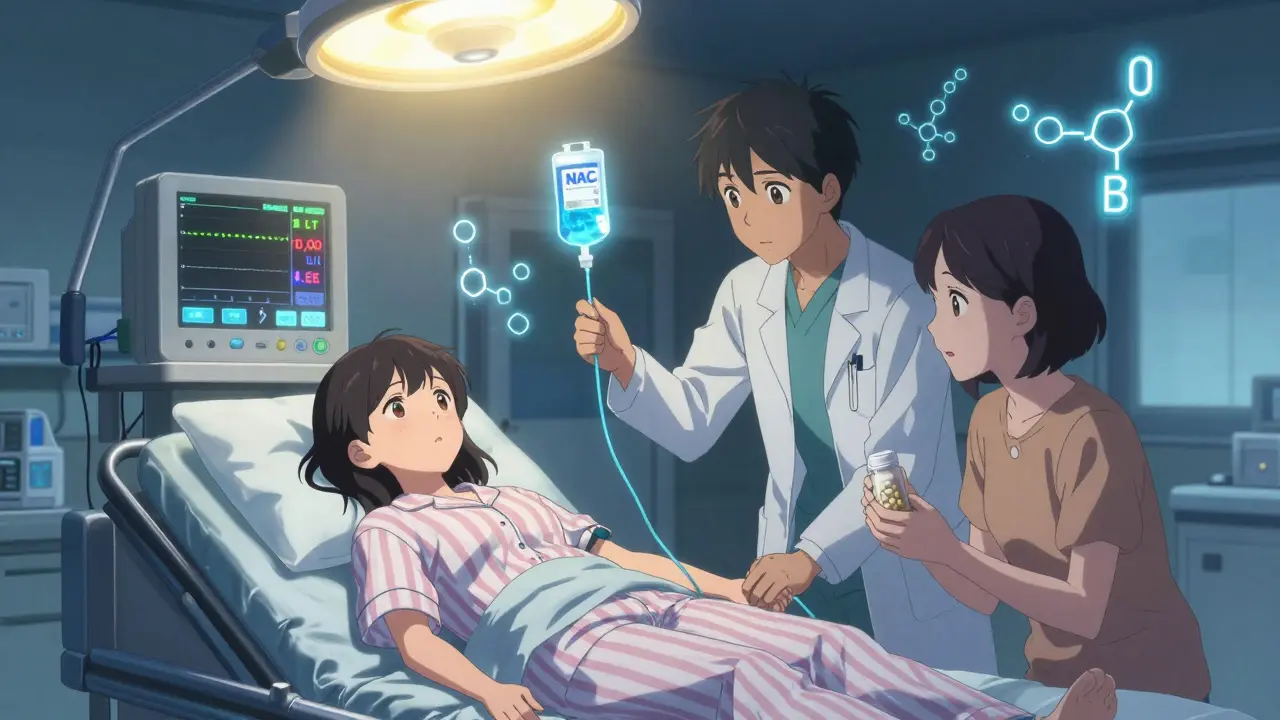
If you survive, your liver can heal - if it wasn’t too damaged. About 85-90% of people who get NAC within 8 hours recover fully. Their liver regenerates. Blood tests return to normal. Most people are back to normal life in 3 months. But 8% still have mild, ongoing liver enzyme spikes. They need follow-up. For the 1-2% who need a transplant, survival rates are high - 85% live at least five years. But transplant is major surgery. You’re on lifelong drugs. Prevention beats treatment every time.
N-acetylcysteine (NAC) is the only antidote approved in the U.S. It works like a sponge, soaking up the toxic NAPQI and rebuilding your liver’s glutathione - the antioxidant your body uses to detoxify acetaminophen. But NAC isn’t a cure-all. It’s time-sensitive. If you get it within 8 hours of overdose, it’s 98% effective. Between 8 and 15 hours, effectiveness drops to 75%. After 15 hours, it’s only 55%. Every hour you wait increases your risk of death by 8.5%. That’s why emergency rooms check your acetaminophen level at 4 hours after ingestion. If it’s above 150 µg/mL on the Rumack-Matthew nomogram, you get NAC - no questions. Intravenous NAC is given over 21 hours: 150 mg/kg in the first hour, then 50 mg/kg over 4 hours, then 100 mg/kg over 16 hours. Oral NAC takes 72 hours and is harder to tolerate. But if you can’t get IV, oral is better than nothing.
It’s not just people who try to overdose. Many accidents happen. Chronic alcohol users are 3-4 times more likely to suffer liver damage - alcohol makes your liver produce more NAPQI. People with hepatitis B or C have 65% higher vulnerability. Those taking seizure meds like carbamazepine or phenytoin? Their risk jumps 40%. Malnourished people - especially those with low protein intake - have 25-30% less glutathione. And here’s the big one: you might not even know you’re taking acetaminophen. Vicodin has 300 mg per pill. Percocet has 325 mg. If you take two of those and a Tylenol for a headache, you’re already over the limit. One study found 68% of people didn’t realize their painkillers contained acetaminophen.
Once you’re in, they don’t just give NAC. They monitor your blood pressure, oxygen, and brain function. They give IV fluids - 1 to 2 liters in the first day - to protect your kidneys. They treat vomiting with ondansetron. If your blood won’t clot, they give vitamin K or fresh frozen plasma. They check your ammonia levels, glucose, and kidney function. If your liver fails, they prepare you for transplant evaluation. The goal isn’t just survival - it’s recovery. And recovery starts the moment you get help.
In 2011, the FDA forced manufacturers to reduce the max dose in prescription combos from 750 mg to 500 mg per tablet. That cut acetaminophen-related liver failure by 21% in 11 years. But people still overdose. Why? Misinformation. Belief that “natural” means safe. Thinking OTC means harmless. Not knowing what’s in your meds. Public education is still lagging. Talk to your pharmacist. Read labels. Write down every pill you take. If you’re on multiple meds, use a pill tracker. Never combine painkillers without checking the acetaminophen content. And if you drink alcohol regularly - don’t take acetaminophen at all. Your liver doesn’t have a backup plan.
Scientists are looking beyond NAC. Research at Harvard Stem Cell Institute shows nitric oxide may help the liver regenerate even after damage has started - in animal studies, it boosted healing even when given 12 hours after overdose. That could change everything. Early detection is also improving. A blood marker called microRNA-122 can spot liver injury within 2 hours - 94% accurate. In the next few years, ERs might use a simple blood test to confirm overdose before symptoms even appear. But for now, the rule is simple: if you took too much, get help. Fast.
People survive acetaminophen overdose every day. Not because they were lucky. Because they got help in time. Your liver is tough. It can heal itself - if you don’t push it past its limit. Don’t gamble with doses. Don’t assume “a little extra” is safe. Don’t wait for pain to start. If you think you’ve taken too much, go to the hospital. Now. It’s not an overreaction. It’s the only thing that saves lives.
Yes. Acetaminophen overdose is the leading cause of acute liver failure in the U.S., killing about 500 people each year. Death happens when the liver can’t process the toxin NAPQI, leading to massive cell death and multi-organ failure. Without treatment, mortality can reach 40%. But with timely NAC, survival rates jump to over 90%.
For adults, the maximum safe dose is 4,000 mg in 24 hours - that’s eight 500 mg tablets. But the recommended single dose is 325-625 mg. Taking more than 7,000 mg in one day can cause severe liver damage. Even 10 pills of 500 mg (5,000 mg total) can be dangerous, especially if you drink alcohol or have liver disease.
No, but many do. Common prescription painkillers like Vicodin, Percocet, and Darvocet contain acetaminophen - often 300-325 mg per pill. Cold and flu medicines like NyQuil, TheraFlu, and Excedrin also include it. Always check the “Active Ingredients” list. If you see “acetaminophen” or “APAP,” you’re taking it. Don’t combine with Tylenol or other acetaminophen products.
No. Alcohol increases the production of the toxic NAPQI metabolite and reduces your liver’s ability to detoxify it. Even moderate drinking (2-3 drinks a day) can triple your risk of liver damage from acetaminophen. If you drink regularly, avoid acetaminophen entirely. Use ibuprofen or naproxen instead - but only if your kidneys are healthy.
Liver damage can begin within hours of overdose, but symptoms usually don’t appear until 24-48 hours later. Blood tests show enzyme spikes as early as 12-24 hours. The most dangerous period is between 24 and 72 hours, when liver cell death peaks. That’s why waiting for symptoms to appear is deadly. If you suspect overdose, get tested immediately - don’t wait.
Yes, most people fully recover if treated early. About 85-90% of patients who get NAC within 8 hours have complete liver regeneration within 3 months. Even those with severe damage often survive with intensive care. Only 1-2% need a transplant, and 85% of transplant recipients live at least five years. But recovery requires medical care - not rest alone.
N-acetylcysteine (NAC) is sold as a supplement in health stores, but it’s not the same as the medical-grade IV or oral formulation used in hospitals. Over-the-counter NAC is not proven to treat overdose and may not contain enough active ingredient to help. Only hospital-administered NAC has been shown to save lives in acetaminophen poisoning. Never rely on supplements in an emergency.

Leave a comments